
The way we make and receive calls has changed starting today—no more asking, "Who is calling?"
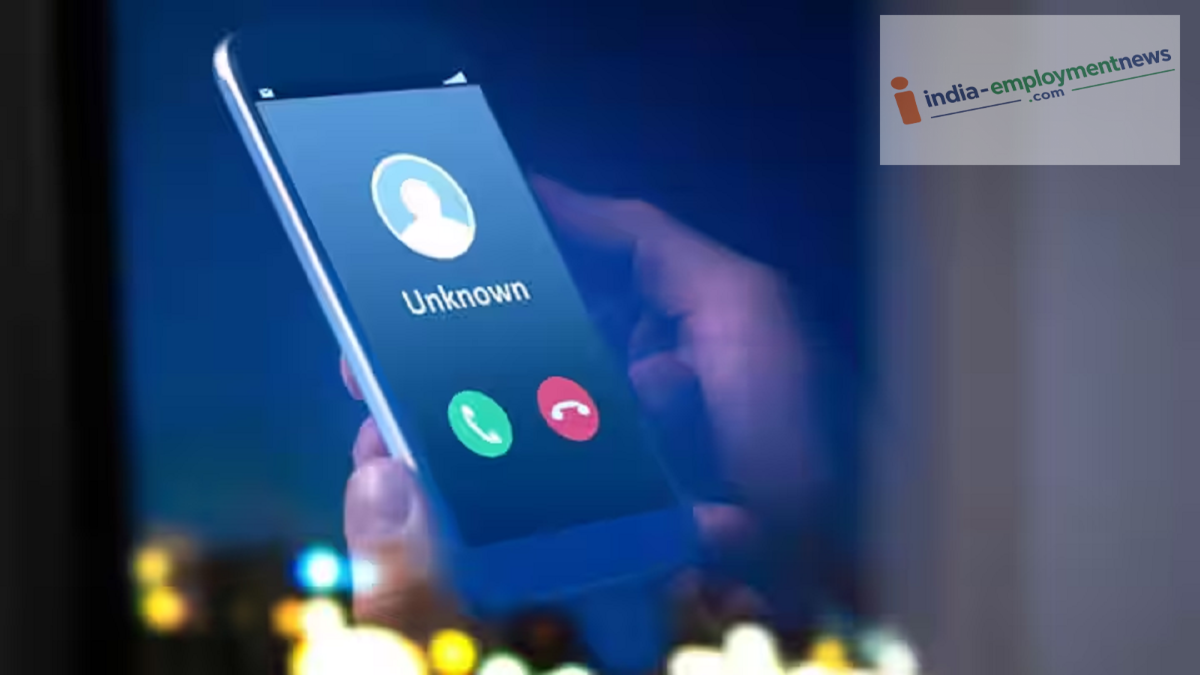
CNAP Rule: Are you also bothered by calls from unknown numbers on your mobile phone? A major new regulation regarding phone calls has come into effect in the country today. Now, the caller's real name will appear directly on your screen.
If you are frequently troubled by calls from unknown numbers, your worries are about to come to an end. Often, when a call arrives from an unfamiliar number, it’s difficult to decide whether to answer or decline it. However, starting today—November 1, 2026—the way calls are handled in the country is undergoing a complete transformation, meaning you will no longer need to ask an unknown caller, "Who is this?"
The Department of Telecommunications (DoT) has taken a significant step for the convenience and security of the public. The government has directed all telecom companies to implement the 'Calling Name Presentation' (CNAP) service, effective today. Under this new mandate, major operators—including Airtel, Jio, Vodafone-Idea, and BSNL—are required to roll out this specialized technology across their 4G and 5G networks, allowing the true identity of the caller to be revealed instantly.
The most notable aspect of this system is that you will no longer need to rely on third-party applications, such as Truecaller, to identify a caller. Whenever a call comes in from an unknown Indian number, the caller's registered name will automatically appear on your phone screen alongside the number. Users do not need to download any additional apps or configure any specific settings to enable this feature.
You might wonder how this technology can display a name without the use of an app. In fact, under the CNAP system, telecom companies are creating a secure database that links customers' mobile numbers with the official names provided at the time of SIM card registration. Whenever someone calls you, your telecom company’s network will instantly fetch the caller’s real name from its database and display it on your screen as the phone rings.
This means that instead of a fictitious or arbitrary name, the screen will show the actual name registered in the KYC documents provided at the time of obtaining the SIM card. However, if the caller’s number is already saved in your contact list, the name you have assigned to it will appear instead. This new feature applies only to numbers that are not already saved in your phone.
The system also includes specific provisions to identify fraudulent or spam calls originating from abroad. If you receive a call from another country, the screen will clearly display "International Call" instead of the caller's name. This will immediately alert users that the call is coming from outside the country, helping them avoid falling prey to international cyber scammers.
The Department of Telecommunications (DoT) has taken a significant step for the convenience and safety of the public. The government has directed all telecom companies to implement the "Calling Name Presentation" (CNAP) service, effective today. Under this new mandate, major operators—including Airtel, Jio, Vodafone-Idea, and BSNL—are required to roll out this technology across their 4G and 5G networks, ensuring that the caller's true identity is immediately revealed.
Furthermore, to safeguard user privacy, an exemption has been included: for users who have opted for the "Calling Line Identification Restriction" (CLIR) service, their names will not be displayed on the recipient's screen. It should be noted that this facility is not generally available to everyone; it is granted only to specific individuals, subject to rigorous verification and valid security-related justifications. This new government initiative is expected to significantly curb the rapidly rising incidents of cyber fraud and fake calls in the country. Previously, people relied on third-party apps to identify callers; however, these apps often displayed incorrect names due to their reliance on crowdsourcing, and they also posed a risk of data leaks. With the introduction of this government-backed, KYC-based, network-level technology, it will become impossible for fraudsters to conceal their identities.
If this feature is not yet available on your number, there is no need to worry. As telecom companies complete their technology rollout over the coming weeks, the feature will become accessible to all 4G and 5G users.
