
Technology: Smart streetlights to be installed in Delhi, what technology do they use?
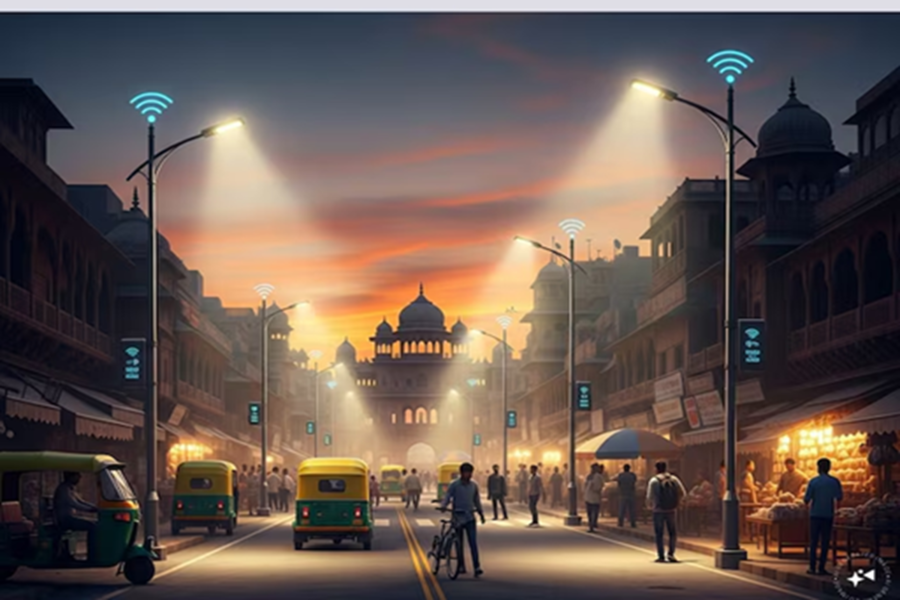
Delhi's streets are soon to be illuminated by bright and smart lighting. The Municipal Corporation of Delhi (MCD) has decided to upgrade 312,000 streetlights across six zones to make them "smart." These zones are Karol Bagh, Civil Lines, City SP Zone, Narela, Rohini, and Keshavpuram. These areas previously fell under the jurisdiction of the North Delhi Municipal Corporation. This decision is expected to result in annual savings of ₹5 crore on electricity bills. The question arises: which technology will enable such significant savings? Let's find out.
The old lighting fixtures are now reaching the end of their lifespan. Between 2012 and 2022, Delhi transitioned from High-Pressure Sodium Vapor (HPSV) lights to LED lights. However, these LEDs have now also completed their operational life. Consequently, the MCD has devised a plan to install a new smart lighting system.
**ILMS: The New System**
The new technology is known as the Intelligent Lighting Management System, or ILMS. It is equipped with specialized sensors that monitor conditions in real-time. Its most significant feature is "adaptive dimming"—the ability to automatically adjust its brightness levels. If no pedestrians, vehicles, or animals are passing along the road, the intensity of the lights automatically decreases.
If the area remains deserted for an extended period, the lights may even switch off completely. As soon as movement is detected, the sensors identify the presence, and the lights immediately brighten up again. This mechanism prevents the wastage of electricity. Since roads often remain empty during the night, there is no need to keep the lights burning at full intensity throughout the entire night. It is precisely this technology that is projected to generate annual savings of ₹5 crore.
**Alerts for Malfunctions**
The ILMS also incorporates remote monitoring capabilities. If a streetlight malfunctions, the system immediately generates an alert. Officials can identify the issue remotely—from the comfort of their offices or homes—and initiate repairs even before a formal complaint is lodged by the public.
Previously, residents had to file a complaint and then wait for the issue to be resolved. Now, this entire process will be significantly expedited. Furthermore, safety and security will be enhanced, as no stretch of road will be left in darkness. This project is scheduled to be implemented as part of a 10-year plan. Within the first three years, all the lights across these six zones will be upgraded.
The contract with the incumbent agency is set to expire in May 2026, following which a new agency will take over. Subsequently, a survey will be conducted to replace 80,000 old lights in unauthorized colonies as well. Lights will be replaced in batches of 25 percent every six months.
**Aiding in AQI Reduction**
This smart system will not only result in financial savings; it will also help improve Delhi's air quality, as reduced electricity consumption will mean fewer power plants need to operate. Maintenance will become easier, and the city's roads will remain safer at night.
MCD officials state, "The ILMS technology allows for the brightness of the lights to adjust automatically, and any complaints regarding malfunctions are resolved immediately."
This initiative by the Delhi Government and the MCD demonstrates that even small-scale smart technologies can make a significant difference. The installation of this system across 312,000 lights will not only generate savings of ₹5 crore but will also make the city brighter, safer, and more eco-friendly.
In light of this plan, it would not be an exaggeration to say that in the days to come, Delhi's roads will be illuminated by smart lighting, ensuring that every penny spent on electricity is utilized efficiently.
PC Social Media
