
Tech Tips: Want your phone battery to last longer? Learn this 80-20 charging rule..
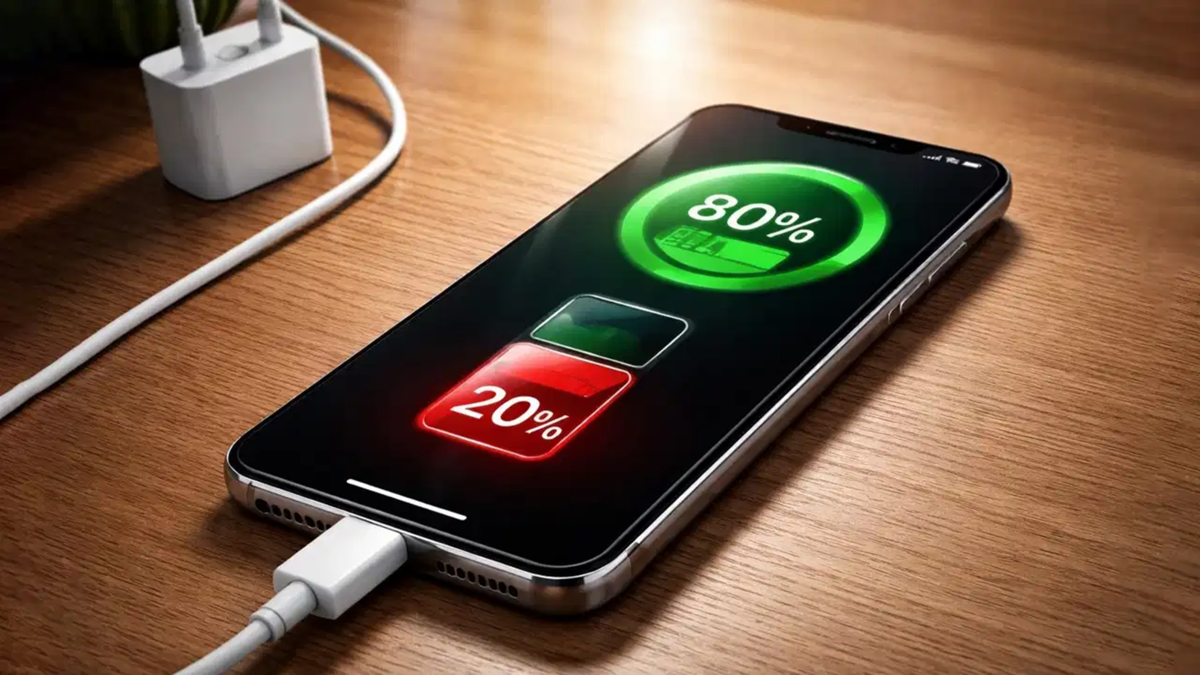
You have likely heard often these days that to keep your phone's battery in good condition for the long term, you should charge it only between 20% and 80%. Consequently, many people plug in their phones before the battery drops to 20% and stop charging as soon as it hits 80%. But is this necessary for every phone? Let’s break it down simply.
What does charging to 80% mean?
Suppose your phone has a 5000mAh battery. If you always charge it only to 80%, you will effectively utilize a capacity of around 4000mAh per charge. This means that despite having a 5000mAh battery, you aren't using its full capacity daily. If an 80% charge is sufficient for your entire day, there is no major issue. However, if you are a heavy user, leaving 20% of the battery capacity unused every day might force you to hunt for a charger frequently.
Does charging to 80% prevent battery degradation?
Not really. A phone's battery loses capacity over time, primarily due to the chemical processes occurring inside it. No matter how carefully you use your phone, the battery won't remain as good as new forever. Therefore, charging only to 80% doesn't completely halt the aging process of the battery. While charging habits can influence the stress placed on the battery, the 80% limit isn't a definitive solution.
What happens after a few years?
A new battery can power the phone for a long time initially. However, its capacity diminishes over time, and you may find yourself needing to charge the phone more frequently than before.
In this scenario, if you are already limiting your charge to 80%, the usable battery capacity available to you becomes even lower. Essentially, the battery's capacity is shrinking, and you aren't even utilizing the full available capacity.
Does charging to 80% damage the software? A battery's actual capacity and the battery percentage displayed on the phone are not the same thing; the phone's software estimates the battery's status to show that percentage.
As the battery's condition changes over time, calibration discrepancies can occur, causing the displayed percentage to differ from the actual battery capacity. However, charging up to 80% does not directly damage the phone's software.
So, why is charging up to 80% recommended?
The main idea behind this rule is to avoid keeping the battery fully drained or fully charged for extended periods. That said, modern smartphones come with features that manage charging intelligently. Some phones learn your charging habits to prevent the battery from sitting at 100% for too long, ensuring it reaches a full charge only when needed.
Is it wrong, then, to charge the phone to 100%?
No. If you need to use your phone all day, are traveling, or won't have access to a charger for a long time, charging it to 100% is perfectly normal and practical. On the other hand, if an 80% charge easily lasts you the whole day and you prioritize battery longevity, setting a charging limit can be a good option.
Ultimately, the 20-80% rule shouldn't be considered mandatory for everyone. Charge your phone according to your needs, and if your device has battery management or charging optimization features, be sure to use them. Your phone is meant for your convenience, so there is no need to constantly worry about the battery percentage.
Disclaimer: This content has been sourced and edited from TV9. While we have made modifications for clarity and presentation, the original content belongs to its respective authors and website. We do not claim ownership of the content.
