
Tech Tips: Is it safe or risky to apply a screen guard to a foldable phone? This small mistake could ruin your expensive device..
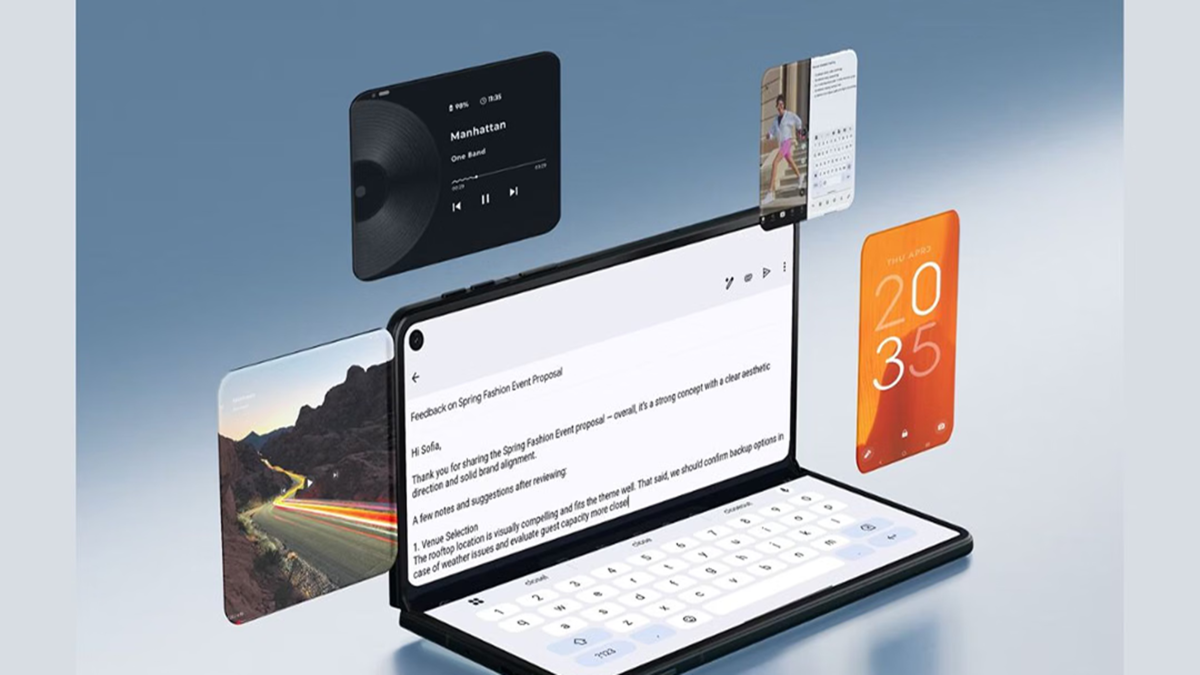
Whenever we buy a new and expensive smartphone, the first thing we consider is applying a sturdy screen protector. An inexpensive screen guard seems like an easy way to protect the phone's valuable screen from scratches and breakage. While this holds true for standard smartphones with flat displays, the equation changes completely when it comes to foldable smartphones.
Foldable smartphones are extremely delicate and feature two distinct screens. Consequently, users are often unsure whether they can apply a screen protector to their foldable phone. The straightforward answer is yes, but with a major caveat: while you can apply a protector to the outer screen, tampering with the inner folding screen can lead to significant damage.
Why can applying a guard to the inner screen be problematic?
Unlike standard phones, the inner screen of a foldable phone does not use rigid glass. Instead, multiple flexible layers are employed to enable it to withstand thousands of folds. To protect these layers, manufacturers pre-install a screen protector.
Phones like the Samsung Galaxy Z Fold8 come with a built-in protector made of a special TPU material designed specifically for the folding screen.
Similarly, Apple's recently launched first foldable phone, the iPhone Duo, also features a built-in protector over the display layers. It incorporates a nano-texture coating that provides a matte finish to the screen and helps conceal the crease. Do not remove the original protector
Removing the original protector can cause severe damage
Smartphone manufacturers explicitly advise against removing the original protector on the inner screen yourself or attempting to apply a third-party guard over it. When the Galaxy Fold was first released, many users mistook it for a standard plastic film and peeled it off, immediately ruining the entire screen. If the pre-installed inner screen guard becomes worn or damaged, have it replaced only at an authorized service center. Even ultra-thin (0.1mm) third-party guards available in the market can damage the inner display's mechanism.
You can apply a protector to the outer screen
Feel free to apply any tempered glass or screen protector of your choice to the phone's outer screen. This is because the outer display functions like a standard smartphone screen, featuring Gorilla Glass or Apple's Ceramic Shield. Applying a protector here for added safety is perfectly safe.
Dust is a bigger enemy than screen guards
The real threat to foldable phones isn't minor surface scratches, but rather fine particles of dust and dirt. If dust or sand particles enter the hinge or the gap near the inner display, they can damage the screen from the inside when the phone is folded. For instance, Galaxy Z Fold devices come with an IP48 rating; while this offers protection against water, it does not fully block fine dust particles. In contrast, Apple iPhones come with an IP68 rating, offering significant protection against dust.
What is the best way to keep a foldable phone safe?
If you want to keep your foldable phone safe for the long term, avoid applying an extra protector to the inner screen. You can apply a screen guard to the outer screen if needed. Additionally, choose a cover that also protects the phone's hinge. Exercise caution when using the phone in dusty or sandy environments and follow the manufacturer's instructions.
Disclaimer: This content has been sourced and edited from Amar Ujala. While we modified it for clarity and presentation, the original content belongs to its respective authors and website. We do not claim ownership of the content.
