
Tech: How do Zepto, Blinkit, and Instamart deliver groceries to your doorstep in 10 minutes? Learn about their entire tech game..
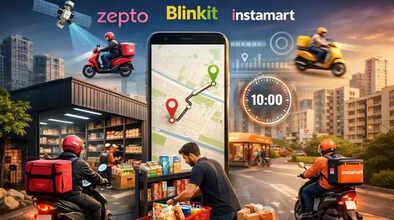
How the 10-Minute Delivery Model Works: Imagine you've lit the gas stove to make tea and realize you're out of sugar. With this service, you can order sugar through a mobile app and have it delivered to your home in 10 minutes. That means the sugar will arrive by the time your tea has boiled a couple of times. It sounds like magic, but companies like Zepto, Blinkit, and Swiggy Instamart are making it a reality. People living in large cities use these services extensively. The 10-minute delivery service isn't just about fast bikes; it's powered by a complete network of data, technology, and smart planning. Companies like Zepto, Blinkit, Flipkart Minutes, and Swiggy Instamart have transformed our shopping habits through quick commerce. Let's understand how 10-minute delivery is actually possible.
What is Quick Commerce and Why is it so Fast?
Quick commerce is a model where everyday essentials are delivered to the customer in a very short time. This means the warehouse from which your goods are delivered is less than 1-2 kilometers away. The focus is not on large orders or long-distance deliveries, but on instant supply from the neighborhood. Apps like Zepto, Blinkit, and Instamart are making 10 to 15-minute deliveries possible by adopting this model. This model is specifically designed to cater to the immediate needs of urban areas. That's why speed is the biggest factor.
Dark Stores, Your Neighborhood's Hidden Mini-Warehouse
The biggest strength of 10-minute delivery is dark stores. These are not ordinary grocery stores, but small warehouses built very close to densely populated areas. Sometimes they operate in basements, alleys, or empty commercial spaces. Customers cannot shop there in person; orders are placed only through the app. Having a store within 1-2 kilometers of your home automatically reduces delivery time.
Data Determines What's Available and When
What goods are stocked in the dark store is not left to a manager's guesswork. Companies constantly analyze data to determine what sells most in which area and at what time. If there is a high demand for ice cream or snacks in a particular neighborhood at night, the store increases its stock accordingly. This means that the necessary items are readily available even before the customer places an order. This data-based planning is what makes delivery superfast.
The system prepares before the order is even placed.
As soon as you search for a product on the app, the company's server becomes active. The system checks the stock at your nearest dark store and determines which employee will pack the items. Sometimes, the packing process begins even before you press the payment button. Products are arranged inside the store in a way that minimizes the packer's movement and reduces the time spent searching for items. The entire order is usually packed in 60 to 90 seconds.
Real-time coordination between rider and GPS
Delivery riders are already waiting outside the store. GPS and AI-based software determine which rider is closest and which route has the least traffic. The system has real-time information about the city's streets, turns, and traffic patterns. This is why the rider reaches your doorstep on time without speeding or taking unnecessary risks. Every minute is calculated using technology.
How the 10-minute delivery service has changed our habits
This instant delivery model has changed consumers' shopping habits. People no longer buy a month's worth of groceries at once, because they are confident that items will arrive instantly when needed. This has led to increased frequent buying, which directly benefits quick commerce companies. Convenience has increased, but the habit of planning is decreasing. This is also the social impact of this entire model.
The future of quick commerce and its increasing speed
Platforms like Zepto, Blinkit, Swiggy Instamart, and Dunzo are constantly strengthening their networks and technology. In the future, delivery is expected to become even faster, more personalized, and data-driven. This 10-minute delivery model is no longer just a convenience, but has become an integral part of urban lifestyles. It's this combination of technology, data, and local presence that makes quick commerce successful.
Disclaimer: This content has been sourced and edited from TV9. While we have made modifications for clarity and presentation, the original content belongs to its respective authors and website. We do not claim ownership of the content.
