
Social Media Ban: Social media to be banned for children under 16 in the UK; curbs on chatbots too..
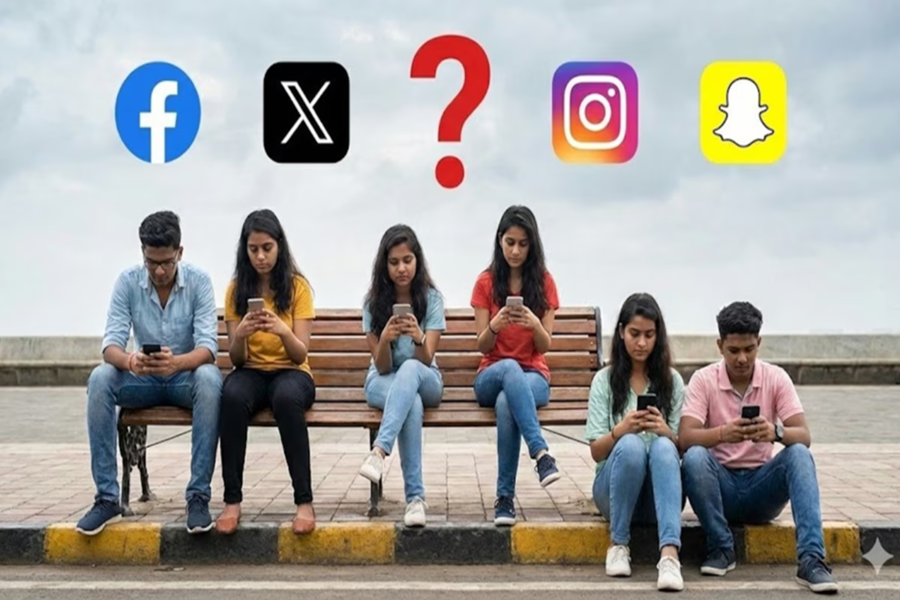
Britain has taken a major and stringent step regarding the online safety of children. Prime Minister Keir Starmer has announced that children under the age of 16 will not be permitted to use social media platforms. The government states that this decision has been made with the safety, mental health, and well-being of children in mind.
Addressing the nation from 10 Downing Street in London, Starmer stated that he made this decision not only as Prime Minister but also as a father of young children. He acknowledged that implementing such a restriction involving the world's largest tech companies would not be easy, but emphasized that the well-being of children is paramount.
Which platforms will the ban apply to?
According to reports, this ban will apply to several of the world's most popular social media platforms. These include TikTok, Instagram, Facebook, X, YouTube, Snapchat, Threads, Twitch, Kick, and Reddit. If this plan is implemented, children under 16 will be unable to use these platforms.
However, messaging apps like WhatsApp will not fall under the scope of this ban. Meanwhile, new rules will also apply to gaming services and live-streaming platforms. Platforms where strangers can directly contact children will be regulated through age-verification systems. The final form of this mechanism is yet to be determined.
Strict measures for chatbots, not just social media
According to a report by the British newspaper *The Sunday Times*, the government does not intend to limit its actions to social media alone. The proposed regulations could also include restrictions or strict controls on chatbots and features within certain gaming apps. Additionally, measures such as a "digital curfew" are being considered to prevent older teenagers from scrolling through social media late into the night.
Social media is hurting children: Keir Starmer
Starmer argues that instead of making children happy, social media often leaves them distressed and feeling unsafe. According to him, online bullying and abuse have become easier than ever before. Furthermore, children may be exposed to content that could be detrimental to their mental health.
He noted that social media platforms are designed to keep users engaged for extended periods. Features like "infinite scroll" keep children glued to their screens for hours, impacting their studies, reading habits, time spent with friends, and sleep patterns.
**Decision taken after public consultation**
This decision was not made hastily. The government had sought public input on the issue, receiving approximately 116,000 responses from various groups, including parents, tech companies, and children. This marked the largest public consultation since the 2012 referendum on same-sex marriage legislation.
UK Culture Secretary Lisa Nandy stated that the majority of respondents supported a social media ban for children under the age of 16. She also clarified that a ban alone is not the solution; it must be implemented alongside other safety measures.
**Legislation could come into effect next year**
When asked about the timeline for the ban, Starmer indicated that the government has initiated the necessary legal procedures. The aim is to implement the legislation by the spring of next year.
He remarked that while some tech companies want people to believe social media cannot be changed, the government rejects this notion. According to him, technology can—and should—be regulated to align with people's needs.
**Other countries have taken similar steps**
The UK is not the first country to take action in this regard. Nations such as Australia, Canada, Brazil, and Indonesia have also enacted laws or announced age-based restrictions to control children's access to social media.
Experts believe that excessive social media use can adversely affect children's mental health, sleep, and academic performance. Consequently, the UK's decision could serve as a precedent for other countries in the future.
Disclaimer: This content has been sourced and edited from Amar Ujala. While we have made modifications for clarity and presentation, the original content belongs to its respective authors and website. We do not claim ownership of the content.
