
Smart TV: Thinking of buying a smart TV in 2026? If you know these 5 things before buying, you won't regret it..
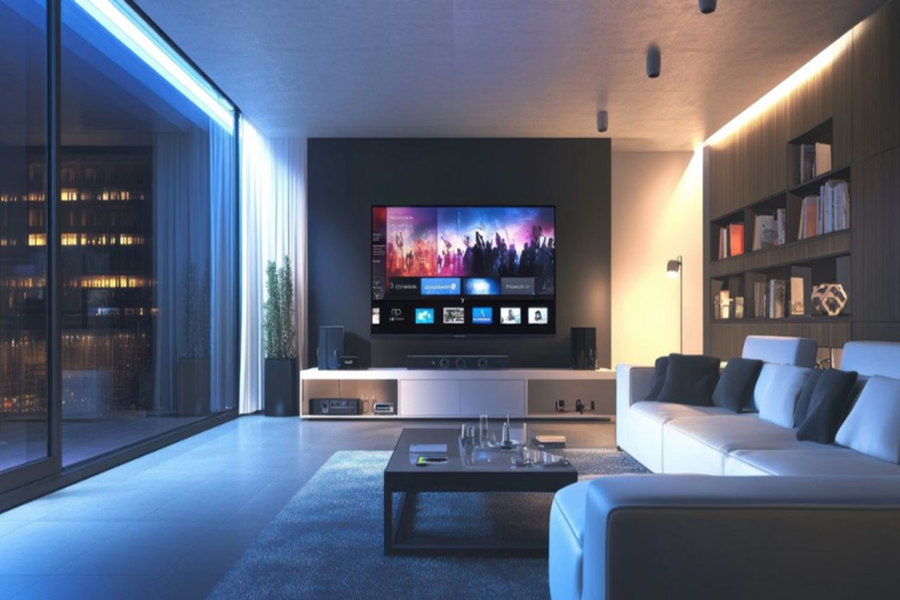
Today, choosing a smart TV is not just about getting a bigger screen or the latest model. In 2026, factors like screen size, panel quality, 4K resolution, operating system, sound, connectivity, and gaming support have become crucial for buying the right smart TV. Making the wrong choice can compromise picture quality, performance, and future support. In this article, we'll explore five important things to consider when buying a smart TV, which will save you money and provide an excellent viewing experience.
1. Choose the Perfect Fit for Your Room
People often think that a bigger TV looks better, but the "bigger is better" formula doesn't always work when buying a TV. The viewing distance should always be 1.5 to 2.5 times the diagonal size of the screen. Therefore, a 43-inch TV is considered best for a distance of 6-8 feet, while a 75-inch TV should only be chosen for large halls to avoid eye strain.
2. The Real Difference Starts Here
The real difference in a TV's picture quality starts with its panel. No matter how new or expensive the TV is, if the panel isn't good, the viewing experience will be lackluster. VA panels offer deep blacks and strong contrast, making them ideal for watching movies in low light or dark rooms. The advantage of IPS panels is their wide viewing angle, ensuring that colors don't fade even when multiple family members are watching from different angles. Additionally, QLED or Mini-LED technology significantly improves brightness and color accuracy, making HDR content appear more vibrant and lifelike.
This is why there's a significant difference between a 30,000 and a 60,000 rupee 4K TV. A 30,000 rupee 4K smart TV only offers high resolution, but the brightness is low, the color depth is limited, and the HDR effect is minimal. In contrast, if we talk about the 60,000 rupee range, you get a better quality panel, stronger backlighting, smoother motion handling, and a faster processor, resulting in a sharper picture, richer colors, and an overall faster and smoother interface. This difference is clearly visible in everyday use and provides a better experience in the long run.
3. Why shouldn't you buy an FHD or HD TV now?
Buying an HD or Full HD smart TV in 2026 is no longer considered a wise decision, as both TVs and content have rapidly shifted towards 4K. Today, almost all major OTT platforms like Netflix, Prime Video, and YouTube are offering most of their new content in 4K resolution, which means the same content doesn't appear in its full quality on HD or FHD TVs. Especially on screens larger than 40 inches, the Full HD picture looks soft and less sharp, while in 4K, the details appear clear and natural.
Most importantly, 4K TVs are no longer expensive. Good 4K smart TVs are now available in India, starting from around 20,000 rupees, leaving no solid reason to opt for HD or FHD. Furthermore, gaming consoles like PS5 and Xbox, and new set-top boxes are also designed for 4K output. Therefore, HD or FHD TVs cannot take full advantage of these devices and are not future-proof. So, if you want your TV to remain reliable and up-to-date for many years to come, choosing a 4K smart TV instead of HD or FHD is the right decision.
4. Smoothness is essential for a better experience
The real and everyday experience of a smart TV depends on its operating system (OS), as this determines how smooth, fast, and easy to use the TV will be. Google TV offers the most app support, and its voice control is quite powerful, allowing you to search and control content simply by speaking. WebOS and Tizen are known for their fast performance, clean interface, and easy navigation, making them user-friendly even for first-time users. Fire OS, on the other hand, can be a particularly good option for Amazon Prime Video users. When buying a TV, be sure to consider the menu speed, app launch time, and how quickly voice commands work.
5. Beneficial for Casual Gamers
If you play games, even casually, gaming support features can be beneficial. Features like a 120Hz refresh rate, HDMI 2.1, VRR (Variable Refresh Rate), and ALLM (Auto Low Latency Mode) make games smoother and reduce input lag. These features are especially important for PS5, Xbox, and cloud gaming, providing better control and real-time response while gaming.
Disclaimer: This content has been sourced and edited from Amar Ujala. While we have made modifications for clarity and presentation, the original content belongs to its respective authors and website. We do not claim ownership of the content
