
Should rainwater be used in an inverter battery? Find out how often you should add water..
Inverters have become a common necessity in every household today. Whether it is the scorching heat of summer or the rainy season, the inverter is the first thing that comes to mind the moment the power goes out. However, many people complain that their inverter batteries do not last very long. Even after purchasing batteries from top-tier brands, they often fail to function properly for an extended period or discharge quickly. If you share this concern, this article might be helpful. Let us look at some common reasons for this—
Why do inverter batteries fail to work properly?
Many people are negligent when it comes to battery maintenance, particularly regarding the water used. People often store rainwater to top up their inverter batteries, while others use tap water or RO water. However, according to a report by Luminous India Limited, rainwater should not be used in inverter batteries. Although rainwater may appear clean, it contains dust, soil, and other impurities. Similarly, tap water contains various minerals.
These impurities can disrupt the chemical processes occurring inside the battery. This leads to a reduction in the battery's capacity and shortens its lifespan.
So, what kind of water should be used?
Only distilled or demineralized water should be used in inverter batteries. This is pure water, free from minerals and other impurities. RO water is also not considered suitable for batteries.
Why is water necessary for the battery?
Most inverter batteries operate on lead-acid technology. Inside them, a mixture of sulfuric acid and water forms the electrolyte. This electrolyte facilitates the process of generating electricity. If the water level in the battery drops, a white layer begins to form on the plates. This reduces the battery's charge-holding capacity and causes it to deteriorate prematurely.
Conversely, overfilling with water dilutes the electrolyte, which also impairs the battery's performance.
How often should the battery water be checked?
The battery water should be checked at least once every 45 to 60 days.
Since water levels deplete faster during summer, it is advisable to check the level once a month.
If the inverter is used frequently, the water level should be checked more often.
Even with infrequent use, the battery should not go unchecked for more than two months.
What is the correct way to top up the battery water?
If the water level has dropped, it is important to refill it correctly. To do this:
First, switch off the inverter and disconnect the power supply.
Wear gloves and protective eyewear (goggles) for safety.
Open the battery vent caps and inspect the water level in each cell; the level should be between the 'Minimum' and 'Maximum' marks.
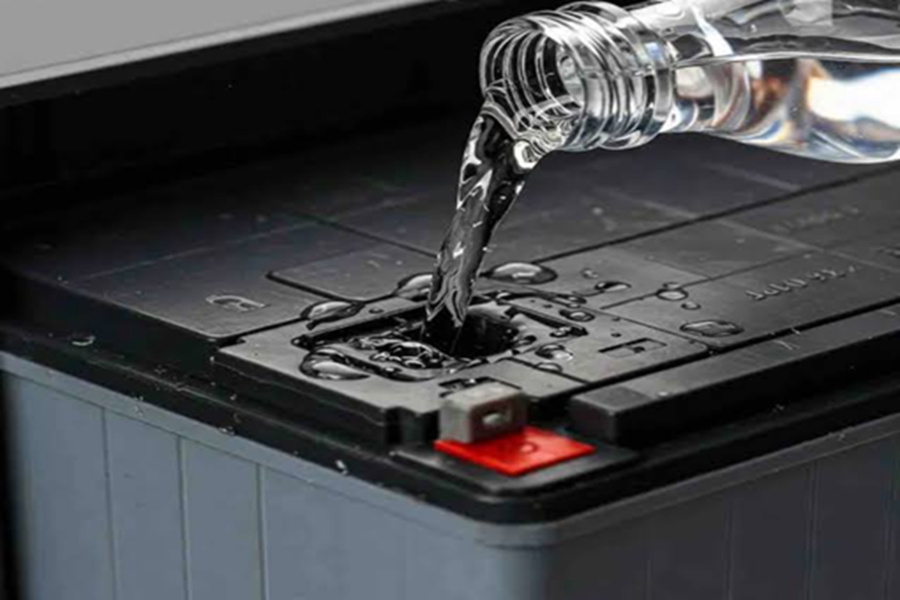
If the level is low, slowly pour in distilled water using a funnel. Do not fill it all the way to the top.
Wait a few minutes after adding water to allow the electrolyte to absorb it properly.
Check the level again and add a little more water if necessary. Then, securely close the vent caps.
If any water spills onto the battery, wipe it off immediately with a cloth to minimize the risk of corrosion.
Keep in mind that inverter batteries are expensive; a little caution can save you from significant replacement costs.
Disclaimer: This content has been sourced and edited from NDTV India. While we have made modifications for clarity and presentation, the original content belongs to its respective authors and website. We do not claim ownership of the content.
