
Poor Network: Why does the internet keep 'frustrating' you on the train? Find out why the network drops on a moving train..
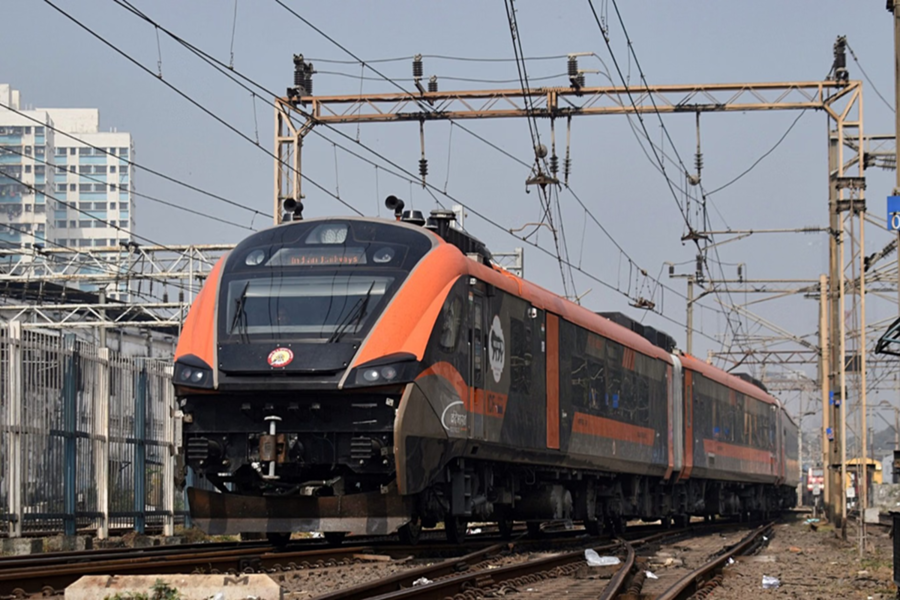
If you travel by train frequently, you have likely noticed something: as soon as the train picks up speed, your smartphone's network starts playing hide-and-seek. Important calls get disconnected, YouTube videos start buffering, and even sending a WhatsApp message becomes a struggle.
Most people assume this happens simply due to poor telecom service or a lack of towers. However, the reality is far more technical. Let’s explore why mobile network issues are so common during train journeys.
1. The metal coach blocks signals
The primary reason for poor network connectivity is the train coach itself. Coaches are constructed from heavy metals like aluminum and steel. Scientifically, when an enclosed space is surrounded by metal, it prevents electromagnetic waves from entering. Additionally, the thick, tinted glass used in AC coaches further weakens the signal. This is why the network often improves suddenly when you move closer to a door or window.
2. Delays in cellular handover
Your mobile phone constantly picks up signals from the nearest cell tower. When you are stationary, the connection remains stable. However, when a train travels at speeds of 80 to 130 km/h, your phone rapidly moves out of one tower's range and into another's. This process is known as a 'handover.' If this handover fails to keep pace with the train's speed, or if the new tower experiences even a second's delay in transmitting the signal, your call drops or the internet connection stalls.
3. Network congestion
Imagine a train carrying between 1,000 and 1,500 passengers, with almost everyone carrying a smartphone. When a train passes through a rural or desolate area served by only a single mobile tower, that tower is suddenly burdened with the load of a thousand phones. Towers in rural areas are not designed to handle such heavy, simultaneous traffic. This phenomenon is known as 'network congestion,' which is why you may not get proper internet speeds even when your phone shows full network bars.
4. Signals are also obstructed by forests and mountains
India's railway network is one of the largest in the world, traversing dense forests, deep ravines, mountains, and long tunnels. Installing and maintaining towers in these rugged terrains is not only difficult for telecom companies but also not economically viable. Consequently, 'blind spots' often emerge in these areas.
What is the solution?
Telecom companies and the Railways are collaborating to address this issue. The provision of free Wi-Fi at railway stations is one such initiative. However, ensuring uninterrupted internet access inside a moving train requires technologies like satellite internet or the installation of specialized 'signal boosters' within the coaches. Until these facilities are fully implemented, the most sensible option is to download your favorite movies and songs before starting your journey.
Disclaimer: This content has been sourced and edited from Amar Ujala. While we have made modifications for clarity and presentation, the original content belongs to its respective authors and website. We do not claim ownership of the content.
