
PNG: How Does PNG Gas Reach Directly from the Pipeline to the Kitchen? Learn About the Entire System and Its Technology..
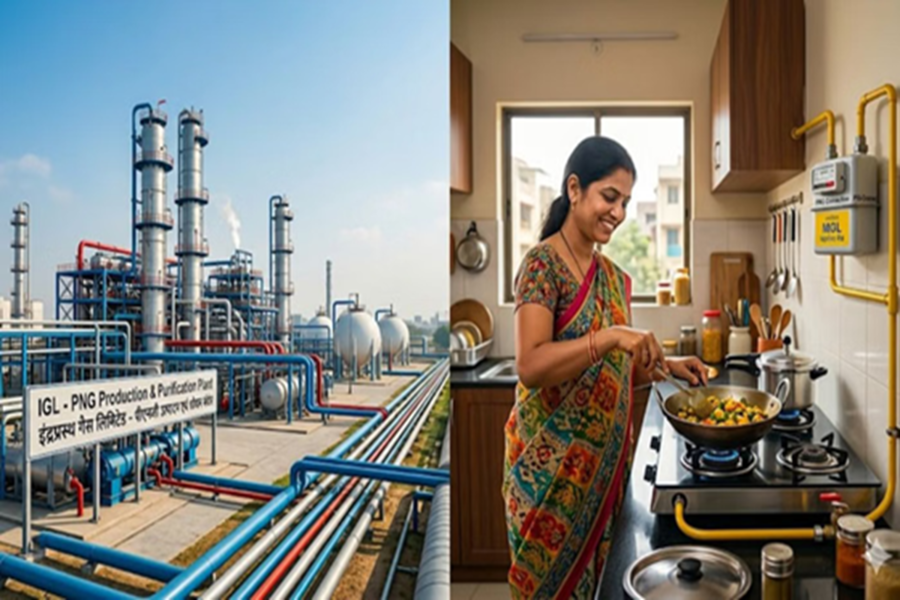
Amidst rising LPG prices, the hassle of booking cylinders, and the wait for delivery, people across the country are increasingly turning toward PNG (Piped Natural Gas). Its network is expanding from major metropolises to smaller towns, delivering gas directly via pipelines—without the need for cylinders—to millions of households. But have you ever wondered how this gas actually makes its way to your kitchen? Behind this lies a lengthy and highly sophisticated process, involving multiple stages that ensure the gas reaches your home safely. Let's explore this in detail.
What is PNG?
PNG—or Piped Natural Gas—is a natural fuel composed primarily of methane. It is considered clean, less polluting, and safer than LPG. In addition to cooking, it is used in homes for water heating and other domestic purposes.
The Journey Begins Underground
The journey of this gas begins at natural gas reservoirs located deep beneath the earth's surface. From there, the gas is extracted through drilling. In its raw form, the gas is not entirely pure; therefore, it is sent for further processing. The gas is transported to large processing plants, where impurities—such as carbon dioxide, sulfur, and other gases—are removed. Following this process, the gas becomes pure and safe for consumption.
The purified gas is transported across various states and cities via high-pressure pipelines. These pipelines are laid underground and are constantly monitored to ensure that any technical issues are detected and resolved in a timely manner.
The Role of the City Gas Distribution Network
Once the gas reaches a city, it is transferred into the City Gas Distribution (CGD) network. Here, the gas pressure is reduced, and it is then distributed through a network of smaller pipes to various localities, residential colonies, and housing societies. Each household is provided with an individual pipeline connection, which includes the installation of a gas meter. This meter records the amount of gas consumed. Subsequently, the gas flows directly into your kitchen and connects to your stove. Natural gas is, in its pure state, odorless. For safety purposes, a chemical called mercaptan is added to it; its pungent odor allows for the immediate detection of any leaks.
Service Pipes and Metering
Finally, the gas reaches the exterior wall of your home via a service pipe. Iron pipes are installed along the external walls of the house to protect them from external damage. Additionally, a meter is installed within your home to record the exact quantity of gas you have consumed. Your bill is calculated based on the amount you use. After passing through the meter, the gas travels directly to your gas stove through a thin, flexible copper tube. Located near the stove is an appliance valve; turning this valve off immediately cuts off the gas supply.
Robust Safety Measures
Safety within the PNG (Piped Natural Gas) system is addressed through a multi-layered approach. The pipelines are equipped with automatic valves and pressure control systems, and undergo continuous 24-hour monitoring. Should a leak occur anywhere in the system, the gas dissipates rapidly into the air, thereby minimizing the associated risks. The primary reasons for the widespread popularity of PNG are its convenience and cost-effectiveness. It eliminates the anxiety of running out of gas cylinders as well as the hassle of booking refills. Furthermore, it represents a more environmentally friendly energy choice.
Disclaimer: This content has been sourced and edited from Amar Ujala. While we have made modifications for clarity and presentation, the original content belongs to its respective authors and website. We do not claim ownership of the content.
