
Plug Pins: Why do phone chargers have 2 pins, but laptops have 3? 90% of people don't know the secret behind the third pin..
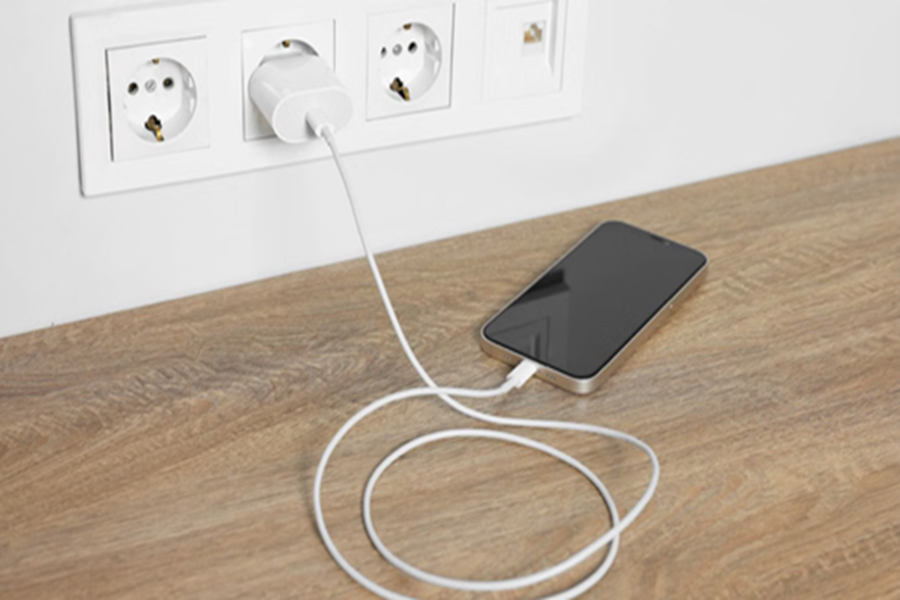
The Reason Behind the 3-Pin Laptop Charger: If you have ever closely examined both a mobile charger and a laptop charger, you must have noticed a significant difference. While mobile chargers typically feature only two pins, devices such as laptops, refrigerators, microwaves, or washing machines come equipped with a three-pin plug. The rationale behind this isn't merely a matter of design; rather, it involves a comprehensive system of electrical safety and power management.
Why Don't Mobile Chargers Have Three Pins?
First, let's understand why mobile chargers are designed with only two pins. Mobile chargers consume very little electricity; typically, they draw between 5W and 65W of power. For such a low load, only two wires—the Phase (Live) and the Neutral—are required. For this very reason, the charger is fitted with just two pins. Furthermore, mobile chargers are encased entirely within a plastic body and utilize double insulation technology. This means that even if an internal current leakage occurs, the electricity cannot reach the outer casing.
Why Are They Always So Lightweight?
You may have also noticed another detail: two-pin chargers are invariably lightweight. There is a specific reason for this as well: the primary advantage of the two-pin design is its compactness. If a third "earthing" pin were added, the charger's physical size would increase, its weight would go up, and its portability would be compromised. Since mobile chargers do not require earthing, manufacturers keep them small and lightweight.
What Is the Function of the Third Pin?
Now, let's address the question: why is a third pin necessary in other devices? This third pin is referred to as the "Earth" or "Ground." Its function is to safely channel electricity into the ground in the event of a current leakage, thereby preventing short circuits and electric shocks, and ensuring the safety of high-power devices. This pin is particularly essential for devices that consume significant amounts of electricity.
Why Do Laptop Chargers Have 3 Pins?
Now, let's get to the main point regarding why laptop chargers feature three pins. A laptop charger consumes significantly more power compared to a mobile charger. Many laptop chargers draw significant power, ranging from 65W, 120W, and 240W, to as high as 330W. With such high power loads, the risk of current leakage increases. It is for this very reason that they are equipped with an earthing pin. If proper earthing is absent, one might feel a mild current in the laptop's metal casing or even experience a tingling sensation or an electric shock. This is the primary reason why laptops feature a three-pin plug.
**Why is the third pin longer and thicker?**
In a 3-pin plug, the earth pin is both longer and thicker than the other two pins. Safety is considered the primary reason behind this design. It is made longer so that the earth connection is established *first* when plugging in the device, and disconnected *last* when unplugging it. But why is it thicker? A thicker pin offers lower electrical resistance. In the event of a fault, this allows electricity to flow rapidly into the ground, thereby ensuring the user remains safe.
**How do mobile chargers remain safe despite this?**
Mobile chargers come equipped with several built-in safety features. These include protection against over-voltage, over-current, and short circuits, as well as double insulation. It is for these reasons that a mobile charger is considered safe even without an earthing pin.
**Which devices require a 3-pin plug?**
Typically, 3-pin plugs are provided on devices such as laptops, refrigerators, washing machines, microwaves, water heaters (geysers), desktop PCs, and gaming consoles. This is because all of these devices consume a significant amount of electrical power.
Disclaimer: This content has been sourced and edited from Amar Ujala. While we have made modifications for clarity and presentation, the original content belongs to its respective authors and website. We do not claim ownership of the content.
