
OTP Emerges as the Biggest Cybercrime Tool: One in Four Frauds Linked to OTP Misuse, Telangana Tops Cyber Crime List
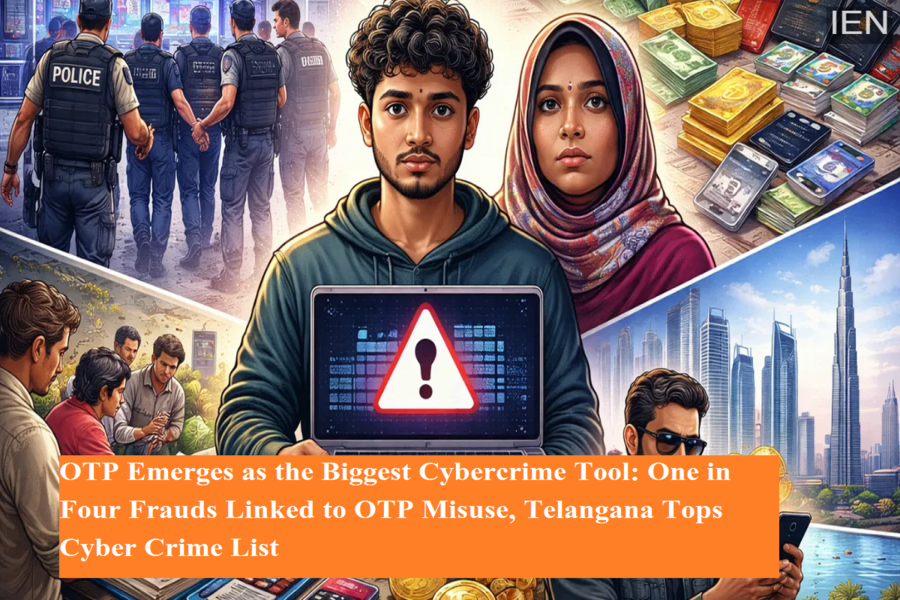
As digital payments and online banking continue to expand rapidly across India, cyber fraud is growing at an alarming pace. Among the many tools used by cybercriminals, One-Time Passwords (OTPs) have emerged as the most exploited vulnerability. Recent data shows that nearly one out of every four cyber fraud cases now involves OTP-based scams, highlighting a serious gap in digital security awareness and systems.
In response to the rising threat, the Reserve Bank of India has announced the implementation of Dynamic Two-Factor Authentication (2FA) from April 1, aiming to strengthen digital transaction security and reduce dependence on static OTP mechanisms.
Nearly Half of Cyber Crimes Are Fraud-Related
According to recent nationwide data, cyber fraud accounts for more than 46% of all reported cybercrime cases in India. This makes fraud the single largest category of cyber offenses, far exceeding crimes such as cyberstalking, online harassment, or identity theft.
What is particularly concerning is the sharp rise in OTP-based frauds over the past few years:
-
In 2021, OTP fraud accounted for 14.5% of total cybercrime cases
-
In 2022, this figure rose to 16.7%
-
By 2023, OTP-related frauds surged to 26.28%
This steady increase indicates that cybercriminals are increasingly targeting users’ trust in OTP-based security systems.
One in Every Four Cyber Frauds Now Involves OTP Theft
The data clearly shows that OTP misuse has become the fastest-growing form of digital fraud. While other categories such as online banking fraud, credit/debit card misuse, and ATM fraud have fluctuated over the years, OTP-related scams have shown a consistent upward trend.
Interestingly, fraud linked to online banking transactions dropped from 34.43% in 2021 to 22.78% in 2023, suggesting that banks have improved backend security. However, criminals have adapted by focusing on human vulnerabilities rather than technical loopholes.
Experts explain that fraudsters often use:
-
Fake phone calls posing as bank officials
-
Phishing links sent via SMS or messaging apps
-
Social engineering tactics that create panic or urgency
Once victims share their OTP—often unknowingly—criminals gain instant access to bank accounts and digital wallets.
Telangana Emerges as India’s Cybercrime Hotspot
Post-pandemic trends reveal that Telangana has emerged as the worst-affected state in terms of cybercrime incidence. The cybercrime rate per lakh population in the state has seen an explosive rise:
-
2018: 3.3 cases
-
2021: 27.3 cases
-
2022: 40.3 cases
-
2023: 47.8 cases
This sharp escalation places Telangana at the top of the national cybercrime rankings.
Other states have also reported significant increases. Karnataka’s cybercrime rate rose from 8.9 to 32.3 during the same period, while Andaman & Nicobar Islands, Kerala, and Puducherry also recorded noticeable growth. However, none matched Telangana’s pace.
New Authentication Rules From April 1
To counter the rising misuse of OTPs, the Reserve Bank of India will roll out Dynamic Two-Factor Authentication starting April 1. Unlike traditional OTP systems, the new framework will involve context-based and transaction-specific authentication layers, making it harder for fraudsters to exploit stolen credentials.
Cybersecurity experts believe this move is long overdue. They argue that OTP-only security is no longer sufficient, especially when criminals combine technology with psychological manipulation to deceive users.
Why Awareness Is Still Critical
While regulatory changes and stronger authentication systems will help, experts stress that user awareness remains the first line of defense. Customers are repeatedly advised:
-
Never share OTPs with anyone, even bank officials
-
Avoid clicking unknown links
-
Verify callers and messages independently
-
Report suspicious activity immediately
A Wake-Up Call for Digital India
The rapid rise of OTP-based fraud serves as a reminder that digital convenience must be matched with digital caution. As India continues its push toward a cashless economy, strengthening both systems and user behavior will be essential to curb the growing cybercrime threat.
