
New York: Why are schools banning AI, and what are the downsides of chatbots? Find out how this will impact 600,000 students..
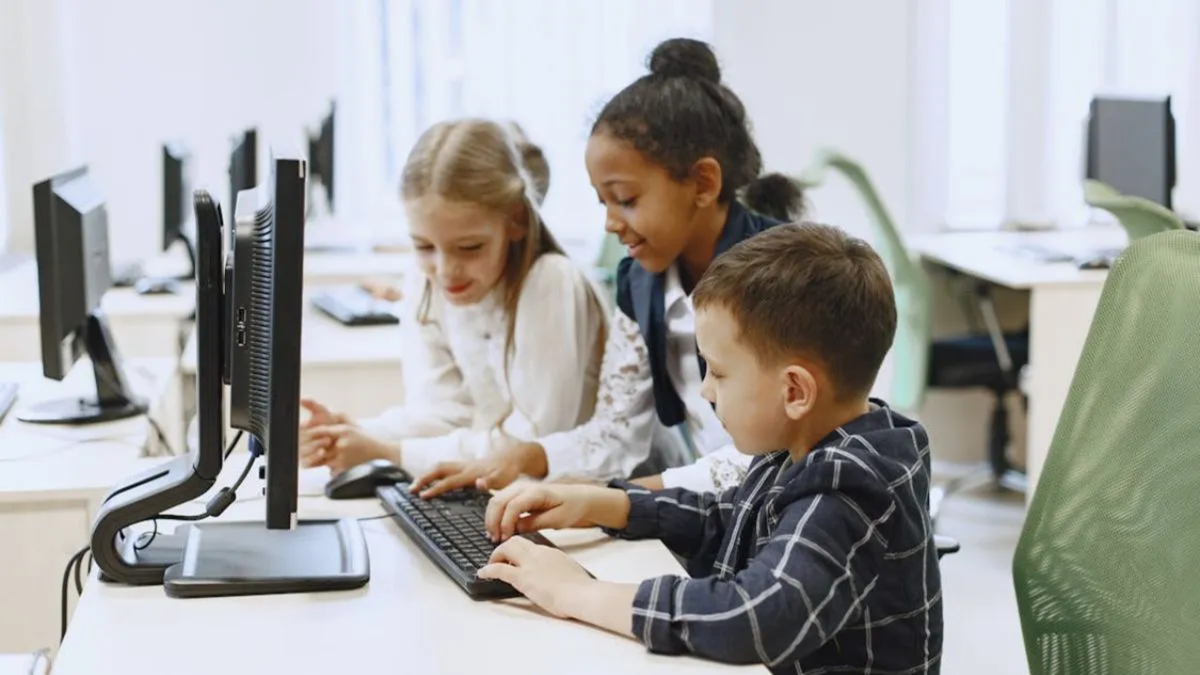
Artificial Intelligence (AI) is rapidly expanding its footprint across every sector today, particularly in education. However, New York—home to the largest school district in the US—has taken a step that has caused a stir in the tech industry. New York City Mayor Zohran Mamdani has imposed a one-year ban, effective immediately, on the use of generative AI for the approximately 600,000 students attending public schools. Amid the growing influence of tech companies and AI, this move is being viewed as a significant effort to preserve traditional and human-centric methods of education.
Why have AI tools been banned for children?
This ban applies to students ranging from pre-kindergarten to the eighth grade. The primary objective of the directive issued by Mayor Mamdani and Schools Chancellor Kamar Samuels is to safeguard children's critical thinking skills—their ability to think and reason independently—and to maintain the dialogue between teachers and students.
Under this new rule, education officials will completely disable the automated features of more than 38 classroom programs. Additionally, public chatbots such as ChatGPT and Claude will be entirely blocked across all school levels. New York had previously banned ChatGPT in 2023 but later lifted the restriction. Now, the administration has revised its policies and implemented stricter rules affecting two-thirds of the student population.
What are the downsides of children using chatbots?
Lack of critical thinking:
AI chatbots provide children with ready-made answers to complex questions in seconds; consequently, they stop reasoning, analyzing problems, and engaging in mental exercise. This impairs their ability to think and comprehend.
Lack of creativity and originality:
Instead of creating essays, poems, or projects themselves, children rely on AI. This gradually erodes their writing style, imagination, and natural ability to express themselves. Impact of Misinformation:
Chatbots often present incorrect or misleading facts in a highly authoritative and confident manner. Young, impressionable children may accept this information as absolute truth, potentially basing their foundational knowledge on flawed facts.
Decline in Interpersonal and Social Skills:
Constantly staring at screens instead of engaging in group discussions with classmates or asking questions of teachers hinders the development of children's communication and social skills.
Erosion of Teacher-Student Relationships:
Teachers provide personalized guidance by understanding a child's mental state, strengths, and weaknesses. Relying on machines for every problem completely eliminates this emotional connection and essential mentorship.
Emphasis on Limiting Screen Time:
High school students have been granted some relief from these restrictions. They will receive AI literacy classes twice a year and be permitted to use select AI platforms under strict supervision. Meanwhile, teachers are allowed to use AI tools for lesson planning and administrative tasks.
However, the use of AI for grading assignments or any form of formal student assessment remains strictly prohibited. The administration has also set screen time limits for students: a maximum of 30 minutes for grades 3 through 5, and 45 minutes for grades 6 through 8. Special exemptions to these rules will be granted to students with disabilities and English language learners.
Mayor Rebuts Tech Companies' Claims:
During a press briefing, city officials categorically rejected the tech industry's narrative that AI is essential for education. Mayor Zohran Mamdani stated emphatically that while tech companies want us to believe AI is necessary for early education, we do not share that view at all. They argued that the role of schools is to teach children to ask questions and examine things; therefore, it is the responsibility of officials to rigorously scrutinize commercial software rather than blindly approving it.
Disclaimer: This content has been sourced and edited from Amar Ujala. While we have made modifications for clarity and presentation, the original content belongs to its respective authors and website. We do not claim ownership of the content.
