
Multiple tasks with a single cable! Can GPMI replace HDMI? Find out the difference between the two..
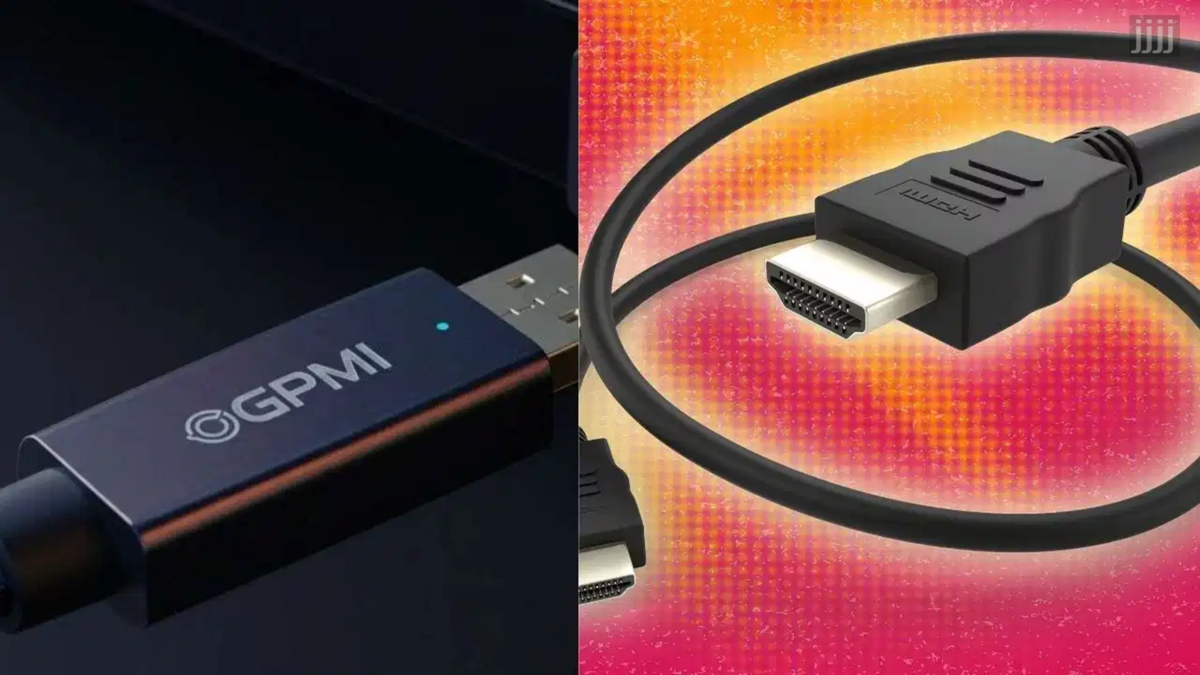
When it comes to connecting a TV, monitor, laptop, or gaming console to another device, the HDMI cable is the first thing that comes to mind. It has long been the standard for transferring audio and video. However, a new name in cable technology is now making waves: GPMI, or General Purpose Media Interface.
It has been developed collaboratively by over 50 Chinese tech companies. Its standout feature is that it is not limited to just transmitting video and audio; GPMI allows for the transfer of video, audio, data, network signals, control signals, and even power through a single cable. This could reduce the need for multiple cables for different tasks. So, could GPMI replace HDMI in the future? And will its picture quality surpass that of HDMI? Let’s break it down in simple terms.
**Two Options Available with GPMI**
GPMI has been introduced in two formats: Type-C and Type-B. Each has different capabilities. The Type-C version features a connector similar to USB-C; it supports bandwidths of up to 96Gbps and power delivery of up to 240W. Meanwhile, the Type-B version uses a different type of connector, offering bandwidth up to 192Gbps and power support of up to 480W.
Both formats support 8K video, meaning GPMI has been designed with high-resolution displays and data-intensive tasks in mind.
**What Sets GPMI Apart from HDMI?**
The most significant feature of GPMI is its all-in-one design. Typically, a complex AV setup might require separate cables for video, audio, network, and power. GPMI, however, is engineered to handle multiple types of signals through a single connection.
This can help reduce cable clutter and simplify the management of the setup. It could prove particularly useful for applications such as 8K displays, video walls, digital signage, conference rooms, and gaming. On the other hand, HDMI is widely used to transmit audio-video signals across TVs, monitors, gaming consoles, and other devices.
Which offers better picture quality?
GPMI’s key strengths are its higher bandwidth and 8K video support. Its Type-B format offers bandwidth of up to 192 Gbps, whereas HDMI 2.2 has a maximum bandwidth of 96 Gbps. However, higher bandwidth does not automatically guarantee a better-looking image on the screen in every situation. Picture quality also depends on the display, source device, and content being used.
There is another important point to consider here. While GPMI supports 8K video, HDMI 2.1 and DisplayPort 2.1 support outputs of up to 10K and 16K resolutions. Therefore, one cannot be declared superior in every respect based solely on bandwidth or resolution.
Can GPMI replace HDMI?
While GPMI’s specifications are certainly impressive, its biggest challenge lies in achieving widespread adoption across devices. HDMI is already ubiquitous in TVs, monitors, gaming consoles, and numerous other devices. Adopting GPMI would require new hardware and devices that support it. It also lacks direct backward compatibility with older HDMI or DisplayPort devices; simply buying a new cable won't allow it to work with older equipment.
Overall, GPMI offers the capability to transmit various types of signals and power through a single cable. However, to replace HDMI, it must overcome challenges related to device support and consumer adoption. For now, even considering its features, it would be premature to say that GPMI will completely replace HDMI.
Disclaimer: This content has been sourced and edited from TV9. While we have made modifications for clarity and presentation, the original content belongs to its respective authors and website. We do not claim ownership of the content.
