
Meta Launches Muse Wonder AI Models: Handle Complex Tasks—from Coding to Legal and Finance—in Minutes..
The world of Artificial Intelligence (AI) is evolving rapidly; it is no longer limited to merely answering questions. Meta has introduced two new AI models named Muse Wonder and Muse Wonder Full. The company claims that these models can execute complex tasks—such as comprehending legal documents, conducting financial analysis, and developing software—across multiple stages. In other words, instead of providing separate instructions for every minor step, users can assign a task to the AI and expect it to work on it continuously. Meta describes this as a significant stride toward "personal superintelligence."
What are Muse Wonder and Muse Wonder Full?
According to Meta, these are its most capable AI models to date. They have been designed to handle a wide range of complex tasks related to both personal and professional life, including areas such as legal work, financial analysis, and software development.
Typically, getting work done via AI requires a user to ask a question or issue an instruction, and then provide a follow-up instruction based on the response. Meta states that its new models go beyond this, capable of completing long-running, multi-step tasks. For instance, they can assist in understanding lease or property agreements, facilitating the settlement of insurance claims, or building applications.
What did Mark Zuckerberg say?
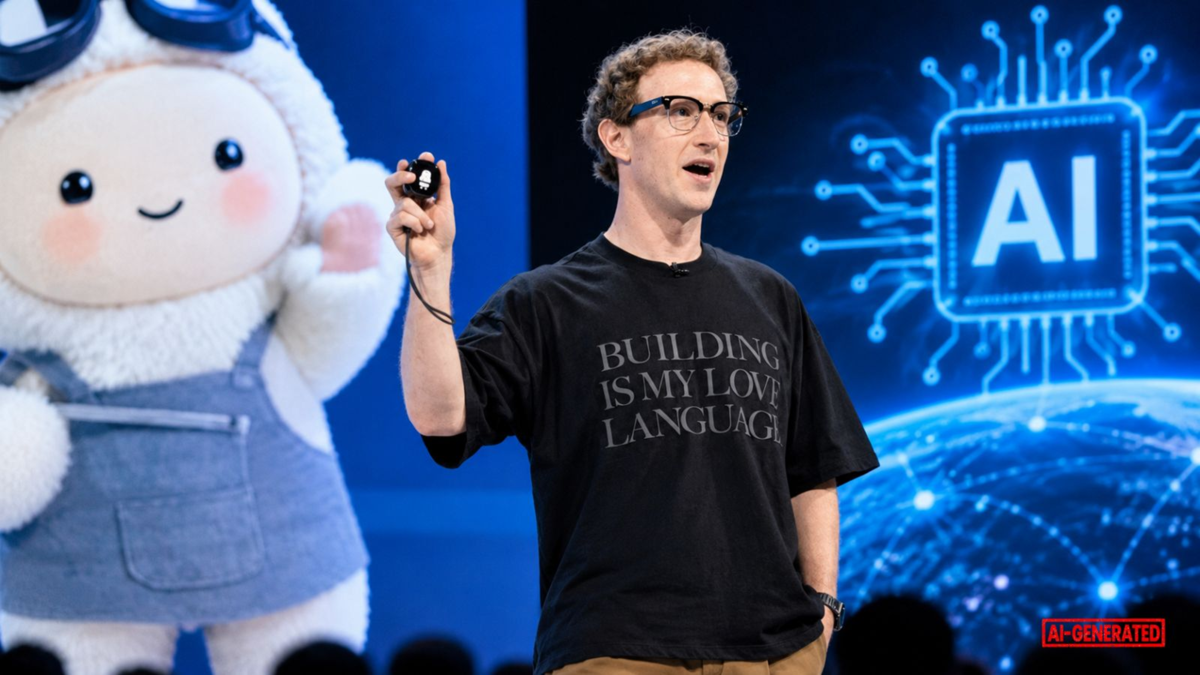
Meta CEO Mark Zuckerberg described these models as a major milestone in the company's AI endeavors. Writing on the social media platform X, he noted that Muse Wonder represents a giant leap toward bringing personal superintelligence to everyone. The company aims to make AI a more capable assistant for people in both their personal and professional tasks.
How did they perform in benchmark tests?
Meta has also shared results from three benchmarks to demonstrate the capabilities of these new models. Benchmarks are tests used to evaluate an AI's performance on specific tasks.
Harvey LAB-AA (Legal Agent Benchmark): Muse Wonder Full scored 13.1, Muse Wonder scored 10.0, and other models (such as GPT-6 Astra) scored 8.6.
DeepSWE 1.1 (Long-horizon coding): In this coding benchmark, Muse Wonder Full achieved 79.0 points, while Muse Wonder achieved 78.8 points.
Automation Bench-AA (Business Workflow): For end-to-end business-related tasks, Muse Wonder Full scored 45.4 and Muse Wonder scored 39.1. In this benchmark, too, Muse Wonder Full outperformed Muse Wonder. All these figures have been shared by Meta.
What do Active Memory and Active Focus do?
Meta's new AI models feature two key capabilities designed to assist in handling long and complex tasks.
Active Memory: This feature enables the AI to retain essential information during a conversation. This reduces the need to repeatedly restate information previously provided while a task is in progress.
Active Focus: This helps the model stay on track toward its goal. If one approach fails, the model can attempt an alternative method and proceed with the task while recovering from errors. Additionally, these models can seek clarification from the user when necessary. They also possess the ability to request permission before executing critical actions, allowing the user to determine the extent of the AI's operational authority.
Who can use these models?
Meta has staggered the availability of the two models.
Muse Wonder: Available to developers and builders via the Meta Model API and Muse Code.
Muse Wonder Full: Available to Muse Code subscribers.
Currently, their announced availability focuses primarily on developers, builders, and Muse Code subscribers. Meta's next major step will likely involve extending Muse Wonder to its consumer-facing services, thereby making its capabilities accessible to a wider audience.
What is the focus on privacy and cybersecurity?
As AI is entrusted with lengthy and complex tasks, the question of how it handles personal information and sensitive matters becomes crucial. Meta states that these models have been trained under specific safety guidelines.
According to the company, they are designed to avoid sharing personal information without authorization, reject harmful requests, and bolster cybersecurity. Meta has also announced plans to release detailed reports on additional safety evaluations. These reports and independent safety assessments will be vital for a better understanding of these claims.
What might change for everyday users?
If these models perform reliably in real-world scenarios, they could assist with tasks such as comprehending documents, analyzing financial data, managing business processes, and developing software. Capabilities like "active memory" and "active focus" could also reduce the need for repeated instructions during prolonged tasks.
Disclaimer: This content has been sourced and edited from Amar Ujala. While we modified it for clarity and presentation, the original content belongs to its respective authors and website. We do not claim ownership of the content.
