
Major Relief for Smart Meter Users: Prepaid System Replaced by Postpaid Billing—Here's How to Make Payments..
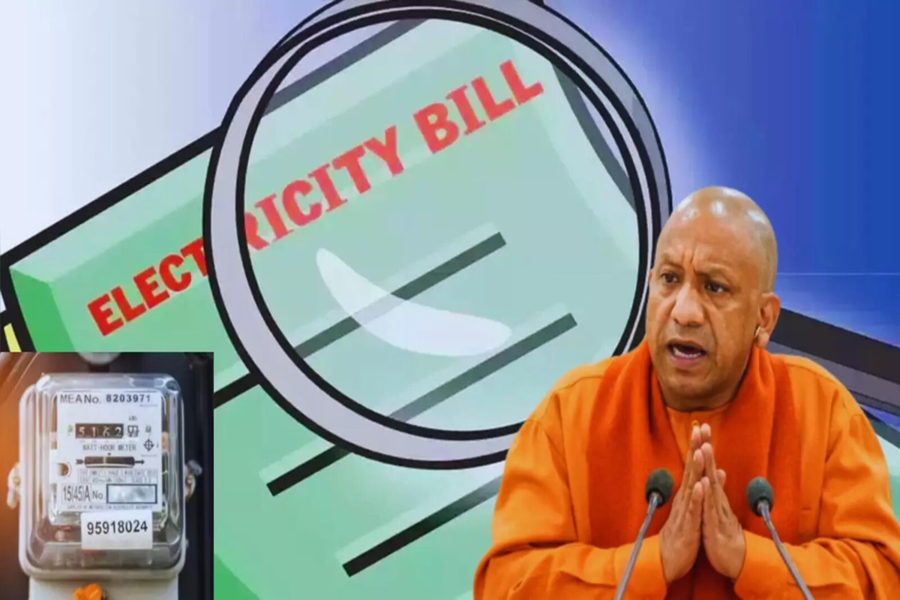
The Uttar Pradesh government has abolished the mandatory requirement for prepaid smart meters and has decided to convert all smart meters to postpaid mode. This major decision was taken following persistent complaints regarding technical glitches and billing irregularities. You no longer need to worry about recharging in advance; instead, you will receive a monthly bill, for which you will be given ample time to make the payment. Let us understand the full story behind this new change and what it means for you.
**Major Change in UP's Electricity Billing System**
The Uttar Pradesh government has issued a significant update regarding the electricity billing system. Now, all smart meters across the state will function as postpaid meters. In fact, people had been facing various difficulties concerning their electricity bills and meters.
Sudden power disconnections, delays in power restoration even after recharging, and the receipt of exorbitant bills had become commonplace occurrences. To resolve these issues, the state government has scrapped the mandatory prepaid system and has shifted all users back to the traditional and more convenient postpaid billing system.
**Why Was This Change Implemented?**
The Uttar Pradesh government had introduced 'prepaid smart meters' in the year 2020-2021 with the objective of modernizing the power sector and minimizing financial losses. The primary condition of this system was that consumers were required to recharge their meters in advance—much like a mobile phone—in order to consume electricity. However, this ambitious scheme soon became embroiled in controversy.
Several serious technical flaws emerged within this system, exacerbating the difficulties faced by the general public. The most significant problem arose when people would successfully recharge their meters, yet their power supply would not be restored on time due to technical delays. Furthermore, complaints regarding erroneous billing and sudden deductions from accounts without any apparent reason generated widespread dissatisfaction among consumers.
Following growing public resentment and the continuous influx of complaints, the government conducted a comprehensive review of the entire system. Consequently, the historic decision has now been taken to switch all smart meters to 'postpaid mode.' Under this decision, approximately 7.5 million connections across the state—which had previously been converted to a prepaid mode—will now be reverted to postpaid status at no additional cost. This will provide consumers with ample time to pay their bills, offering them significant peace of mind.
**What is a Smart Meter?**
Essentially, a smart meter is a modern, digital device designed to measure electricity consumption; it tracks your household's power usage in real-time. It represents a significant advancement over traditional analog meters, as it eliminates the need for an employee to visit your home to take readings. Instead, the meter automatically transmits all data directly to the electricity department's servers.
The primary advantage of this technology is that it generates highly accurate bills, thereby eliminating the scope for human errors—such as incorrect readings or "manual errors." Furthermore, a key feature of smart meters is that the electricity department can control them remotely from their offices, making load management and power monitoring far easier and more transparent than ever before.
**What Was the Prepaid System?**
The prepaid system functioned exactly like a prepaid SIM card for a smartphone: users were required to top up their accounts with funds in advance to pay for electricity. As soon as the meter's balance ran out, the power supply to the household would be automatically disconnected. This system was introduced to resolve the issue of pending bill arrears; however, due to flawed technology and poor implementation, it ultimately proved to be a failed project.
**How Will Electricity Bills Be Generated Now, and What is the Payment Process?**
With the return of the postpaid system, the electricity billing process has become significantly simpler and more transparent than before. Under the new framework, your billing cycle will run from the first day of the month to the last, calculating the total electricity consumed throughout that entire period. You will no longer need to make repeated trips to department offices or wait for a paper bill to receive your statement. The department will now send your billing details directly to your WhatsApp or via SMS by the 10th of the following month. Providing relief to consumers, the government has allotted a generous window of approximately 15 days for bill payments. The greatest relief is extended to those with outstanding dues from previous bills; the government has introduced a special facility allowing them to clear their old arrears in 10 easy installments.
If, due to any technical glitch, you do not receive the bill notification on your mobile phone, there is no need to panic. You can view and pay your bill by visiting the official web portal of the electricity department or by utilizing the helpline number.
Disclaimer: This content has been sourced and edited from Amar Ujala. While we have made modifications for clarity and presentation, the original content belongs to its respective authors and website. We do not claim ownership of the content.
