
LiDAR Sensor: What is a LiDAR sensor in a car? Why are these 'invisible rays' the enemy of your smartphone camera?
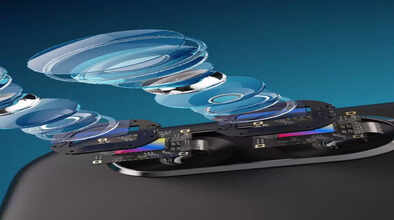
Do you remember that laser gun toy we used to play with as kids? And the warning that came with it, stating that the laser pointer could damage your eyes? Laser light can be dangerous not only for your eyes but also for your smartphone. If you own a modern car equipped with a LiDAR sensor, you need to be careful. This sensor can destroy your phone's camera lens and sensor. While these rays may be invisible to the human eye, they can be harmful to the delicate optical parts of a camera.
How does it damage the camera?
Smartphone camera sensors are very sensitive. When the laser beam emitted by the car's LiDAR sensor shines directly into your phone's camera lens, it can burn out the sensor's pixels. While this is unlikely to happen, the risk is highest when you point your camera directly at the car's LiDAR emitter or when you are using a zoom lens for videography.
What exactly is LiDAR?
LiDAR stands for 'Light Detection and Ranging'. It is a remote sensing technology similar to radar, but it uses laser light instead of radio waves. A LiDAR sensor rapidly emits laser light and measures the time it takes for the light to reflect. It is used in new cars to create a 3D map of the surrounding environment. This helps autonomous vehicles navigate in snow or detect obstacles.
Invisible to humans, but it burns the camera.
The light emitted by LiDAR is in the infrared spectrum, which our eyes cannot see. If you stand in front of the car, you won't see anything unless you have a thermal camera. But smartphone imaging sensors can detect this laser. When this laser shines directly on the sensor, it creates a 'burn-in' effect, resulting in permanent black spots or dead pixels in photos.
Viral video reveals the danger.
A video recently went viral on Reddit that proved this danger. A user tried to record a video by holding their smartphone camera near their Volvo EX90 car. As soon as they zoomed in, the car's LiDAR laser damaged the phone's camera sensor, and dead pixels appeared on the screen. It is generally advised to avoid pointing a camera directly at a LiDAR sensor. The laser light emitted by the LiDAR can damage the camera's sensor or affect its performance.
Disclaimer: This content has been sourced and edited from Amar Ujala. While we have made modifications for clarity and presentation, the original content belongs to its respective authors and website. We do not claim ownership of the content.
