
ISKCON Temple Cooler Incident: Your cooler could turn deadly in the heat; avoid making this mistake at all costs to prevent electric shock...
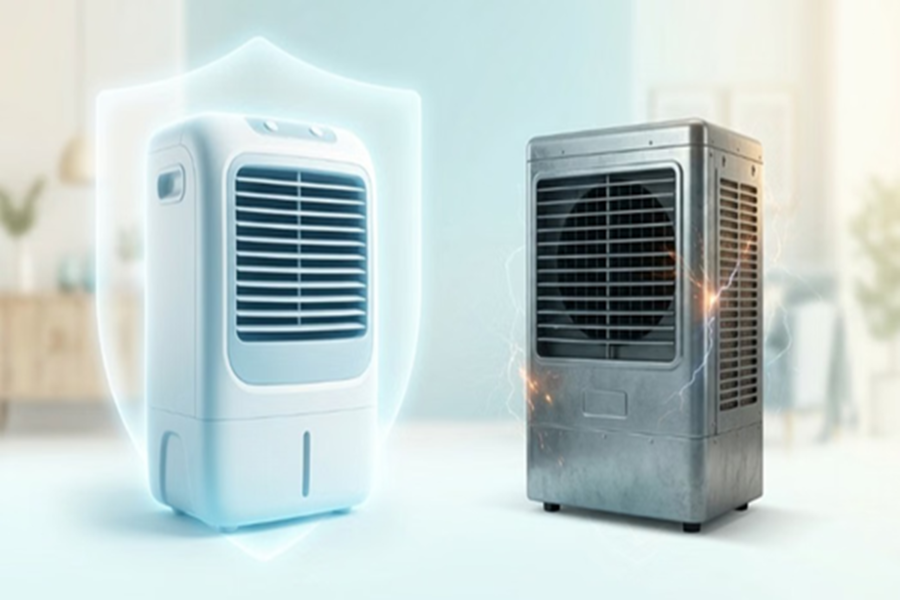
Electric Cooler Safety: Recently, a young man lost his life due to electrocution from an air cooler at the ISKCON temple in Vrindavan. This incident has raised questions regarding the safety of these appliances. Preliminary reports indicate that the accident occurred due to an electric current in a cooler and a mist fan installed outside the temple. Let us understand why home coolers can suddenly become electrically charged and how to stay safe.
Why can coolers be dangerous?
We all enjoy the cool breeze from a cooler, but the unit contains a motor, wiring, and other electrical components alongside the water.
If the wiring is faulty, the earthing is improper, or the motor develops a leak, the entire body of the cooler can become electrically charged. This risk is significantly higher in coolers with metal bodies.
Why are plastic-body coolers considered better?
You may have heard that plastic-body coolers are safer. This is because, in the event of a technical fault, the likelihood of the outer casing becoming electrically charged is lower.
In contrast, metal-body coolers carry a higher risk of electric shock.
Precautions to take while using a cooler
Always wear slippers or sandals when filling the cooler with water or checking the water level.
If your home lacks proper earthing, the risk of current leakage increases, and the presence of water can aggravate the situation.
Avoid this mistake during servicing
We often hear about AC servicing, but people rarely pay attention to cooler maintenance until the unit stops working completely. Proper and safe servicing is crucial to prevent accidents. Keep the following points in mind:
Seek help from expert technicians: Do not attempt to fix technical issues with the motor, pump, or wiring yourself. Always have repairs carried out by a certified or professional technician. Disconnecting the power supply is mandatory: If you wish to clean or service the cooler yourself at home, first unplug it from the socket—effectively cutting off the power supply completely. Afterward, allow any water accumulated inside the cooler to dry out fully before reaching inside.
Do not tamper while the unit is running: People often attempt to clean the water distribution pipe or adjust the cooling pads (honeycomb or wood wool) while the cooler is still running. Since the motor is submerged in water, such a minor error while the unit is powered on can pose a life-threatening risk.
Regular inspection of wiring: If your cooler is old, immediately replace any stiff wires or damaged joints. Use only waterproof tape and ensure that no live wire comes into contact with the cooler's body or the water.
Minor negligence can lead to a major accident.
Experts state that while coolers are essential during summer, safety is even more important.
The risk of such accidents can be significantly reduced through regular maintenance, proper earthing, the use of plastic-bodied coolers, and adherence to electrical safety guidelines.
Therefore, a small precaution can protect you and your family from danger.
Disclaimer: This content has been sourced and edited from Amar Ujala. While we have made modifications for clarity and presentation, the original content belongs to its respective authors and website. We do not claim ownership of the content.
