
Is WhatsApp Really Safe? Musk & Durov’s Claims Spark Privacy Debate—Here’s the Truth
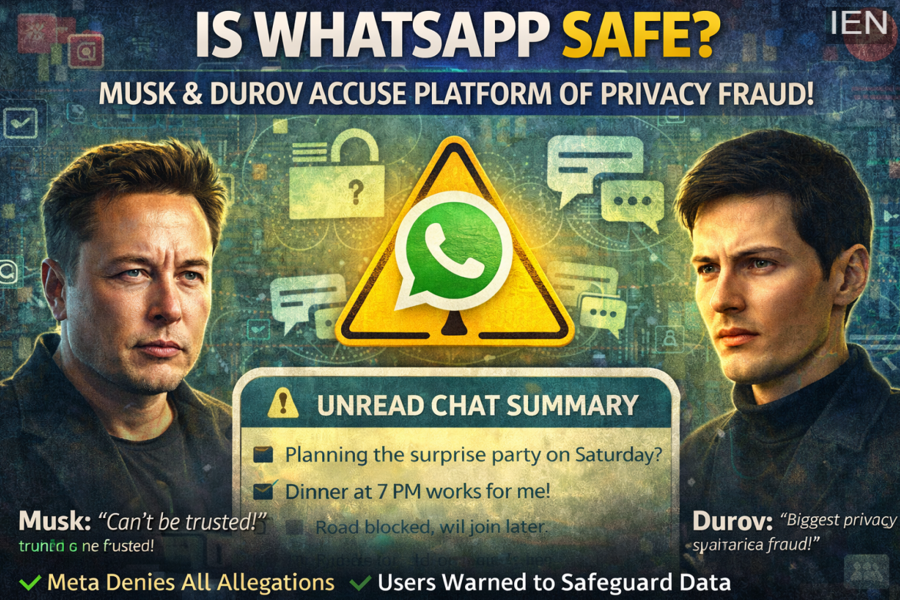
A fresh controversy around WhatsApp has triggered widespread debate on user privacy and data security. High-profile figures like Elon Musk and Pavel Durov have raised serious concerns about the platform’s encryption claims, leaving millions of users questioning how safe their private conversations really are.
So, are these claims valid—or is it just another tech rivalry playing out in public? Let’s break it down.
⚠️ What Are the Allegations Against WhatsApp?
The controversy began after reports surfaced of a lawsuit filed in California, where users accused WhatsApp of intercepting and accessing messages during transmission.
There are also claims suggesting that Meta—WhatsApp’s parent company—may be sharing message-related data with third-party firms like Accenture.
👉 If proven true, these allegations could challenge WhatsApp’s widely promoted end-to-end encryption model.
🗣️ What Elon Musk and Pavel Durov Said
Elon Musk publicly criticized WhatsApp, stating that the platform cannot be fully trusted when it comes to user privacy. He also encouraged users to switch to alternative platforms, including messaging services integrated with X (formerly Twitter).
Meanwhile, Telegram CEO Pavel Durov went a step further, calling WhatsApp’s privacy claims “one of the biggest frauds in tech history.”
👉 However, it’s worth noting that both individuals are associated with competing platforms, which adds another layer to the debate.
🛡️ Meta’s Response to the Claims
In response to the allegations, Meta Platforms strongly denied any wrongdoing.
According to the company:
- WhatsApp uses the Signal Protocol, widely regarded as one of the most secure encryption systems
- Messages are protected by end-to-end encryption, meaning only the sender and receiver can read them
- No third party—including Meta—can access message content
👉 Meta has labeled the accusations as false and misleading.
🔍 What Is End-to-End Encryption?
To understand the issue, it’s important to know how encryption works.
📌 Imagine sending a letter written in a secret code:
- Only the recipient has the key to decode it
- Even if someone intercepts the message, they cannot read it
👉 This is essentially how WhatsApp’s encryption is designed to function.
🤔 Should You Be Concerned?
At this stage, the matter is still under legal review, and no final conclusions have been reached.
👉 While concerns exist, there is no confirmed evidence that WhatsApp is breaking its encryption promises.
However, experts recommend staying cautious when sharing sensitive information online.
🔐 How to Stay Safe on WhatsApp
To enhance your digital security, follow these simple steps:
✔️ Enable Two-Step Verification in settings
✔️ Avoid sharing bank details, passwords, or highly sensitive data
✔️ Regularly check linked devices and active sessions
✔️ Keep your app updated for the latest security features
👉 These practices can significantly reduce risks, regardless of the platform you use.
🧾 Final Takeaway
The debate around WhatsApp’s privacy highlights a larger issue—trust in digital platforms. While bold claims by tech leaders have stirred concerns, official statements from Meta continue to defend the platform’s security framework.
For now, the truth lies somewhere between allegations and assurances. Until concrete evidence emerges, users should focus on maintaining good digital hygiene and staying informed.
⚠️ Disclaimer
This article is for informational purposes only. Claims mentioned are based on public statements and ongoing legal developments. Users are advised to rely on official sources and follow best security practices while using messaging platforms.
