
IRCTC: AI will now monitor railway food and oversee the kitchen staff; action will be taken even for minor errors..
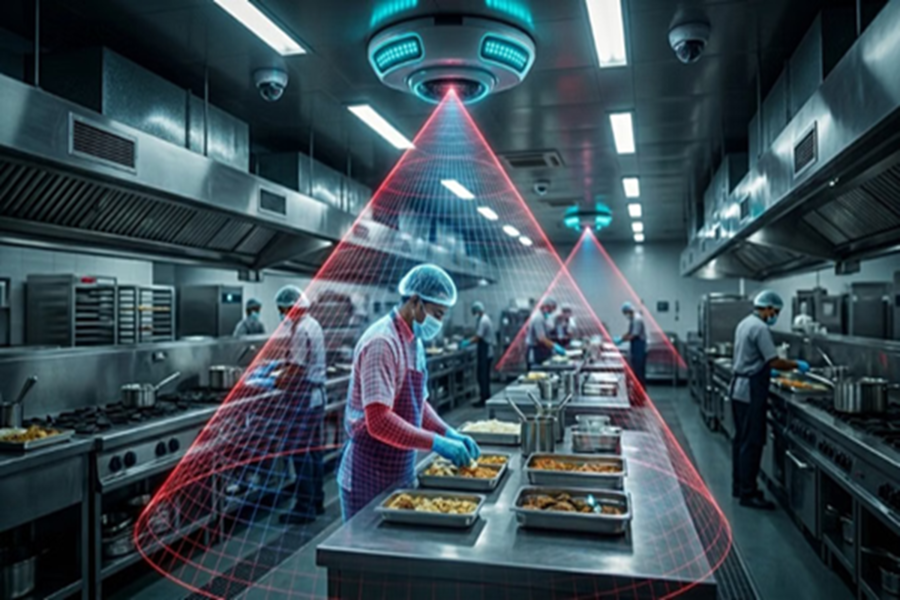
Indian Railways Food Quality: Food hygiene and quality have long been serious concerns for the millions of passengers traveling on Indian Railways; however, the Indian Railway Catering and Tourism Corporation (IRCTC) has now implemented an Artificial Intelligence (AI)-based monitoring system in its base kitchens. Through this new system, food preparation processes across the country are being monitored around the clock to ensure that passengers receive safe, high-quality meals.
AI Keeps a Close Watch on Over 800 Kitchens
IRCTC has connected more than 800 base kitchens nationwide to an AI-based surveillance network. A total of 2,394 smart cameras have been installed for this purpose, with monitoring conducted from a central war room in Delhi. The system continuously tracks all activities within the kitchens and can instantly detect any lapses regarding hygiene or related protocols. Its objective is to maintain food quality and ensure strict adherence to hygiene standards.
What Irregularities Does the AI System Detect?
The AI-based monitoring system is capable of identifying nine specific types of activities:
Kitchen staff not wearing hairnets: The system checks whether cooks are wearing hairnets to prevent hair from falling into the food during preparation.
Use of transparent gloves: It detects whether employees are wearing gloves while handling food.
Negligence in kitchen cleanliness: AI continuously monitors the cleanliness of floors, counters, and workspaces.
Lack of mopping or sanitization: Routine cleaning and mopping activities are also monitored.
Presence of rats: The system sends an immediate alert if any rodents are spotted in the kitchen.
Presence of flies: AI can detect the presence of flies near the food. Detecting Cockroaches: Immediate notifications are sent to the concerned officials if cockroaches are spotted in the kitchen.
Identifying Unhygienic Practices: The system issues alerts if hygiene protocols are violated during food preparation or handling.
Other Unhygienic Conditions Affecting Food Safety: Additionally, AI cameras detect minor irregularities that could impact food quality and safety, capable of spotting insects as small as 7–8 mm.
Even the Smallest Insects Cannot Escape Detection.
IRCTC officials state that this technology is highly sensitive. The AI system is capable of identifying insects as small as 7 to 8 millimeters. As soon as an irregularity or unhygienic practice is detected, an alert is immediately sent to the relevant kitchen manager.
If the manager fails to rectify the issue in time, the matter is escalated to senior officials. Typically, action is taken against the responsible individual within two hours.
Hundreds of Daily Alerts
According to IRCTC, this monitoring system is not merely for show; it is actively utilized. On average, 350 alerts are generated daily through this system. A total of 13,550 alerts were recorded over the past month.
The highest number of cases originated from the Northern Region, with 4,123 alerts recorded. This was followed by the Eastern Region with 3,205 alerts and the Western Region with 2,687 alerts. Officials note that the most common hygiene violation observed is staff failing to wear hairnets.
Challenges Increase with Seasonal Changes
IRCTC considers the period of seasonal transition to be the most critical time for kitchens. During this time, there is a higher likelihood of food quality being compromised and an increase in passenger complaints. Although approximately 10 percent of the alerts generated by the system are false alarms, the monitoring mechanism continues to play a vital role in driving improvements and ensuring quality control.
Disclaimer: This content has been sourced and edited from Amar Ujala. While we have made modifications for clarity and presentation, the original content belongs to its respective authors and website. We do not claim ownership of the content.
