
iPhone vs Android: Which One Will Run Smoothly for 5 Years? The Real Comparison Between iPhone and Android..
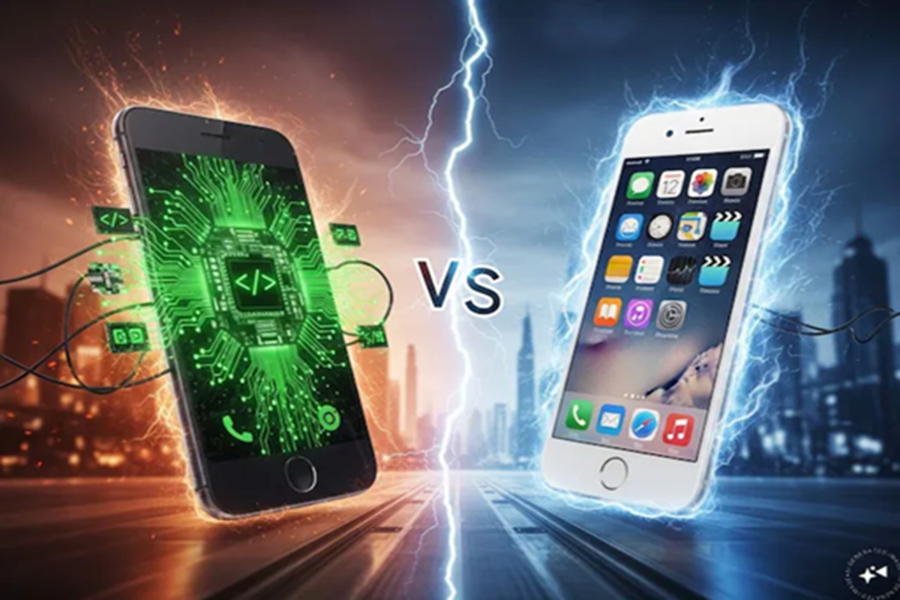
Nowadays, purchasing premium smartphones priced between ₹50,000 and ₹100,000 has become a common practice. But consider this: two or three years down the line, when you need to buy a new phone, how much will your old one fetch on the resale market? Furthermore, for how many years will the phone continue to run smoothly? This is precisely where the most significant difference between iPhones and Android devices lies. If you are aware of these factors before investing your money, you could potentially save thousands of rupees.
**iPhones Lead in Resale Value:** According to the latest reports from 2026, an iPhone retains 60–70% of its original value even after two years. This means that if you purchase an iPhone for ₹80,000, you can easily resell it for ₹48,000 to ₹56,000 two years later. In contrast, premium Android phones (such as the Samsung Galaxy S series) retain only 45–55% of their value.
Google Pixel devices fare even lower, retaining approximately 40–50% of their value.
In India, platforms like Cashify offer a buyback value of up to ₹96,000 for an iPhone 16 Pro Max, whereas a Samsung S25 Ultra fetches up to ₹87,500.
**The Reason?** The iPhone's strong brand value, high market demand, and long-term software support. Android phones tend to depreciate more rapidly because new models are released at a much faster pace.
**iPhones Also Excel in Longevity**
iPhones receive regular iOS updates and security patches for a period of 5 to 7 years. Consequently, their performance, battery health, and security remain robust over the long term. Even an iPhone that is 4 to 5 years old continues to run smoothly today.
While some premium Android phones (such as Samsung and Pixel) now promise up to 7 years of updates, most brands typically provide only 3 to 4 years of OS updates and 4 to 5 years of security updates. After this period, the device's speed begins to slow down, app compatibility issues may arise, and the battery tends to degrade more quickly. **The Result?** After just three years, the phone starts to feel outdated.
**Which One Should You Choose?**
Opt for an iPhone if: you intend to use the same phone for an extended period, you desire a strong resale value, and you prefer a simple, smooth, and seamless user experience. Choose Android if: You desire extensive customization, budget-friendly options, or a foldable phone. However, it tends to fall short in terms of resale value and longevity.
Recommendation:
If you are spending upwards of ₹50,000, do not focus solely on the camera or display. Prioritize checking the resale value and software support. If maintained in good condition, an iPhone will better preserve the value of your investment.
Purchasing a premium smartphone is an investment—not merely the acquisition of a gadget. Even in 2026, the iPhone continues to outperform Android devices in terms of both resale value and longevity. Making the right choice ensures that, even after 2–3 years, your phone will fetch a good resale price and continue to operate without issues. Before investing your money, be sure to keep these two factors in mind: Value and Longevity.
Disclaimer: This content has been sourced and edited from News18 Hindi. While we have made modifications for clarity and presentation, the original content belongs to its respective authors and website. We do not claim ownership of the content.
