
Inverter vs. Non-Inverter AC: Which is the best choice? From power consumption to longer lifespan..
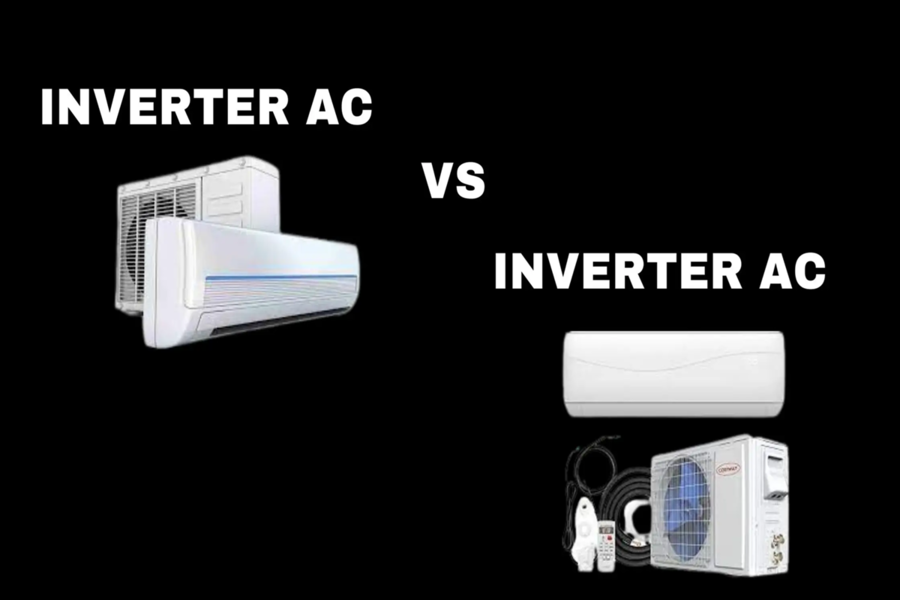
Summer is approaching, and many people are already planning to buy a new AC for their home or office. These days, two types of air conditioners are most commonly seen in the market: inverter ACs and non-inverter ACs.
Many people buy an AC based on the price or offers, but they don't understand the real difference between these two technologies. Therefore, it becomes crucial to understand how both work and which one will be better for you. Let's find out...
How does an inverter AC work?
In simple terms, an inverter AC is based on new and advanced technology. The compressor can increase or decrease its speed depending on the room temperature. When the room temperature reaches a set level, the compressor continues to run at a slower speed. This maintains a stable temperature, eliminating the need for frequent power-off.
How does a non-inverter AC work?
Non-inverter ACs, on the other hand, use older technology. The compressor operates in only two modes: either fully on or completely off. It continues to operate at full capacity until the room temperature reaches the set level.
As the room cools down, the compressor shuts off, and when the temperature rises, it turns on again. This is why it cycles back and forth.
How much difference in power consumption?
If you want to save electricity by using the AC day and night, an inverter AC is considered a better option. The compressor adjusts its speed according to the need, reducing power consumption. Whereas a non-inverter AC runs at full capacity every time, which can lead to higher power consumption.
Which is better for cooling?
Both types of ACs are excellent when it comes to cooling. It has been observed that non-inverter ACs are better for cooling large spaces quickly. Inverter ACs are the best option for smoother and more consistent cooling.
Which AC has a longer lifespan?
Both types of ACs have a good lifespan, but inverter ACs also have a PCB to control the compressor. Therefore, if a fault occurs, repair costs may be slightly higher. However, the technology behind non-inverter ACs is quite simple, so parts are easily available in any city, and repairs are also easy.
PC Social Media
