
India Asks Meta to Explain WhatsApp Username Feature Within Three Days Amid Fraud Concerns
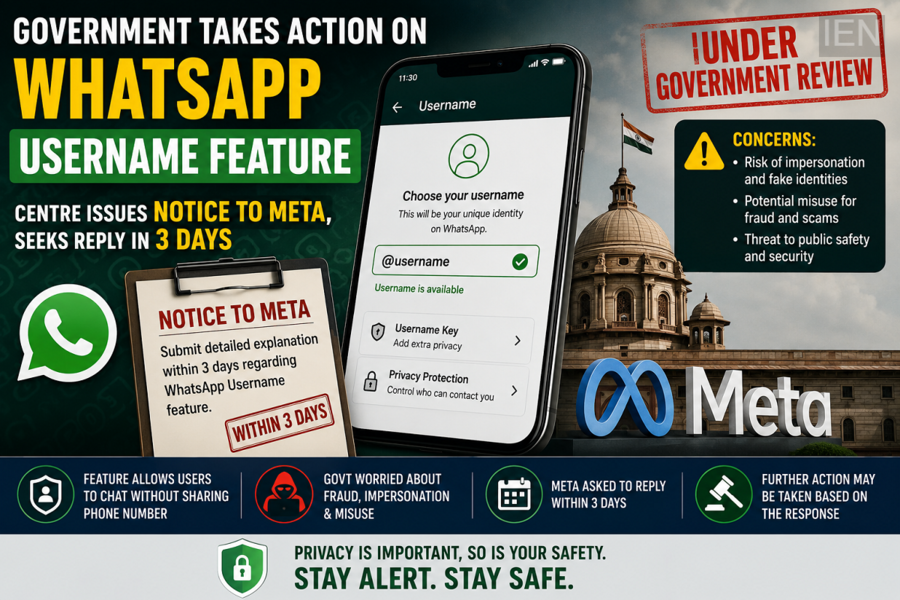
The Indian government has directed Meta to provide a detailed explanation of WhatsApp's newly introduced Username feature within three days, as authorities examine whether the update could increase the risk of online fraud, impersonation, and identity misuse. Officials have also asked the company not to proceed with a wider rollout of the feature in India until consultations are completed.
The move comes just days after WhatsApp began allowing users to reserve usernames, a feature designed to let people communicate without sharing their mobile phone numbers.
Government Reviewing Privacy and Security Risks
According to official sources, the government's review focuses on whether the username system provides sufficient safeguards against fake identities and cyber fraud.
Authorities are concerned that malicious users could create usernames closely resembling those of government agencies, businesses, public figures, or other individuals, potentially making impersonation scams more convincing. Officials say the review will assess whether the feature adequately balances user privacy with public safety and cybersecurity.
Meta Asked to Respond Within Three Days
Government sources said Meta has been instructed to submit a detailed clarification within three days explaining how the feature works and what protections are in place to prevent misuse.
Officials are also examining the legal framework available should additional regulatory action become necessary. If the company's response is found to be unsatisfactory or the feature is considered to pose significant risks, further action could be considered before the feature is fully introduced in India.
Why Authorities Are Concerned
The Username feature allows WhatsApp users to communicate using a unique username instead of revealing their phone number to new contacts.
While the feature is intended to improve privacy, officials believe it could also make it easier for scammers to imitate trusted organizations or individuals by registering similar-looking usernames.
With cyber fraud cases continuing to rise, authorities say messaging platforms must ensure new features cannot be exploited for identity theft, financial scams, or public deception.
Industry Voices Highlight Potential Risks
The feature has also attracted attention from members of the technology industry.
Some industry leaders have cautioned that usernames resembling legitimate brands, companies, or public personalities could create confusion if strong verification and anti-impersonation measures are not implemented.
Experts note that while usernames can improve privacy by hiding phone numbers, effective verification systems remain essential to prevent misuse.
Could the Rollout Be Delayed?
At this stage, the government has not announced a permanent restriction on the feature. Instead, officials have asked Meta to pause the rollout in India while discussions and technical evaluations continue.
The review is expected to examine:
-
Protection against impersonation.
-
Anti-fraud safeguards.
-
Identity verification mechanisms.
-
Compliance with Indian digital regulations.
-
Potential impact on cybersecurity and law enforcement.
The outcome of these consultations may determine whether additional safeguards are required before the feature becomes widely available in the country.
What This Means for WhatsApp Users
For now, users in regions where the feature is available can continue reserving usernames, but its future rollout in India will depend on the outcome of the government's review.
WhatsApp has said the Username feature is intended to strengthen privacy by reducing the need to share mobile numbers with new contacts. However, Indian authorities are seeking assurances that these privacy benefits do not come at the cost of increased opportunities for impersonation, scams, or identity fraud.
