
How does a phone's SOS system work without the internet? Let’s explore the technology.
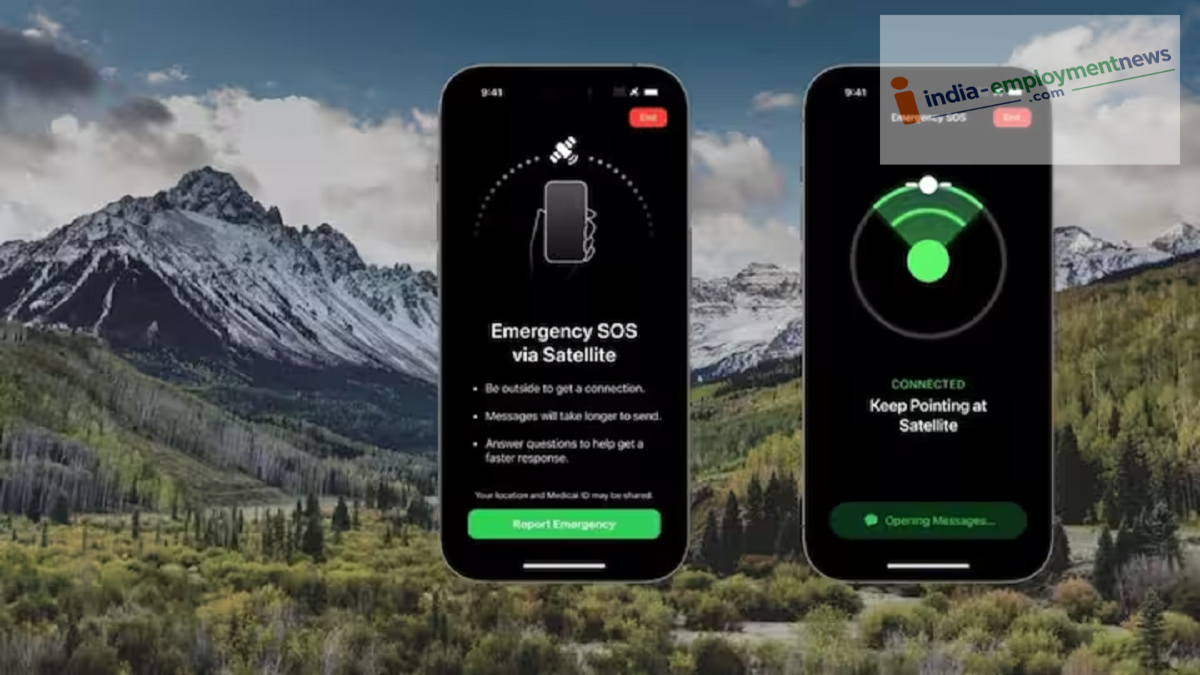
Even if your phone has no internet or network connectivity, it can still save your life in an emergency. Here is how the SOS technology functions during such critical situations.
We often get frustrated when our mobile data runs out, or the network signal disappears. But have you ever noticed that even when there is absolutely no signal, your screen displays the message "Emergency calls only"? This is your smartphone’s SOS—or "Save Our Souls"—system, which can save your life even without an internet connection or an active mobile plan.
When you find yourself in trouble, pressing the power button three or five times in quick succession activates the SOS mode. While many people assume that everything today relies on the internet, the emergency system operates quite differently. This feature does not depend on data packs or Wi-Fi; instead, it functions using radio waves and specialized communication protocols.
The primary technology behind this is "universal cellular network access." Regulations dictate that even if a tower from your specific service provider is unavailable, your phone can connect to the network of another available provider. Telecom towers worldwide prioritize emergency calls above all else; if a tower is congested with heavy traffic, the system will drop regular calls to ensure your emergency call is connected immediately.
Another crucial component is the built-in GPS chip in your phone. Contrary to the common belief that an internet connection is required to track location—as is the case with services like Google Maps—this is not true. Your phone’s GPS receiver captures signals directly from satellites orbiting in space. Without consuming a single kilobyte of data, the chip can instantly determine your precise location, including your latitude and longitude.
As soon as you trigger the SOS function, your phone converts this GPS location data into a standard text message (SMS). Sending an SMS does not require high-speed internet; it can easily be transmitted even via the control channel of a very weak cellular signal. A message containing a link to your live location, along with a request for help, is instantly sent to your pre-saved emergency contacts, as well as to the police or ambulance services.
But what happens if you are in a dense forest, a remote mountain range, or a desert where there are no cellular towers? For such situations, modern phones now feature satellite connectivity. Apple devices and many Android phones are capable of connecting directly to satellites orbiting in Low Earth Orbit (LEO)—bypassing the need for ground-based cellular towers entirely.
When you find yourself in a "dead zone," a specific animation appears on your phone screen, guiding you to point your device toward a particular direction in the sky. Once your phone aligns with a satellite in space, it compresses your location data, remaining battery level, and answers to a few basic questions regarding your emergency, then transmits this information directly to the satellite.
Since satellite bandwidth is quite limited, data is transmitted in the form of compact codes rather than voice calls. The satellite in space captures this signal and relays it to a ground station (a relay center) on Earth. From there, experts or automated systems immediately alert local rescue teams and police control rooms, providing them with your location so that help can be dispatched promptly—potentially saving lives.
Furthermore, this smart system leverages your phone’s hardware even without an internet connection. Once the SOS feature is activated, the phone automatically triggers a loud siren, flashes its light, and displays your medical ID—such as your blood group and any pre-existing medical conditions—on the screen. Therefore, be sure to go into your phone’s settings today and add your emergency contacts and medical information.
