
Government keeps a close watch on net neutrality: Can Jio and Airtel charge extra for special internet speeds?
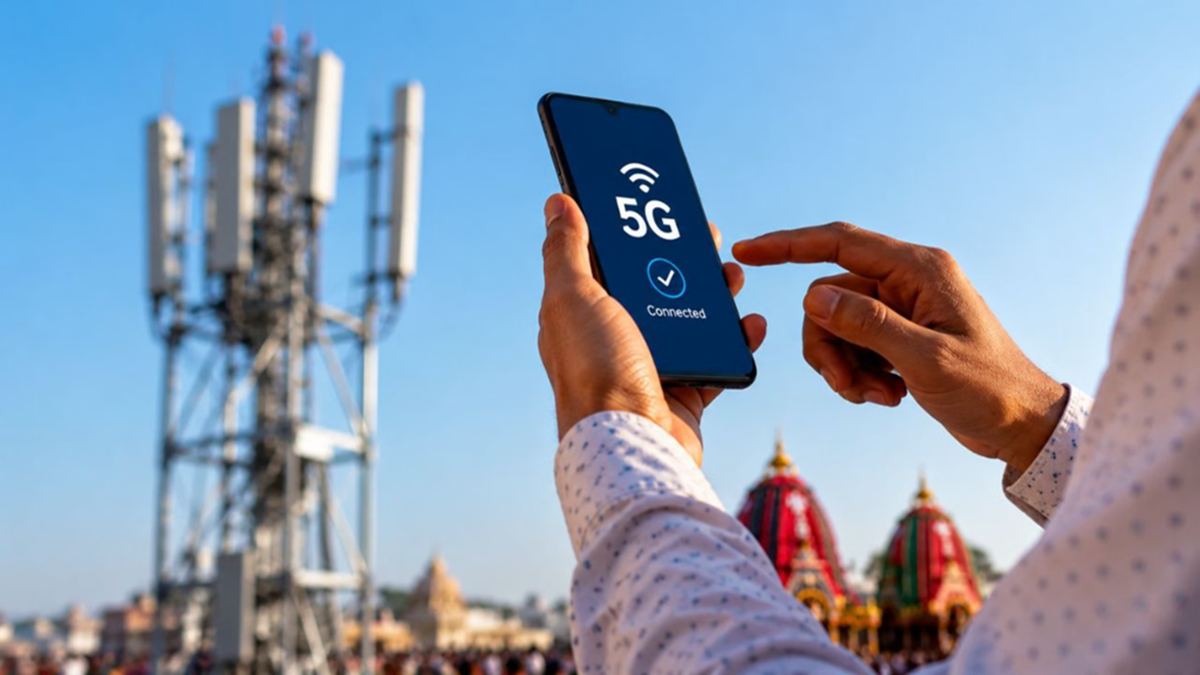
The way the internet is used in India could change in the near future. The central government is preparing to review existing regulations regarding net neutrality. It is believed that with the advent of new technologies like 5G and network slicing, the government wants to clarify whether telecom companies should be permitted to use separate networks and charge distinct fees for specific digital services. According to media reports, the government has already sought recommendations on this matter from the Telecom Regulatory Authority of India (TRAI).
What is Net Neutrality?
Net neutrality essentially means that internet service providers must treat all websites, apps, and online services equally. In other words, a company cannot deliberately slow down or speed up a specific website, nor can it prioritize a particular platform in exchange for payment.
For instance, if you have an internet connection from a service provider, you should have equal access and speed for every website and app. This is the principle that net neutrality ensures. These regulations were implemented in India in 2018 to guarantee an open and fair internet for all users.
Why is the government reviewing the rules?
Several new technologies have rapidly evolved following the rollout of 5G, with network slicing being one of the most significant. The government believes the current rules do not clearly specify whether separate networks can be provided for services such as cloud gaming, healthcare, industrial automation, autonomous vehicles, and smart factories. Consequently, the government intends to review the existing regulations to determine whether amendments are required or if a simple clarification would suffice.
How will this affect average internet users?
For now, the government has clarified that there will be no changes to the fundamental principle of an open internet. This means that prioritizing any website, app, or online content in exchange for payment will not be permitted. The government maintains that the internet will remain open to everyone just as before, and no "walled" model—where certain services receive preferential treatment—will be implemented.
What is 5G network slicing technology?
5G network slicing is a technology that allows a single 5G network to be divided into multiple virtual networks. Each network slice is tailored to specific requirements. For instance, services such as cloud gaming, robotics, healthcare, industrial applications, and autonomous vehicles can be allocated a dedicated network offering ultra-low latency and high bandwidth. Meanwhile, standard internet browsing and video streaming continue to operate on a separate network.
However, if this technology is used to provide a service with capabilities superior to those of the standard internet, it could raise questions under existing net neutrality regulations.
Jio and Airtel are already preparing
According to reports, Bharti Airtel has already launched a service based on 5G network slicing, providing select postpaid customers with enhanced speeds and lower latency. This service is currently under review by the Department of Telecommunications (DoT) and TRAI.
Meanwhile, Reliance Jio has also announced plans to utilize 5G network slicing technology to improve network capacity and coverage in congested urban areas.
What is the situation in other countries?
It is not just India; several other countries are also re-evaluating their stance on net neutrality. Discussions on this subject are ongoing in many European Union nations. In the United States, federal-level net neutrality rules have been repealed, although distinct regulations remain in effect in certain states.
Furthermore, countries such as the US, the UK, Singapore, Malaysia, and China are already employing 5G network slicing technology for various specialized services.
Disclaimer: This content has been sourced and edited from Amar Ujala. While we have made modifications for clarity and presentation, the original content belongs to its respective authors and website. We do not claim ownership of the content.
