
Government cracks down on offline-capable Bitchat: Notice issued to immediately remove the app; find out why it became a threat..
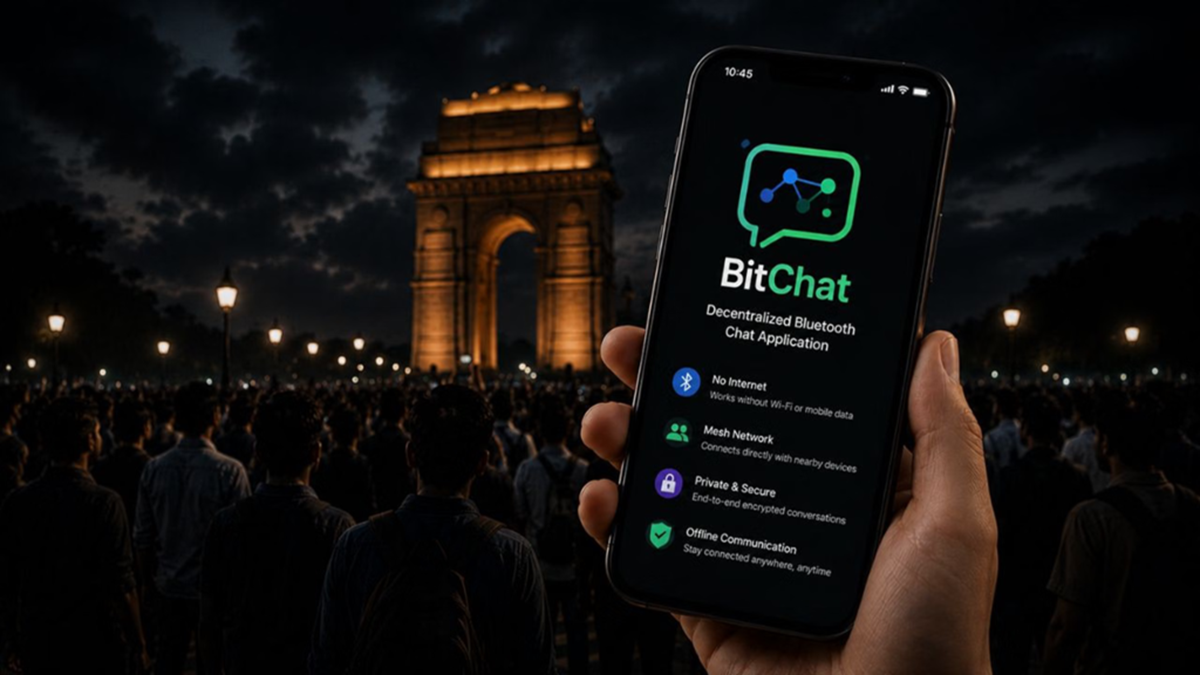
In today's digital age, it is hard to imagine messaging without the internet; however, an app that functions seamlessly without internet or mobile network connectivity can pose a significant challenge to security agencies. This is precisely the case with the 'Bitchat' app.
The 'Indian Cyber Crime Coordination Centre' (I4C)—the cybercrime wing of the Union Ministry of Home Affairs—has issued a stern notice to Microsoft subsidiary GitHub, directing the immediate removal of this Bluetooth-based messaging app from its platform.
**Jack Dorsey Expresses Displeasure on X**
Following this strict government move, Bitchat developer and former Twitter CEO Jack Dorsey shared the government notice (dated July 23) on the social media platform X on Friday. Expressing his displeasure, he wrote, "The Indian government does not like technologies like Bitchat at all and wants to shut it down at any cost." The I4C has not yet issued an official response regarding this matter.
**Why Did It Draw the Government's Ire?**
The app came under scrutiny primarily due to a recent protest organized by the 'Cockroach Janata Party' at Jantar Mantar in New Delhi. During the protest, the government had temporarily suspended internet services in the area to maintain law and order. Despite this, many protesters extensively used the Bluetooth-based Bitchat app to communicate with one another.
**How Did Bitchat Become a Major Headache for Security Agencies?**
According to the I4C notice, the app poses a significant security threat. Its technical architecture operates entirely on a decentralized peer-to-peer (P2P) Bluetooth mesh network. It requires neither a mobile network nor a server to function. Messages sent via the phone remain stored locally on the device itself, making them extremely difficult to trace.
Anonymous and Secret Messaging: Creating an account on this app requires no phone number verification or user registration, ensuring the user's identity remains completely concealed.
Beyond the Reach of Law Enforcement: Its design makes it nearly impossible for the police or security agencies to intercept (trace) messages or identify the criminals involved.
Lack of Data Availability: Since the app lacks a centralized service provider, investigative agencies cannot access subscriber data or communication records when needed.
Threat to National Security
The notice explicitly warns that anti-national elements, terrorist organizations, and organized criminals could easily exploit the app's ability to function even during internet shutdowns.
Intelligence inputs indicate that such platforms can be used to incite violent protests, spread rumors and misinformation, promote radicalization, and execute criminal conspiracies. This poses a direct threat to India's sovereignty, integrity, defense, and public order.
Legal Scrutiny
In its notice to GitHub, the I4C clarified that the content hosted by the Bitchat app is unlawful. It clearly violates Sections 43, 84B, and 84C, as well as Section 61 (read with Sections 196 and 197), of the Information Technology (IT) Act. All eyes are now on the steps GitHub takes in response to this notice and whether Bitchat will remain available in India.
Disclaimer: This content has been sourced and edited from Amar Ujala. While we have made modifications for clarity and presentation, the original content belongs to its respective authors and website. We do not claim ownership of the content.
