
Google SynthID Detector: Identify AI-generated photos and videos in minutes—what is this tool and how do you use it?
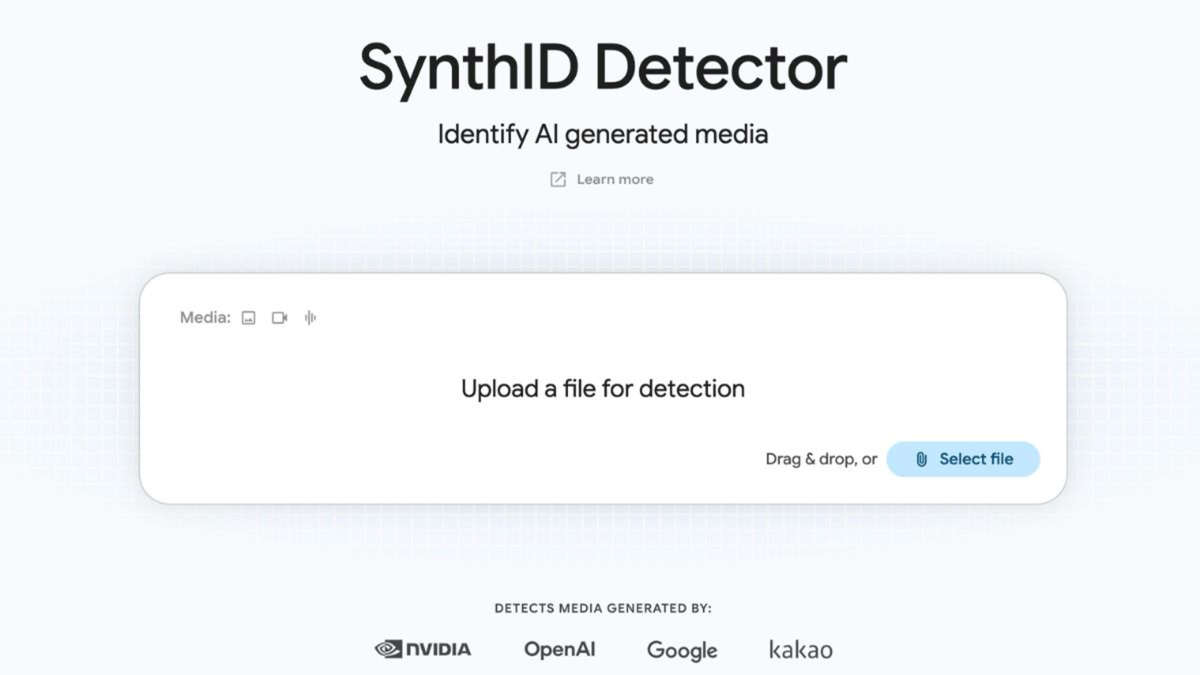
In the era of AI, distinguishing between real and fake content is becoming increasingly difficult. To address this issue, Google has made its SynthID Detector website publicly available to all users. It is a web-based verification portal that allows anyone to check whether a digital photo, audio clip, or video file was generated by AI or has undergone modifications. Initially, this tool was released for testing purposes to journalists and media professionals. Its scope has now been expanded, and it can analyze images, audio clips, and video files.
What is the Google SynthID Detector?
SynthID Detector is a web-based verification tool from Google designed to identify AI-related watermarks in digital content. It enables users to verify the presence of a SynthID watermark in photos, videos, or audio files.
Google states that the detector is not limited to content created by its own AI systems; it also supports watermarked output from industry partners such as OpenAI, NVIDIA, and Kakao. Integration for Apple is also coming soon. However, it is important to understand the tool's limitations: it does not guarantee the identification of all AI-generated content. Its detection capabilities rely primarily on the specific digital watermarks it is designed to recognize.
How does SynthID work?
Google developed SynthID to embed digital watermarks into AI-generated content. This watermark is incorporated into text, images, audio, and video at the very moment the content is created.
A key feature is that the watermark is generally imperceptible to humans—neither visible nor audible—yet the detection system can still identify it. This embeds an invisible signature within the digital content, offering a clue about its AI-generated origins.
Google has designed this technology so that adding the watermark does not compromise content quality, while ensuring it remains detectable even after standard editing.
**Watermark remains detectable even after photo and video editing**
Digital files are frequently cropped, subjected to color filters, or compressed; video frame rates may also be altered. Google has engineered SynthID to remain detectable despite such common modifications—including "lossy" digital compression, which results in some data loss. However, this does not guarantee detection after every type of edit; the outcome depends on the specific file and the watermark embedded within it.
**How to check photos, videos, and audio using the SynthID Detector?**
**Upload the file:** First, upload the photo, video, or audio clip you wish to analyze into the provided tool.
**Query the content:** Ask the system to determine whether the file contains signs of an AI-generated watermark.
**View the result:** The system scans the file to indicate whether a recognizable SynthID signature has been found. While this process can signal that content is AI-generated, the absence of a watermark is not definitive proof that the content is entirely authentic or was not created with AI assistance.
**Feature available in Gemini, Google Search, and Chrome**
Notably, beyond the standalone SynthID Detector website, Google has also integrated content verification capabilities into its consumer products. These include Gemini, Google Search, and Chrome. Users can check for suspicious content using these tools. To do this, they can submit a photo, video, or audio file via the relevant interface and ask whether the content was generated by AI or has been altered.
The system then scans the file for the detectable SynthID watermark and provides a result. This can reduce the need for users to visit separate websites each time. However, the availability and functionality of these features may depend on the specific Google product and its support capabilities.
Can this tool identify every AI-generated photo or video?
The SynthID detector is designed to identify AI-related watermarks, not to detect every instance of synthetic content on the internet.
Disclaimer: This content has been sourced and edited from Amar Ujala. While we modified it for clarity and presentation, the original content belongs to its respective authors and website. We do not claim ownership of the content.
