
Ghost Guns: Ghost guns made using 3D-printing technology can be identified, scientists have discovered a way to trace them..
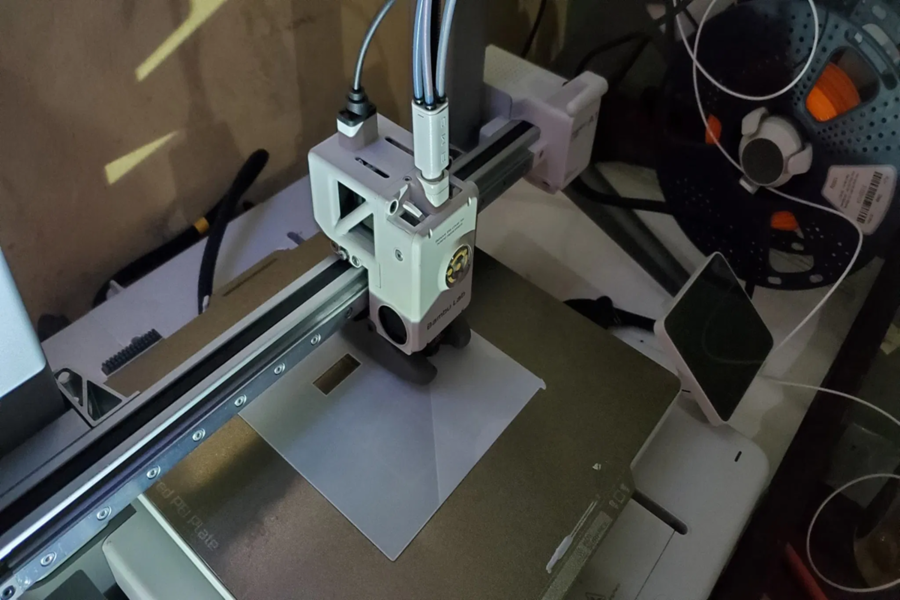
While 3D printing technology has opened up new possibilities in the fields of industry, health, and education, it also presents a dangerous side in the form of 3D-printed guns. Blueprints for these weapons are readily available online. With a simple 3D printer and a little technical knowledge, anyone can create an unlicensed firearm at home. This is why they are often referred to as "ghost guns" or "untraceable weapons."
What is 3D printing technology?
3D printing, also known as additive manufacturing, is a technology in which a machine builds an object layer by layer based on a 3D design (CAD file) created on a computer. It involves adding plastic, metal, or other materials piece by piece to create a solid 3D object. The unique feature of this technology is that it allows for the easy creation of complex designs. Prototypes can be created quickly, and material waste is minimized.
The Growing Threat of 'Ghost Guns'
Last year, a major operation in Australia resulted in the seizure of hundreds of 3D-printed weapons and their components. Worryingly, 3D-printed parts can be combined with common hardware parts available in the market to create 'hybrid' weapons. These weapons can be comparable in strength and lethality to factory-made weapons. Consequently, the biggest challenge facing law enforcement agencies is how to trace the source of these weapons.
Are these weapons truly 'untraceable'?
A potential solution to this challenge has now emerged. A new study published in the journal Forensic Chemistry claims that 3D-printed guns are not as untraceable as previously believed. The research found that the filament used in 3D printers, the plastic material from which these weapons are printed, has its own unique chemical identity. This identity could hold the key to tracing these weapons.
What are 3D-printing filaments?
3D-printing filaments are typically made from different types of polymers or plastics. The most common are PLA (polylactic acid), ABS, and PETG. PLA is a bioplastic, ABS is known for its strength, and PETG is flexible and durable. However, many companies add additional chemicals or additives to these base plastics to make the product stronger, more flexible, or more attractive. Interestingly, full details of these additives are often not provided on the packaging.
What did the research reveal?
Researchers analyzed more than 60 filament samples using infrared spectroscopy. This technique measures how a material absorbs infrared light. Each filament has a unique 'infrared profile,' which can be called its chemical fingerprint. The study was conducted in collaboration with ChemCentre, an Australian forensic lab. The investigation revealed that many seemingly identical filaments were chemically different. Even two filaments made from the same polymer showed clear differences due to different additives. One sample even contained an additive not mentioned on the packaging.
These findings clearly imply that if the filament used with a 3D-printed gun is recovered, a scientific identification between the two can be established. Weapons recovered in different cases can be linked, increasing the likelihood of tracing the supply chain. This means that ghost guns, once considered completely untraceable, can now be identified.
Movement Forward
However, researchers also acknowledge that it is currently impossible to completely distinguish each filament. Therefore, further work is underway to determine the detailed chemical and elemental composition of the filament using more advanced techniques. The goal is to use the chemical fingerprint of any recovered 3D-printed weapon to identify its material and printer. It is clear that while technology has created a new threat, it is also using that technology to find a solution. If this scientific approach is
Disclaimer: This content has been sourced and edited from Amar Ujala. While we have made modifications for clarity and presentation, the original content belongs to its respective authors and website. We do not claim ownership of the content.
