
Flying a drone for a wedding or a reel? Don't make this mistake—you could end up straight in jail..
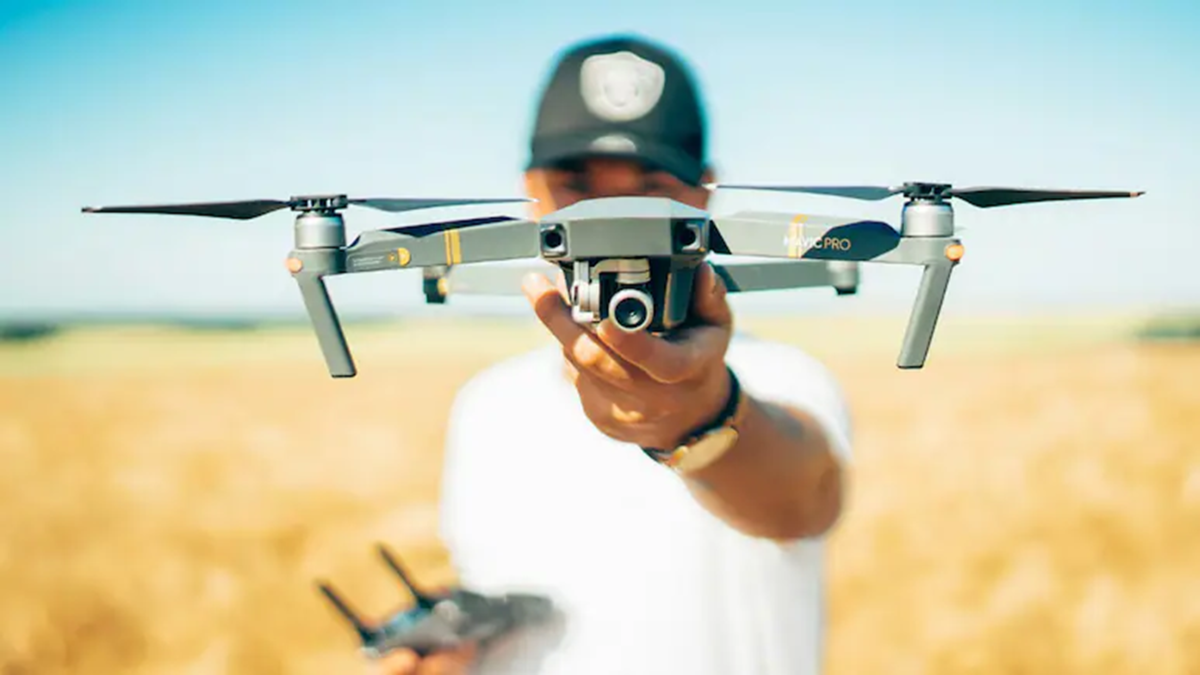
These days, everyone is flying drones. Whether it’s weddings, Instagram Reels, agricultural fields, or real estate advertisements, you’ll spot drones everywhere. However, most drone operators are unaware of the regulations. Did you know that failing to comply with drone-flying rules could even land you in jail?
Imagine a wedding taking place in Punjab. The wedding procession is dancing. A young man from the family, armed with a ₹50,000 drone and a dream of going viral on Instagram, launches it into the air to capture the perfect aerial shot. Everyone applauds. But as the drone flies, it drifts a bit too close to a nearby airbase. That is the precise moment when everything changes.
The drone industry is growing rapidly.
Drones are no longer a novelty; they have become commonplace. Reports indicate that by February 2026, India had approximately 40,000 registered drones and an equal number of DGCA-certified remote pilots. When you factor in the 244 approved drone training schools, it is evident that this industry has expanded at a rapid pace.
Weddings are just the beginning. Farmers use drones to spray pesticides. Real estate agents fly them to create property videos. Small business owners use them for promotional Reels. Land surveyors rely on drones for their work. Meanwhile, influencers fly them to capture that perfect overhead shot capable of grabbing the algorithm's attention. Drones have quietly become an integral part of everyday Indian life. The problem is that public awareness regarding the regulations has not kept pace. This lack of awareness leads to trouble.
You must know about these three zones.
India's airspace is not a free-for-all zone; it is divided into color-coded areas. Every drone pilot—whether hobbyist or professional—is expected to understand the distinctions between them. Green Zone: This is the area where most people fly drones—open fields, rural areas, and most residential neighborhoods. If your drone is registered, you can fly it up to an altitude of 400 feet without needing prior permission.
Yellow Zone: This is controlled airspace. It encompasses areas around airports, city centers, and other sensitive locations. You must obtain permission via the 'Digital Sky' platform before flying here. Approval for low-risk flights is usually granted quickly.
Red Zone: This is the zone that spells real trouble. Red zones include international borders, military installations, the Parliament House, and other high-security areas. No drone can fly here without explicit government approval—and such approval is granted only in very rare cases.
Always Check the Map
It is important to note that these zones are not static; they change during events like elections, cricket matches, VVIP visits, and national festivals. An area that was in the 'Green Zone' last month might be in the 'Yellow Zone' this month. The only way to be certain is to check the zone status on the 'Digital Sky' map immediately before every flight.
Alerts Triggered Upon Entering Unauthorized Areas
When an unauthorized drone enters restricted airspace, the primary challenge isn't necessarily shooting it down; rather, it is identifying exactly what it is. Amardeep Singh, Founder and CEO of the counter-drone technology company Armory, says, "An unauthorized drone entering restricted airspace does not, in itself, constitute an immediate security threat. However, it is an event that requires rapid and accurate assessment. Detection is merely the first step. Authorities need to know the drone's location, its point of origin, its flight path, and—if possible—who is operating it."
Modern drones do not make this task easy. They can alter their altitude and change course mid-flight; in some instances, they even switch communication methods if they detect signal interference. Consequently, officials rely on a variety of tools. They use radio frequency sensing to pick up drone signals and 'Drone ID' systems to trace a drone back to its operator. However, Drone ID is not yet mandatory or fully implemented everywhere, meaning a clear digital trail cannot always be guaranteed.
Yet, the most difficult question is not simply where the drone is, but rather why it is there. Amardeep Singh told "The hardest question concerns intent. A recreational drone that accidentally drifts into a restricted area is vastly different from one deliberately heading toward a sensitive location. AI and machine learning can help operators rapidly analyze signals and flight behavior, but technology alone cannot determine a drone's true intent in every situation."
This is why India's counter-drone systems have been designed with multiple layers, encompassing detection, tracking, identification, and assessment. Only after these steps is a decision made regarding the next course of action. In crowded areas, shooting a drone down directly from the sky can be more dangerous than letting it be. He further explains that the final decision rests not with machines, but with trained human operators.
Instead of relying on imported systems, India is now focusing on developing its own counter-UAS technology, with special emphasis on threat classification and behavior analysis. While this presents a significant challenge, India is striving to address it in a manner tailored to its specific airspace and security requirements.
Risk of Imprisonment
The consequences of violating rules for a drone operator are straightforward and severe. Penalties may be imposed depending on where the violation occurred and the gravity of the offense. Additionally, the drone could be confiscated, the operator blacklisted from future registrations, or—in serious cases—imprisonment could follow.
The good news is that complying with the regulations is not difficult. If your drone weighs more than 250 grams, you must register it. For any drone exceeding this weight, obtaining a Unique Identification Number (UIN) via the 'Digital Sky' platform is mandatory. It is essential to check the zone map before every flight—not just the first time—as zones can change during elections, festivals, or VIP movements.
Points to Remember When Flying a Drone
If you are flying a drone heavier than the 'nano' category (under 250 grams) or using one for commercial purposes, you must obtain a Remote Pilot Certificate. Never assume that a "green" zone will remain green indefinitely; temporary restrictions can be imposed overnight.
Many people are curious about the actual cost of a decent camera drone. For hobbyist flyers, entry-level options like the DJI Mini 2 SE start at around ₹46,500. It is lightweight enough to be exempt from many stringent registration regulations, making it easy for first-time flyers to operate.
Wedding videographers and small business owners often step up to models like the DJI Mini 4 Pro, priced at approximately ₹99,999. It shoots sharp 4K video, features omnidirectional obstacle sensors, and delivers footage that looks far more premium than its price tag suggests.
Those seeking a fully professional setup might opt for drones offering dual cameras, extended flight times, and superior stability in high winds. For them, the DJI Air 3 is an option, priced around ₹1,35,500. It has become highly popular among travel creators and wedding videographers who require reliable gear for their daily shoots. However, do note that these prices do not include the costs of registration, training, or insurance; if you plan to use the drone for commercial purposes rather than just family functions, these additional expenses will apply.
Disclaimer: This content has been sourced and edited from NDTV India. While we have made modifications for clarity and presentation, the original content belongs to its respective authors and website. We do not claim ownership of the content.
