
FIFA World Cup Scams: Get an Alert as Soon as You Search for Tickets on Facebook—Here's How Meta Will Protect You from Scammers..
The 2026 FIFA World Cup—one of the world's largest sporting events—will be hosted this time across the United States (USA), Canada, and Mexico. While the tournament typically sparks immense fervor among football fans, major events like this also attract scammers who attempt to capitalize on the excitement through ticket fraud. To prevent this from happening this time around, Meta has devised a foolproof security plan designed to protect fans and players from cyber fraudsters. Meta has woven a robust network of AI-based tools and cross-industry partnerships to ensure user safety before, during, and even after the tournament. Read on to discover how this Meta security plan will work.
**Pop-up Alerts to Activate the Moment You Search for Tickets on Facebook**
Scammers frequently defraud people on social media under the guise of selling fake tickets. Recently, similar incidents came to light at the Ekana Stadium in Lucknow, where numerous fans were swindled out of thousands of rupees and issued counterfeit tickets; the truth was only revealed later when the barcodes were scanned. To curb such incidents, Meta is rolling out a special pop-up notification feature on Facebook.
**How This Alert Will Work**
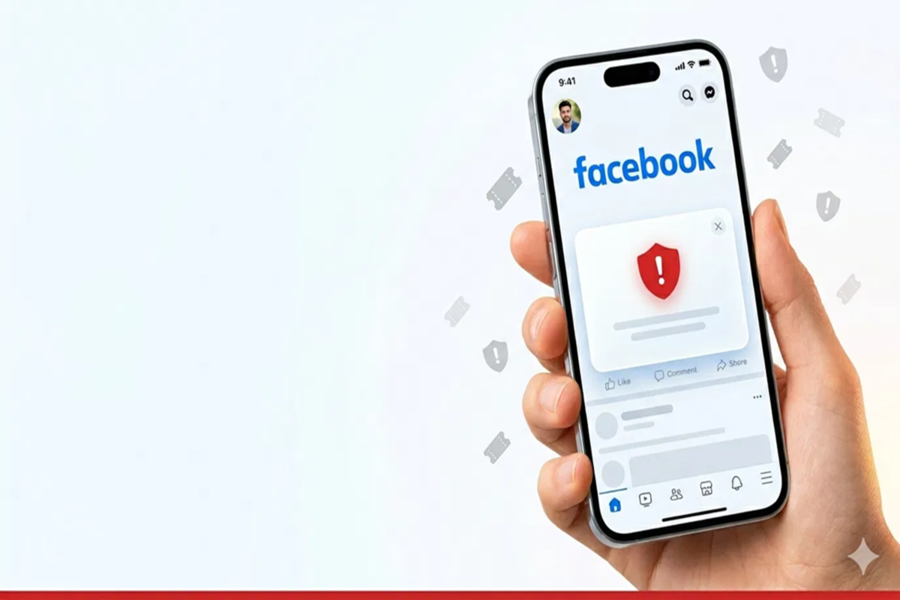
As soon as a user enters any term (keyword) related to "FIFA World Cup 2026 tickets" into the Facebook search bar or visits a group associated with tickets, this alert will immediately appear on their screen. Additionally, users will receive helpful guidance.
This pop-up alert will inform users of the key precautions they should take before purchasing tickets. It will provide instructions on how to verify ticket authenticity and will also direct users to Meta’s reporting tools, enabling them to immediately report any suspicious content or fake accounts. Furthermore, it will offer guidance on secure payment methods.
**What Will Be Meta's Primary Focus?**
Meta has clarified that scammers rarely operate in just one isolated space; instead, they typically operate across multiple different platforms. Therefore, to combat these threats, Meta’s dedicated enforcement teams will maintain round-the-clock surveillance. It is worth noting that these teams are currently focusing primarily on three types of scams:
Fake accounts running ticketing scams.
Fraudulent offers related to immigration and visa processing.
Fake lodging or accommodation listings targeting match-goers.
**Work Is Already Underway**
Meanwhile, Visa and Meta have recently collaborated to uncover a major online scam network that was targeting individuals by misusing the FIFA World Cup 2026 branding. This network utilized fake websites to display fraudulent betting and gambling offers, luring users with promises of huge rewards and easy wins.
These sites requested banking details, card information, and other personal data from users—information that was subsequently used for fraudulent purposes. Meta states that this scam network was tracked down and dismantled with the assistance of inter-industry fraud monitoring initiatives such as the Global Signal Exchange (GSE) and the Fraud Intelligence Reciprocal Exchange (FIRE).
**AI and Advanced Tools to Eliminate Scammers**
Meta has recently deployed AI-based detection systems to identify scammers, introduced user-facing tools to help users recognize scams, and established partnerships with global law enforcement agencies. Central to the company's enforcement strategy is cross-industry signal sharing, a mechanism through which multiple companies exchange fraud-related signals.
Meta has given assurances that as the FIFA World Cup 2026 draws closer and the matches begin, these security measures will be further enhanced and tightened to ensure that the excitement of the tournament remains safe and free from any cyber threats.
**What Precautions Should Users Take?**
Meta's measures alone cannot guarantee complete security; users must also exercise caution on their part. To this end, users have been provided with the following advice:
Purchase tickets only from official websites.
Do not place immediate trust in links found on social media.
Steer clear of suspicious offers. Always check the URL before making a payment.
Use the reporting tools available on Facebook.
The company states that while AI will certainly help, digital caution remains the most essential form of protection.
Disclaimer: This content has been sourced and edited from Amar Ujala. While we have made modifications for clarity and presentation, the original content belongs to its respective authors and website. We do not claim ownership of the content.
