
Fake 8th Pay Commission Messages Trap Government Employees, Cybercriminals Use APK Files to Steal Data
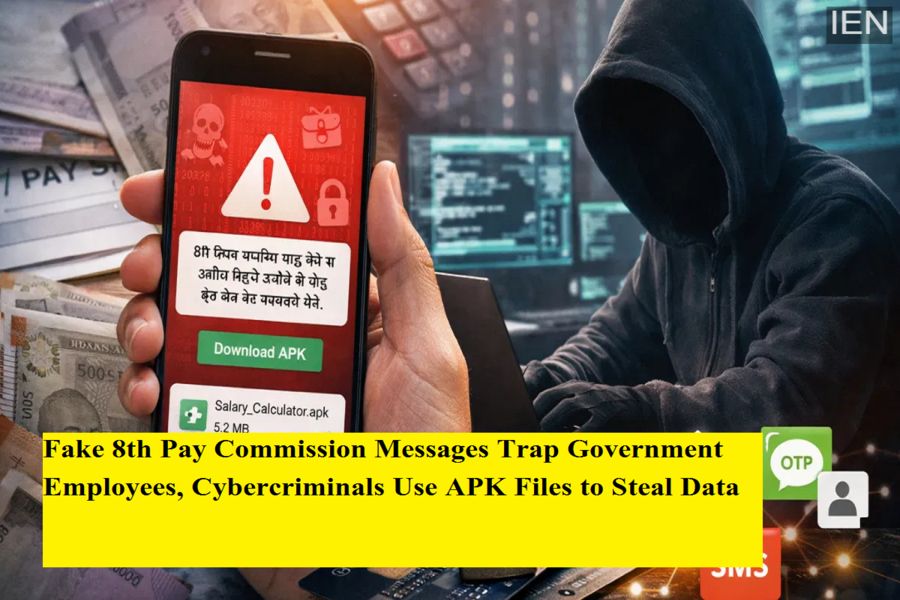
Government employees across India are being targeted by a new and dangerous cyber fraud that exploits the buzz around the 8th Pay Commission. Fraudsters are circulating misleading messages on WhatsApp, claiming to reveal how much an employee’s salary will increase once the commission is implemented. However, these messages are part of a sophisticated scam designed to gain full control over victims’ smartphones and drain their bank accounts.
Cybersecurity experts have warned employees to stay alert, as installing the malicious file shared in these messages can lead to severe financial and personal data loss.
How the 8th Pay Commission Scam Operates
The scam usually begins with a WhatsApp message that appears official and convincing. The message claims that employees can instantly calculate their revised salary under the 8th Pay Commission by downloading a special mobile application.
The steps followed by fraudsters typically include:
-
Sending a WhatsApp message mentioning “8th Pay Commission salary hike”
-
Sharing a download link for an APK file
-
Claiming the app will show revised pay structure and allowances
-
Encouraging immediate installation for “early access”
Unlike legitimate apps, this file is not available on the Google Play Store. It is downloaded directly through a link, bypassing standard security checks.
What Happens After the APK Is Installed
Once the victim installs the APK file, the app requests multiple permissions that seem harmless at first glance. These include access to contacts, SMS, call logs, storage, and even accessibility settings.
According to cyber experts, this is a Remote Access Trojan (RAT) or malware-based attack. After permissions are granted, fraudsters can remotely control the phone without the user’s knowledge.
Using this access, scammers can:
-
Read bank OTP messages
-
Perform unauthorized UPI and net banking transactions
-
Send messages to contacts to spread the scam further
-
Hack social media and email accounts
-
Extract sensitive personal and financial information
In many cases, victims realize something is wrong only after money has already been withdrawn from their accounts.
Why Government Employees Are Being Targeted
Cybercriminals are deliberately targeting government employees due to several factors:
-
High curiosity about the 8th Pay Commission
-
Expectation of salary hikes and revised allowances
-
Trust in messages that appear official
-
Availability of leaked or publicly accessible employee data
Fraudsters exploit this trust and urgency to push victims into downloading the malware without verification.
How to Protect Yourself From This Scam
Cybersecurity authorities advise following these safety measures strictly:
-
Never download APK files from unknown links
-
Install apps only from the official Google Play Store
-
Keep “Install from Unknown Sources” disabled
-
Avoid granting unnecessary permissions to apps
-
Rely only on official government portals for pay commission updates
-
Use updated antivirus and security software on your phone
No government body shares salary calculators or pay hike details through WhatsApp or unofficial mobile apps.
What to Do If You Have Installed the Fake App
If you have accidentally installed such an APK file, take immediate action:
-
Disconnect your phone from the internet
-
Uninstall the suspicious app immediately
-
Change all bank, UPI, and email passwords
-
Temporarily block UPI and net banking services
-
Change passwords of social media accounts
-
File a complaint with the nearest cyber crime cell
You should also report the incident on the official National Cyber Crime Portal to initiate further investigation.
Stay Alert, Stay Safe
Government employees are advised to remain cautious and avoid trusting unverified digital messages, especially those promising financial benefits. Any official update related to pay commissions is announced only through authorized government channels and websites.
With cyber frauds becoming increasingly sophisticated, awareness and caution remain the strongest tools to stay protected.
