
Facebook Rolls Out New Tools to Help Creators Report Impersonators More Easily
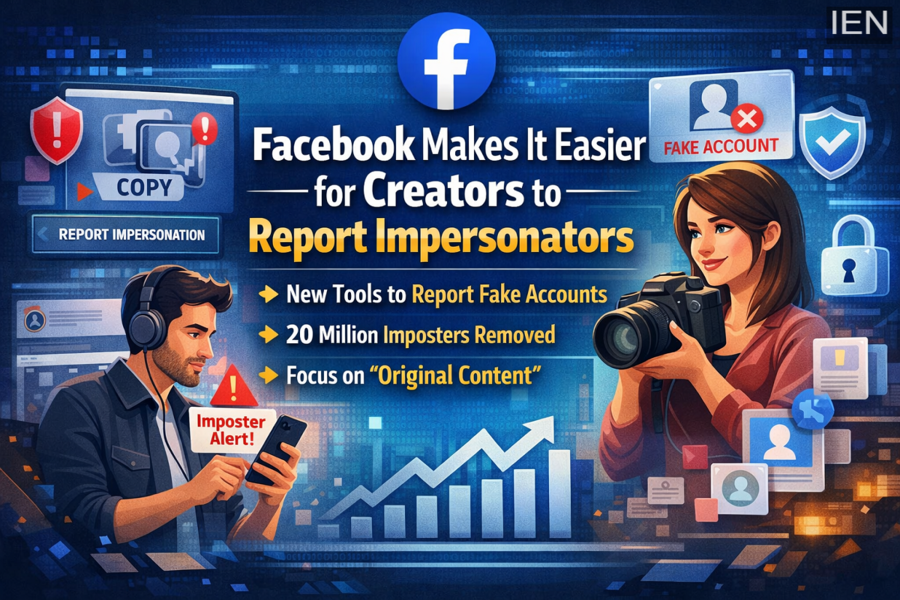
Meta is stepping up its efforts to protect original creators on Facebook, introducing new tools that simplify reporting impersonation and strengthening its guidelines around original content. The move comes after growing criticism over the rise of low-quality, AI-generated posts flooding the platform.
New Features Aim to Combat Impersonation
Facebook has acknowledged concerns from creators who say impersonation and content theft are hurting their reach and earnings. To address this, Meta is now testing enhanced tools that allow creators to quickly identify and report duplicate or stolen content.
With the updated system:
-
Creators can track where their content is being reposted
-
A centralized dashboard will allow them to report impersonators more efficiently
-
Reporting multiple violations will become easier through a single interface
These changes are designed to save time and give creators more control over how their work is used across Facebook.
Progress in Tackling Fake Accounts
Meta revealed that its earlier efforts have already delivered measurable results. In 2025 alone:
-
Around 20 million fake or impersonating accounts were removed
-
Reports of impersonation targeting major creators dropped by 33%
The company also noted that engagement with original content has significantly improved. Views and watch time for authentic creator posts nearly doubled in the second half of 2025 compared to the previous year.
Focus on Original Content Gets Stronger
Alongside the new reporting tools, Meta is refining its definition of what counts as “original content.” According to the updated guidelines:
-
Content must be created or produced directly by the creator
-
Remixing content is allowed only if it adds new value, such as commentary, analysis, or fresh insights
-
Simply reposting or making minor edits (like adding captions or borders) will be treated as unoriginal
Such low-effort content will now be deprioritized in Facebook’s feed, reducing its visibility.
Limitations Still Remain
While the new tools mark progress, they are not without limitations. Currently, Facebook’s system mainly detects duplicate content but does not fully address cases where someone uses a creator’s identity or likeness without permission.
This remains a major concern in the age of AI, where deepfakes and identity misuse are becoming increasingly common.
Industry-Wide Challenge
Facebook is not alone in facing these issues. Other platforms are also taking action. For instance, YouTube recently expanded its AI detection tools to better identify deepfake content involving public figures and journalists.
The broader challenge for tech companies is balancing innovation in AI with user safety and content authenticity.
Why This Matters for Creators
For content creators, these updates could be a game-changer. By reducing impersonation and promoting original work, Facebook aims to:
-
Improve monetization opportunities
-
Enhance visibility for genuine creators
-
Restore trust in the platform
As competition among social media platforms intensifies, ensuring a fair and safe environment for creators will remain critical.
Final Takeaway
Facebook’s latest updates signal a clear shift toward prioritizing originality and protecting creators’ rights. While there’s still room for improvement—especially in detecting identity misuse—the new tools are a step in the right direction.
For creators tired of seeing their work copied or misused, these changes could finally offer much-needed relief.
