
Electricity Bill Scam: Receiving messages about a power disconnection? Beware—you could be the next victim of a scam..
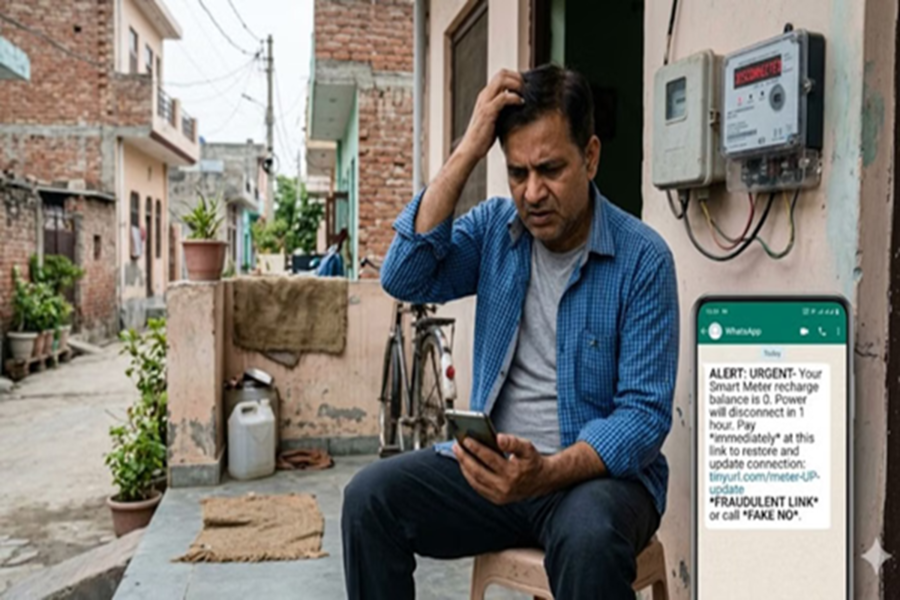
While technology has undoubtedly simplified our work, it is also giving rise to new problems on a daily basis. Just as cases of booking scams—stemming from gas shortages—had yet to subside across the country, a new type of scam has now emerged, this time involving prepaid electricity meters. Gangs of fraudsters are targeting consumers under the pretext of updating their electricity bills. These scammers are ensnaring consumers in their trap through phone calls.
**Posing as Electricity Department Employees**
Recently, a similar case came to light in Bulandshahr, Uttar Pradesh. Cyber fraudsters are calling electricity consumers and falsely identifying themselves as employees of the Energy Corporation. They claim that the previous month's bill has not been updated in the system and, consequently, the electricity connection will be disconnected immediately. Offering a solution to this issue, the fraudsters instruct the consumer to update their bill. Furthermore, they mention that they will send a link to a mobile application via SMS. Upon opening this link, an app automatically installs itself, which is then used to execute the fraud.
However, vigilant individuals are not falling for this ruse. It is important to note that no employee of any Energy Corporation ever sends links or messages to consumers for the purpose of updating electricity bills. If you receive such a call or message, it is likely a scam.
**Electricity Consumers Should Keep These Points in Mind:**
* Please note that prepaid electricity meters should be recharged *only* through official apps or websites. If you receive a call or message threatening to disconnect your electricity supply, it is likely a fraudulent attempt.
* Employees of the Energy Corporation will *never* ask you for personal information—such as your phone number, bank account details, or email address—over the phone.
* To pay electricity bills or recharge prepaid meters, use *only* official apps, websites, or authorized public service centers.
* Avoid clicking on any suspicious links received via mobile SMS or WhatsApp, as doing so poses a risk of your phone being hacked.
* If you receive a call or message from cyber fraudsters, immediately report the incident to the Cyber Cell by calling 1930.
Disclaimer: This content has been sourced and edited from Amar Ujala. While we have made modifications for clarity and presentation, the original content belongs to its respective authors and website. We do not claim ownership of the content.
