
Don't have internet or a UPI app? RBI's new 'Tap and Pay' feature will change the way you make payments..
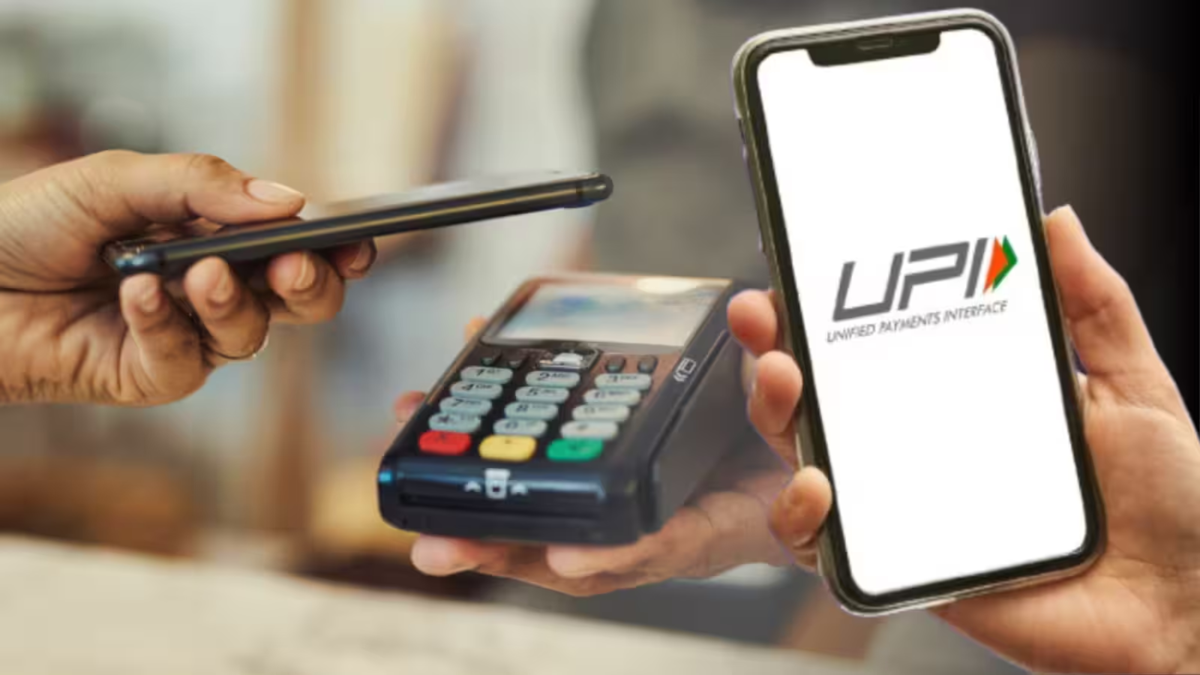
UPI Tap and Pay: Making UPI payments without an active internet connection is now easier. The Reserve Bank of India (RBI) has launched the 'UPI Tap and Pay' feature. This allows users to make payments at NFC-enabled Point-of-Sale (POS) machines. To do this, they simply need to unlock their NFC-enabled smartphone and tap it against the terminal.
RBI Governor Sanjay Malhotra announced this feature on September 10. It is one of two new features introduced to simplify digital payments and provide better support and security to customers.
However, there is an important point to understand here. 'UPI Tap and Pay' does not mean that UPI will work without an internet connection everywhere. The user's phone does not require mobile internet for the transaction, as the payment can be processed using the POS machine's internet connection.
How does UPI 'Tap and Pay' work?
This new feature is designed to make UPI payments function similarly to contactless card payments.
Users with NFC-enabled smartphones can unlock their devices and tap them against a compatible POS terminal. The payment is then processed using the terminal's internet connection.
This facility supports various types of UPI-linked accounts, including RuPay credit cards linked to UPI.
For small payments, users can make transactions of up to ₹5,000 without entering a UPI PIN. For transactions exceeding ₹5,000, the UPI PIN must be entered at the POS terminal.
This could make using UPI at physical stores much easier, especially for users who may not have mobile data available at the time of payment.
What is MyUPI?
Alongside 'Tap and Pay', the RBI has launched 'MyUPI', an AI-powered customer support platform developed by the National Payments Corporation of India (NPCI). MyUPI is based on NPCI’s FiMI small language model and aims to consolidate information regarding users' UPI transactions and AutoPay mandates across various banks and UPI apps into a single location.
The platform also includes several features that give users greater control over their payments.
One such feature is the 'Safety Switch,' which allows users to request that UPI debit transactions be declined if they suspect their account has been compromised. Another feature, 'UPI Number Delink,' enables users to stop receiving UPI payments via their mobile number.
MyUPI will also provide users with additional information about the beneficiary before a payment is completed. For eligible transactions, the platform will support automated chargeback processing.
Another feature, known as 'Transaction Replay,' will allow users to repeat a transaction previously made through any UPI app.
Why are these changes necessary?
According to the NPCI, UPI has become a vital component of India's digital payment ecosystem, accounting for 89 percent of total digital transactions.
These new features indicate a shift in focus beyond merely facilitating digital payments. The objective is also to simplify payments at physical terminals, enhance customer support, and empower users with greater control over their accounts.
The NPCI stated that MyUPI is designed to function not just as a customer support service, but as a layer of trust and control. It will offer round-the-clock assistance and self-service options in multiple languages.
These new launches also advance the NPCI's efforts to simplify UPI authentication. Biometric authentication for UPI was introduced at GFF 2025, and according to the NPCI, the total number of biometric-authenticated UPI transactions had surpassed 6.29 billion by August 31, 2026. 'Tap and Pay' and MyUPI together signal a new era for UPI—one that focuses not just on processing payments, but on making them more convenient, secure, and easy to manage.
Disclaimer: This content has been sourced and edited from Money Control. While we have made modifications for clarity and presentation, the original content belongs to its respective authors and website. We do not claim ownership of the content.
