
Do you use an electric blanket in winter? This small mistake of yours could prove costly—learn the right way to use it..
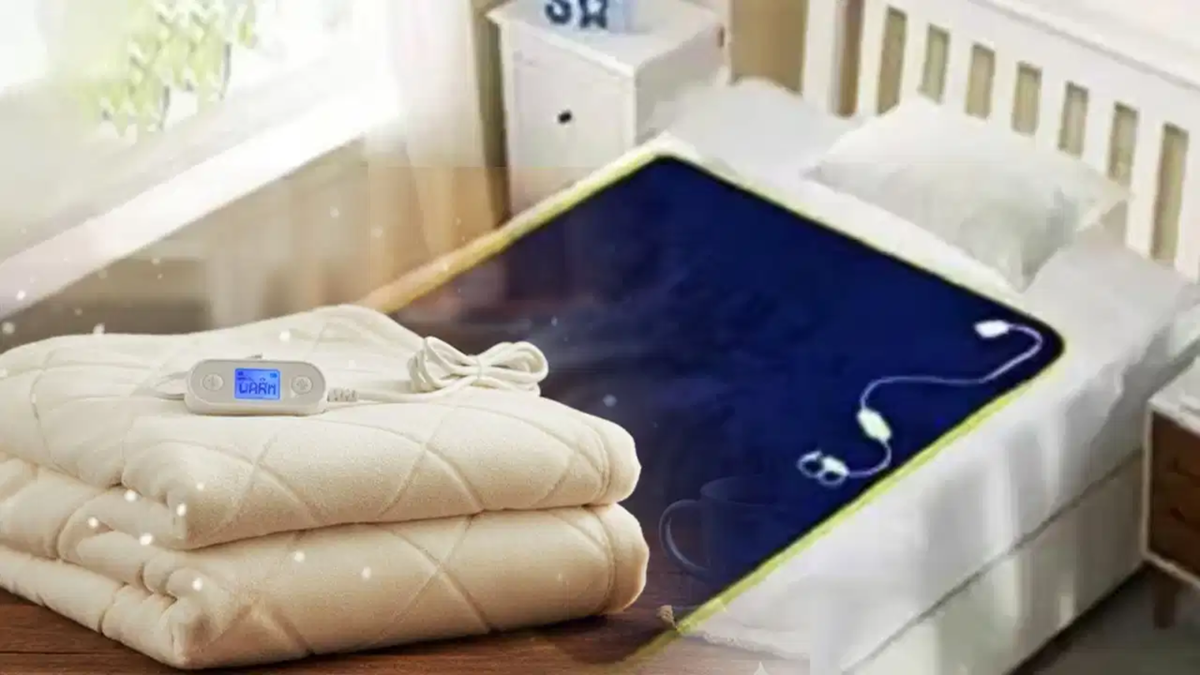
To stay warm during the winter, people use quilts, blankets, and room heaters. Recently, electric blankets have also become quite popular—especially in regions with harsh winters where homes lack central heating systems. The key feature of an electric blanket is that it is heated electrically; it contains internal heating wires that warm up once the blanket is plugged in. However, not all electric blankets are the same—some are designed to be placed underneath you on the bed, while others are meant to be used as a cover (like a regular blanket).
People of all ages, from children to the elderly, use them for relief from the cold. Yet, a little carelessness can lead to risks such as electric shocks, skin burns, or even fires. Therefore, keep the following points in mind when using an electric blanket:
Do not use old or damaged electric blankets.
If your electric blanket is very old, has exposed wires, or if the temperature control switch is not functioning correctly, stop using it immediately. Faulty wiring increases the risk of short circuits and fires.
Do not use the blanket while it is folded.
Some people use electric blankets while they are folded or bunched up. Doing this can compress the internal heating wires, causing certain areas to become excessively hot. Always use the blanket spread out flat, in accordance with the manufacturer's instructions.
Avoid leaving it on all night.
Some people keep their electric blankets switched on throughout the night while they sleep. If the blanket lacks safety features like a timer or an automatic shut-off function, this can be dangerous. It is best to warm up your bed before going to sleep and then switch the blanket off. Only use it overnight if the manufacturer explicitly states that it is safe to do so.
Avoid using with other heating devices.
Do not use a hot water bottle or a heating pad alongside an electric blanket. This can cause excessive heat to accumulate in one area. Prolonged, intense heat may damage the blanket's internal wiring and increase the risk of skin burns.
Do not place heavy objects on the blanket.
Avoid placing heavy books, thick comforters, or other heavy items on an electric blanket. These can trap heat, causing specific parts of the blanket to become dangerously hot. Therefore, do not keep unnecessary items on the blanket while it is in use.
Never plug in a wet blanket.
If an electric blanket gets wet, do not turn it on. Contact between electricity and water can lead to electric shocks or short circuits. If the blanket becomes wet, unplug it immediately and follow the manufacturer's instructions before attempting to use it again.
Do not allow children or the elderly to use it unsupervised
Extra caution should be exercised when electric blankets are used by young children, the elderly, or individuals who may not be able to accurately gauge heat levels. If the blanket becomes too hot, they might not be able to turn it off in time. Consequently, it should never be used without supervision.
Be careful when purchasing an electric blanket.
When buying an electric blanket, choose a high-quality model that includes essential safety features. Look for features such as temperature control, overheating protection, and an automatic shut-off function.
Disclaimer: This content has been sourced and edited from TV9. While we have made modifications for clarity and presentation, the original content belongs to its respective authors and website. We do not claim ownership of the content.
