
CAPTCHA: Why do you repeatedly have to prove you're human on the internet? Learn what CAPTCHA is and the truth behind it..
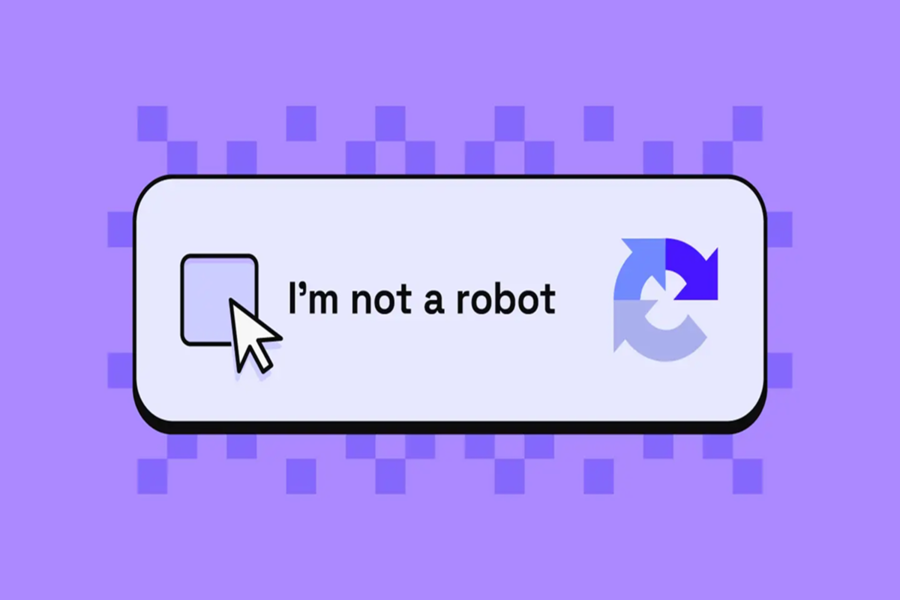
CAPTCHA stands for Completely Automated Public Turing test to tell Computers and Humans Apart. It's a test that a human can solve in seconds, but it's a major challenge for even the world's most powerful supercomputers and AI algorithms.
Why is CAPTCHA necessary?
Thousands and millions of automated programs (bots) are active on the internet, spreading spam, creating fake accounts, buying tickets or selling items in seconds, and attempting to crack passwords. CAPTCHA works to stop these bots. For example, online ticket booking, e-commerce sales with heavy discounts, website comment sections, and login and password pages all use CAPTCHA to prioritize real users over machines.
How does CAPTCHA prevent hacking and spam?
Hackers try millions of password combinations using bots. CAPTCHA forces bots to stop repeatedly because they cannot solve the puzzles. This keeps accounts secure.
Where did it start?
The history of CAPTCHA begins in the late 1990s. AltaVista first used it in 1997, but it received official recognition and its name in 2003 from Luis von Ahn and his team at Carnegie Mellon University. Luis later created reCAPTCHA, which displayed words from old newspapers that computers couldn't scan. When millions of people solved these, they were unknowingly helping to digitize old books. Google recognized its potential and acquired it in 2009. Google then used it for two major purposes:
Google Maps: You may have noticed that after some time, house numbers and street signs started appearing in CAPTCHA. Google was actually using you to read house numbers and street signs for its Street View maps to make them more accurate. Then, as AI advanced, bots also became capable of reading distorted words. That's when Google introduced the "I'm not a robot" checkbox. It doesn't just look at a single click, but tracks your mouse movements, browser history, and cookies before you click. A human's mouse moves somewhat erratically, while a bot clicks in a perfectly straight line or with sudden, jerky movements. This is how the difference between a human and a machine is detected.
How does Google get you to work for free?
Not only that, when you identify pictures of bicycles, buses, or cars in a CAPTCHA, you are unknowingly training Google's AI system. This helps improve Google's self-driving cars and image recognition technology. So, along with providing security, you are also contributing to AI development.
Disclaimer: This content has been sourced and edited from Amar Ujala. While we have made modifications for clarity and presentation, the original content belongs to its respective authors and website. We do not claim ownership of the content.
