
Can your voice be stolen too? Understand the growing threat of deepfakes through Giorgia Meloni's voice trademark..
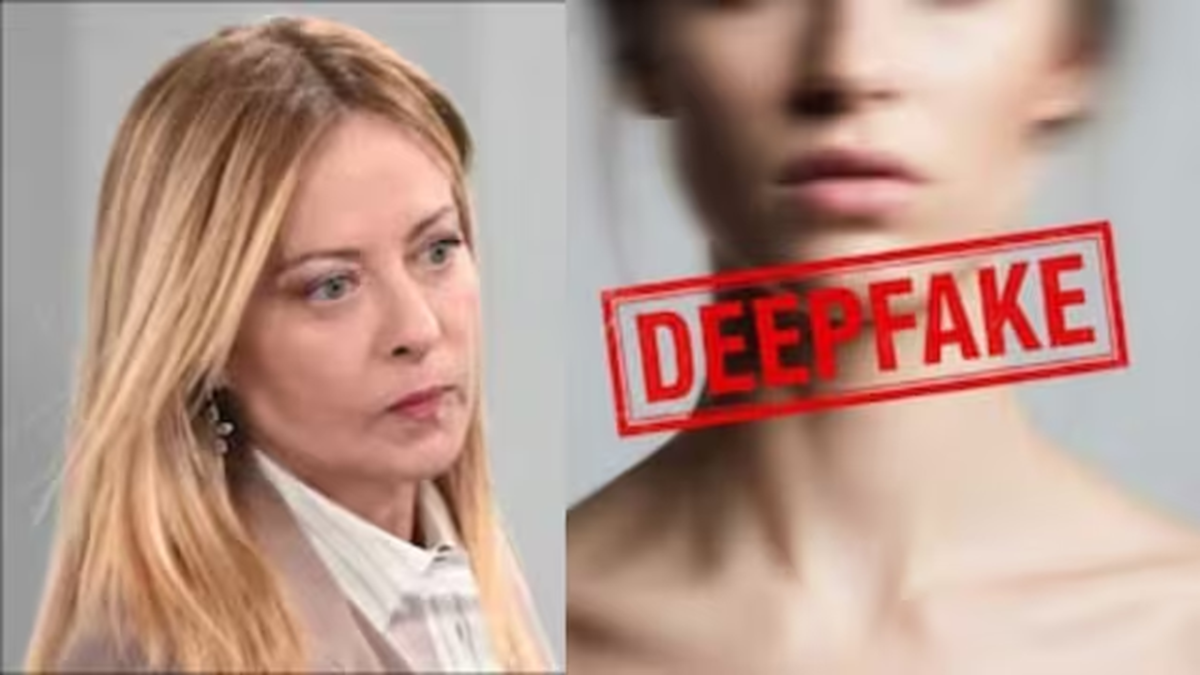
Italian Prime Minister Giorgia Meloni has recently taken a unique step: she has applied to the European Union Intellectual Property Office (EUIPO) to trademark her voice. This move aims to prevent the creation of fake videos or audio featuring her using artificial intelligence (AI).
This news has once again brought the growing threat of deepfakes into the spotlight. Let us understand what a deepfake is and why it has become so dangerous.
What is a deepfake?
Deepfake is a technology that uses AI to manipulate a person's face, voice, or an entire video so realistically that an ordinary person might mistake it for the genuine article.
The term 'deep' comes from 'deep learning,' a subset of AI. In this process, the computer learns from millions of images and audio samples to generate synthetic content.
For instance, by recording just a few seconds of a politician's real voice, AI can transform it to sound like a full speech or a song. Similarly, in videos, one person's face can be superimposed onto another person's body. Today, this technology has become so affordable and accessible that an audio deepfake—which 70 percent of people might mistake for the real thing—can be created using just three seconds of actual voice audio and an expenditure of around 30 euros.
How does a deepfake work?
First, the AI model undergoes training using multiple samples of real voices or faces. The AI then analyzes these patterns to generate new content. Audio deepfakes involve voice cloning.
Video deepfakes utilize face-swapping or lip-syncing techniques. While this previously required expensive software and specialized expertise, anyone can now create deepfakes from home using free apps and online tools.
Why is Meloni concerned?
Giorgia Meloni has previously fallen victim to deepfakes. A manipulated photo of her, depicting her in underwear, sparked a major controversy. Her autobiography is titled *Io sono Giorgia* (I am Giorgia). She has now submitted a four-second audio clip in which she twice states, "I am Giorgia Meloni." If the trademark is approved, she will secure exclusive rights to her voice across Europe; no one else will be able to use it without her permission. This measure aims to guard against fake content and fraud. Trademarks are valid for 10 years and require subsequent renewal.
**The Threat of Deepfakes Globally and in India**
According to a Kaspersky report, crimes involving voice cloning are on the rise. During India's 2024 Lok Sabha elections, deepfake videos featuring Narendra Modi, Rahul Gandhi, and Amitabh Bachchan circulated widely on platforms like WhatsApp, TikTok, and X, prompting the Election Commission to issue an advisory on the matter.
Deepfakes are being used to spread rumors, inflict political damage, blackmail individuals, and commit fraud. Meloni is not alone in this; in Italy, singer Giusy Ferreri and actor Luca Ward have also trademarked their voices. This trend highlights how celebrities and politicians are taking legal steps to protect their identities.
**What Lies Ahead?**
While the proliferation of AI has made creating deepfakes easier, it has also fostered mistrust within society, leaving people questioning the authenticity of what they see and hear. Although measures like trademarks offer protection, curbing the issue entirely requires better detection tools, stricter laws, and greater public awareness.
Giorgia Meloni’s decision serves as a reminder that in the digital age, protecting one's voice and likeness has become just as crucial as safeguarding documents like a passport or Aadhaar card. Deepfakes are not merely a source of entertainment but also a serious threat. Therefore, it is everyone's responsibility to exercise caution and spread accurate information.
Disclaimer: This content has been sourced and edited from News18 Hindi. While we have made modifications for clarity and presentation, the original content belongs to its respective authors and website. We do not claim ownership of the content.
