
Breathing has become difficult in Delhi-NCR; learn how to choose the right air purifier to protect yourself from pollution..
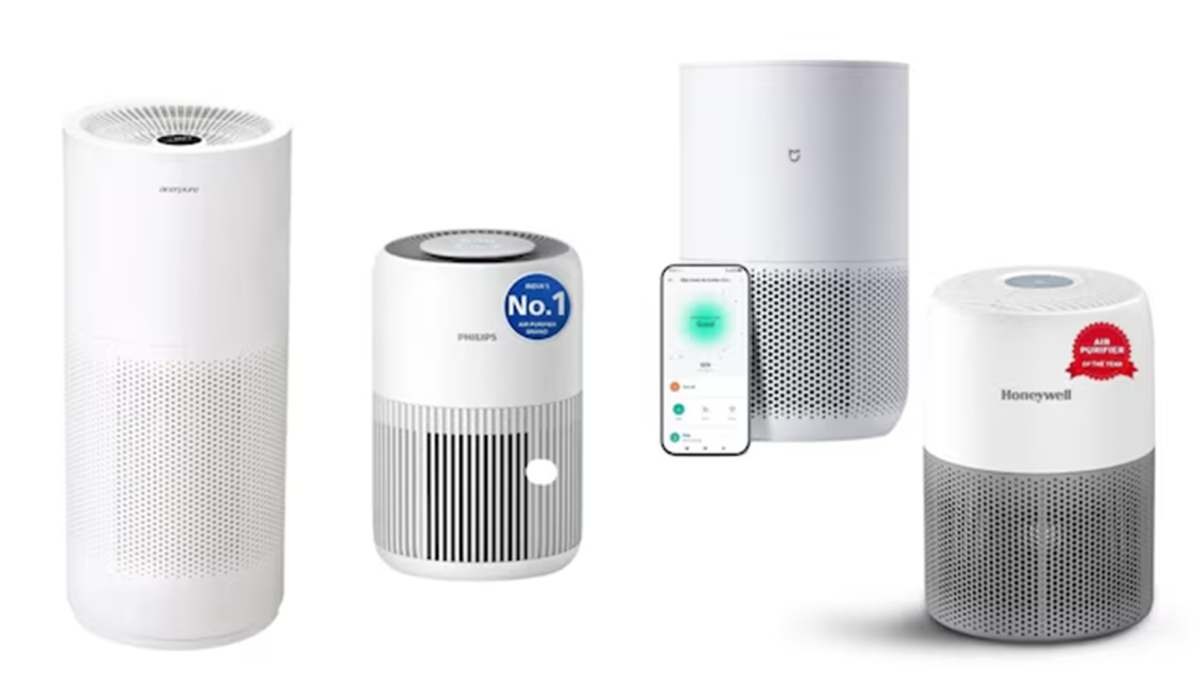
Air quality in Delhi-NCR has deteriorated significantly. Following Diwali, the air has become highly toxic, with the Air Quality Index (AQI) climbing above 400—a level classified as 'severe.' A combination of smoke, dust, stubble-burning emissions, and vehicular pollution makes even breathing difficult.
When outdoor air quality is poor, pollution inevitably finds its way indoors. Even with windows kept shut, tiny particles like PM 2.5 can still enter the home. In such conditions, an air purifier has become an essential household appliance.
Why is an air purifier necessary?
We spend the majority of our day indoors. Children, the elderly, and individuals with asthma or respiratory conditions are particularly vulnerable to the effects of pollution. Common issues include headaches, coughing, eye irritation, and fatigue. Prolonged exposure to poor-quality air increases the risk of developing lung and heart diseases.
An air purifier mitigates these risks by cleaning the air within a room. It effectively traps PM 2.5, dust, pollen, smoke, and, to some extent, odors. In a city like Delhi, it has become a health necessity.
How does an air purifier work?
An air purifier uses a fan to draw in air and pass it through a series of filters. The most critical component is the 'True HEPA' filter; a high-quality HEPA filter can capture 99.97% of particles as small as 0.3 microns.
An activated carbon filter absorbs odors, smoke, and certain gases. Some models also include a pre-filter, which traps larger particles before they reach the main filters. This process ensures that the air in the room is continuously cleaned.
What should you look for when buying one?
Start by measuring the size of your room—the CADR (Clean Air Delivery Rate) is the most important metric to consider. This indicates the volume of clean air a machine can deliver in one hour. For a small bedroom (100–150 square feet), a CADR (Clean Air Delivery Rate) of 200–300 is sufficient.
For a large living room, you would need a CADR of 400 or higher. It is advisable to consider a slightly smaller room size than what the manufacturer specifies, as a more powerful machine is better suited for environments like Delhi.
Check the filter quality—look for "True HEPA" or "H13-grade" filters, rather than just "HEPA-type" ones. An activated carbon layer is also essential, especially in places like Delhi, to help neutralize smoke and odors.
Consider the noise level; a unit that operates below 50 decibels is ideal for nighttime use. Also, check the power consumption and the cost of replacing filters. Since filters typically need to be replaced every 6–12 months, this can add up to an annual expense of several thousand rupees.
Opt for reputable brands with a strong service network. Features like app connectivity, air quality sensors, and "auto mode" are quite useful. Avoid models that use ionizers or ozone generators, as these can potentially be harmful in certain situations.
What are the price ranges for air purifiers in the market?
Budget models are available between ₹5,000 and ₹10,000; these provide basic air purification suitable for smaller rooms.
Mid-range options, priced between ₹10,000 and ₹25,000–₹30,000, include models from brands like Xiaomi, Philips, and Coway. These generally offer an adequate CADR and effective filtration for most households.
Premium models range from ₹30,000 to ₹60,000 (or more) and include smart, high-performance machines from brands like Dyson. The annual cost of replacing filters can range from ₹2,000 to ₹5,000 or even more.
Proper use of an air purifier is also essential. Place it in the middle of a room or in a location with good airflow. It remains effective only when doors and windows are kept closed. Ensure filters are replaced on time; otherwise, the device could end up spreading pollution instead. A single unit is generally insufficient for an entire home; it is better to install separate units in key rooms.
The problem of pollution in Delhi-NCR recurs year after year. Wearing a mask when outdoors and using an air purifier indoors have both become necessary. By choosing the right device and using it correctly, you can, to a significant extent, safeguard the air that you and your family breathe.
Disclaimer: This content has been sourced and edited from News18 Hindi. While we have made modifications for clarity and presentation, the original content belongs to its respective authors and website. We do not claim ownership of the content.
