
BLDC vs. Regular Fans: Which Offers Greater Electricity Savings? Find Out Which One Makes for a Smart Choice Today..
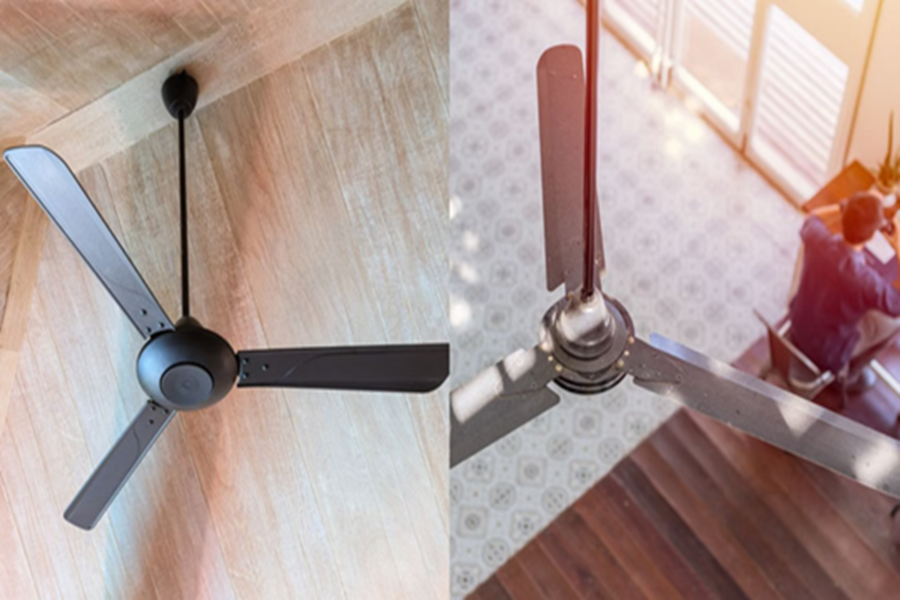
The fans that have been operating in our homes for decades are based on induction motor technology. These units feature copper coils and a system that rotates in response to the flow of electricity. On the other hand, BLDC—or 'Brushless Direct Current'—fans represent a pinnacle of modern engineering. Unlike their traditional counterparts, they do not utilize brushes; instead, they rely on permanent magnets. This technology minimizes friction, ensuring that the fan neither heats up nor generates noise while in operation. While standard fans tend to lose speed during voltage dips, BLDC fans possess the capability to deliver a consistent airflow despite voltage fluctuations.
**Which One Is Kinder to Your Wallet?**
If you are concerned about your electricity bills, the BLDC fan clearly comes out on top. A typical older-style fan consumes an average of 75 to 80 watts of electricity. In comparison, a high-quality BLDC fan consumes a mere 28 to 35 watts. Simply put, you could power approximately three BLDC fans for the same amount of energy required to run just one standard fan. If the fans in your home run for 15 to 20 hours a day, a single BLDC fan could save you anywhere between ₹1,500 and ₹2,000 on your electricity bill over the course of a year.
**Which One Leads in Terms of Features and Comfort?**
When it comes to convenience, BLDC fans are akin to modern-day gadgets. They often come equipped with a remote control, eliminating the need for you to get out of bed just to switch the fan on or adjust its speed. These fans also offer advanced features such as a 'Sleep Mode,' a 'Timer,' and even 'Reverse Rotation' (ideal for use during the winter months).
Standard fans, conversely, typically rely on old-fashioned regulators—components that are prone to malfunction or often begin to emit an annoying buzzing or squeaking sound over time. However, while ordinary fans can be repaired by any local neighborhood electrician, a BLDC fan with a faulty circuit must be taken to the manufacturer or a specialized technician for repairs.
Is Spending More Money a Wise Decision?
On the price front, ordinary fans remain the common man's first choice today, as they are easily available within the range of ₹1,200 to ₹1,800. In contrast, the price of BLDC fans starts at ₹2,500 and goes up to ₹5,000. At first glance, a BLDC fan may seem expensive, but it should be viewed as an investment. Through electricity savings, this fan recovers its higher cost within just 15 to 18 months. Thereafter, every unit of electricity saved translates directly into profit for you.
Which Is the Right Choice for You?
The choice depends on your specific needs and budget. If you live in a rented home, have a very limited budget, or use the fan infrequently, opting for an ordinary fan is not a bad idea. However, if you are looking for a fan for your own home—where high electricity bills are a major concern and you wish to enjoy modern features (such as remote control)—then, without a doubt, a BLDC fan is the most appropriate and sensible choice.
Disclaimer: This content has been sourced and edited from Amar Ujala. While we have made modifications for clarity and presentation, the original content belongs to its respective authors and website. We do not claim ownership of the content.
