
Big News for WhatsApp Users: Why Did Elon Musk Say, "The App Is Not Trustworthy"?
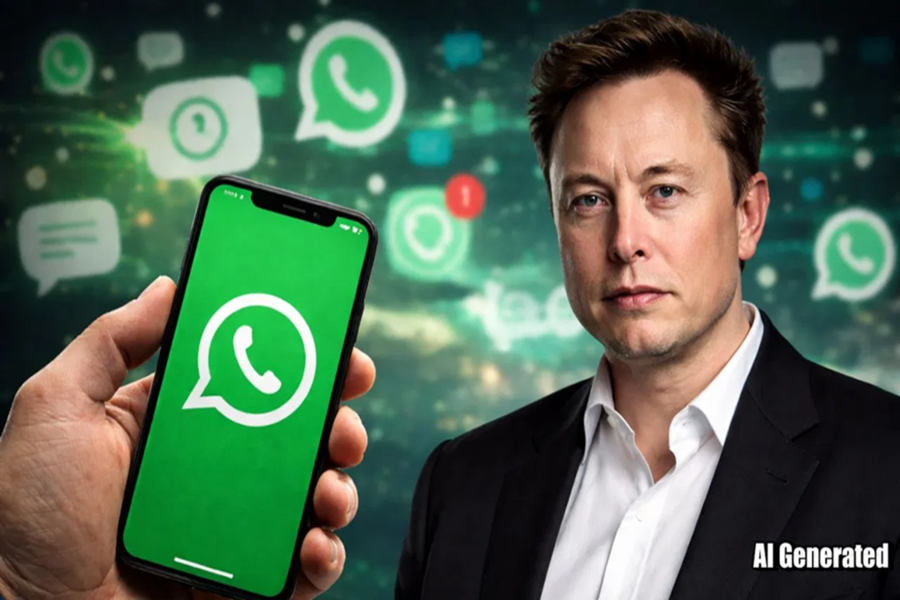
Earlier this year, a major class-action lawsuit was underway against Meta in a US court. The company stands accused of misleading users regarding its claims of end-to-end encryption, while allegedly secretly providing access to private messages. Although Meta has categorically denied these allegations, the controversy is once again gaining momentum on X (formerly Twitter), with Elon Musk labeling WhatsApp as unsafe for users. This has reignited his long-standing feud with Mark Zuckerberg and sparked a major debate regarding messaging privacy.
Responding to a viral post highlighting the legal case, Musk wrote, "Can't trust WhatsApp." In another post, he urged users to switch to his own platform, X, for more secure audio and video calls. This is not the first time we have seen Musk aim Meta; he has frequently criticized Zuckerberg and his company's platforms, while simultaneously promoting X Chat as a more secure and private alternative.
**Allegations Against WhatsApp**
Let's get to the crux of the controversy. The class-action lawsuit filed against WhatsApp alleges that the company allows its employees, contractors, and third parties to access private messages. The complaint claims that the internal systems of WhatsApp's parent company—Meta—are capable of bypassing encryption, thereby allowing messages to be reviewed.
**Pavel Durov Weighs in on WhatsApp**
This time, Musk is not alone. In the viral thread, Telegram CEO Pavel Durov also criticized WhatsApp, claiming that the app's encryption can be misleading and accusing it of sharing user data with third parties. He wrote on X: "WhatsApp's encryption could be the biggest consumer fraud in history. Despite its claims, it reads messages and shares them with third parties. Telegram has never done this, nor will it ever do so." It is worth noting that Telegram does not offer end-to-end encryption by default. Its standard chats utilize a cloud-based system, which means that messages are stored on Telegram's servers. Only its "Secret Chats" feature employs full end-to-end encryption; consequently, its privacy model is fundamentally different from—and less robust than—WhatsApp's default encryption system.
Disclaimer: This content has been sourced and edited from TV9. While we have made modifications for clarity and presentation, the original content belongs to its respective authors and website. We do not claim ownership of the content.
