
Best Solar Panel: Monocrystalline or Polycrystalline… Understand which solar panel is best for your home..
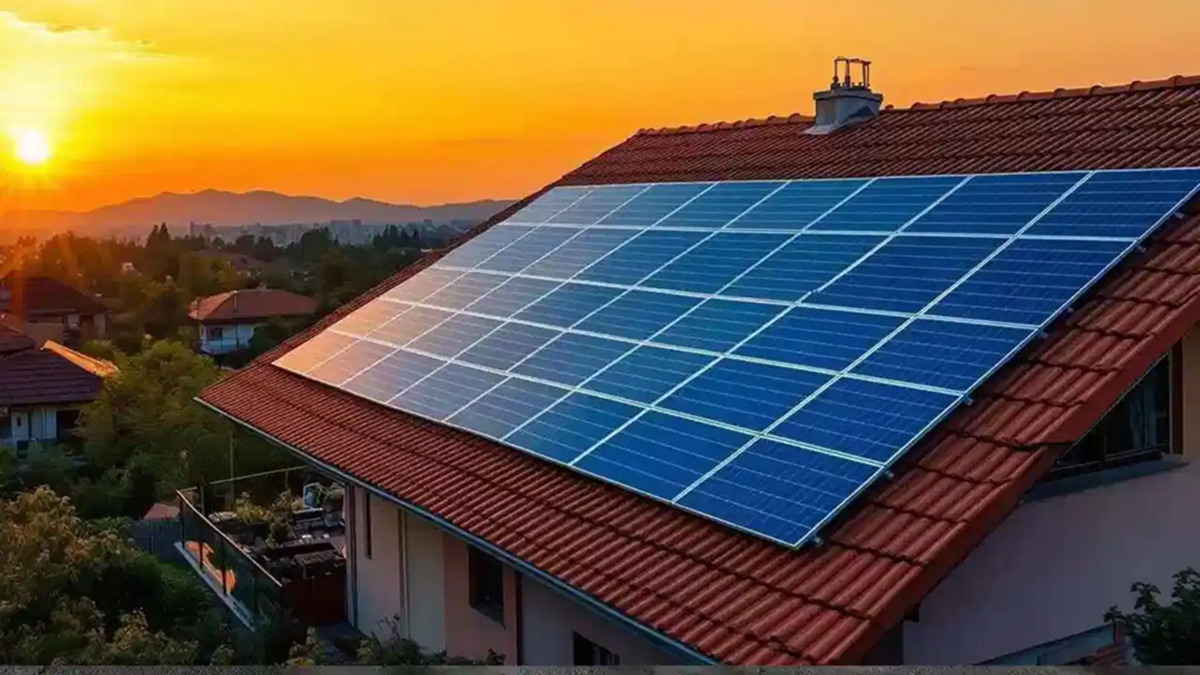
Best Solar Panel: Exorbitant monthly electricity bills and unscheduled power cuts have disrupted the common man's budget. To find a permanent solution to this problem, a large number of people are now turning to installing solar panels on their rooftops. However, when you go to the market to buy solar panels, you encounter a variety of options. A consumer's biggest question is often which panel would be best for their roof—one that can generate the maximum amount of electricity while occupying minimal space. Since this is a long-term investment, making the right decision based on accurate information is crucial. Let us understand the technicalities of solar panels so you can make the right choice.
What is best for your roof?
If you are planning to install solar panels, you will primarily find three types in the market: monocrystalline, polycrystalline, and thin-film panels. Monocrystalline panels are made from a single silicon crystal, giving them a deep black color and a premium appearance. In contrast, polycrystalline panels are created by melting and fusing multiple silicon fragments together, resulting in a light blue hue. The third type—thin-film panels—is generally used for large commercial projects. They are not considered a good option for residential rooftops because they require a significant amount of space for installation.
Which one generates more electricity?
The quality of a solar panel is measured by how effectively it converts sunlight into electricity; technically, this is referred to as 'efficiency.' When it comes to generating the most electricity, monocrystalline panels clearly take the lead. Their efficiency typically ranges between 19% and 24%. In contrast, the efficiency of polycrystalline panels is limited to around 15% to 17%. This simply means that if you have limited rooftop space, a monocrystalline panel will generate significantly more electricity than a polycrystalline one within the same area.
**Power Determined by Structure**
How exactly do monocrystalline panels generate so much electricity? The answer lies in their internal structure. These panels are made by cutting a single, continuous silicon crystal. Consequently, electrons flow easily in a uniform direction, resulting in negligible energy loss during the process. In contrast, polycrystalline panels consist of multiple small crystals joined together. The boundaries between these crystals impede electron flow, slightly reducing the panel's electricity-generating capacity.
**High Power Output Even in Scorching Heat**
Significant advancements have recently been made in monocrystalline panel technology. Modern panels featuring technologies like TOPCon and Heterojunction are now available. These panels generate more electricity than standard monocrystalline panels, achieving efficiency levels of 22% to 24%. A key advantage is their ability to operate at full capacity even in hot countries like India, where summer temperatures soar; their performance does not drop even in extreme heat. Therefore, if your budget allows, opting for these technologically advanced panels can be a very wise decision.
Disclaimer: This content has been sourced and edited from TV9. While we have made modifications for clarity and presentation, the original content belongs to its respective authors and website. We do not claim ownership of the content.
