
Banks remain closed on holidays—so where does the cash in ATMs come from? Who replenishes it? Find out how this system works..
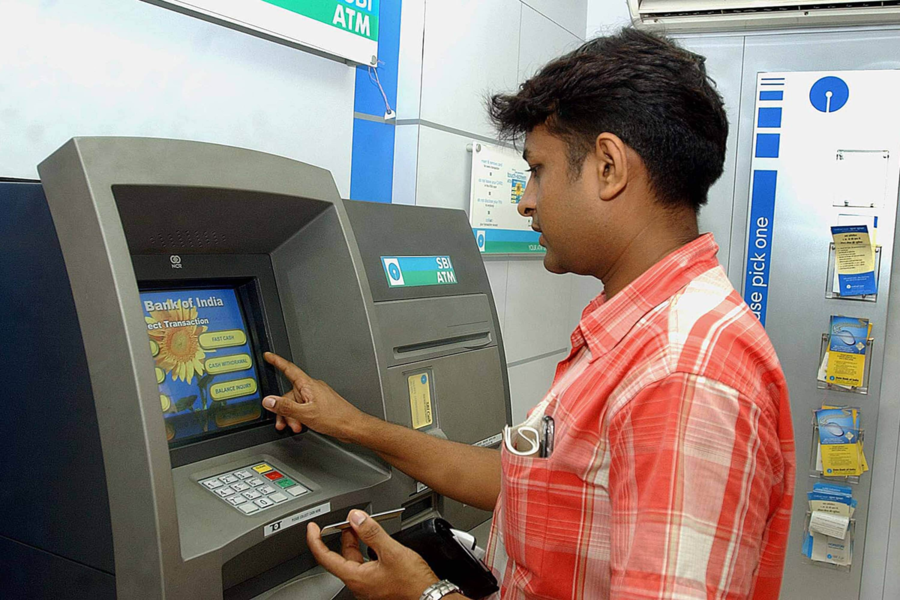
Imagine that there are long holidays for a festival. The banks have been closed for the past three days, and you suddenly find yourself in need of cash. You head to a nearby ATM, swipe your card, and crisp banknotes emerge. Have you ever wondered—when not a single bank employee is on duty—where exactly did these notes inside the ATM come from? Do banks simply load enough cash into the machines before going on holiday to last for weeks?
The truth is that the ATM operates within its own distinct "ecosystem." Banks have now largely ceased handling the task of replenishing cash themselves. Instead, this responsibility is outsourced to third parties—specifically, Cash Management Companies (CMCs). These companies operate 24 hours a day, 365 days a year. It makes no difference to them whether it is a Sunday or a festival day; their sole objective is to ensure that no ATM in any corner of the city ever runs "out of cash."
How Does the ATM Cash System Work?
The journey of cash reaching an ATM begins in the bank's vault and ends up in your wallet. Let's explore how this process unfolds:
Outsourcing
Most major banks no longer handle the task of loading cash into ATMs internally. Instead, they enter into agreements with specialized cash management companies such as CMS, Brink's, or Writer Safeguard. These companies collect the cash from the bank's "cash chest" (a large, secure vault) and transport it to the ATMs.
Real-Time Monitoring (The Magic of Software)
Every ATM is connected to the bank's central server—as well as the cash agency's control room—via specialized software. The moment you withdraw cash, the system updates instantly. The agency utilizes a dashboard that issues a "Red Alert" whenever the cash reserves in a specific ATM drop below a predetermined threshold. Cash Vans and Armed Security
When an ATM is running low on cash, the agency dispatches its 'cash van' to that specific route. These vans are equipped with GPS tracking systems and are accompanied by armed guards. Inside the van, there is a specialized 'safe' that can only be opened using a specific code.
How are banknotes stored inside an ATM?
Banknotes are not stored loosely inside an ATM. Instead, they are kept within sturdy metal containers known as 'cassettes.' Typically, an ATM contains 3 to 4 cassettes. Each cassette is designated for banknotes of a specific denomination (such as ₹100, ₹200, or ₹500). When the agency's personnel arrive, they remove the empty cassettes and install new, filled ones. This process is referred to as a 'cassette swap.'
**Special Preparations for Holidays**
The demand for cash surges during festivals or extended holiday periods. Consequently, agencies engage in 'demand forecasting' well in advance.
**Extra Loading:** On the day preceding a holiday, ATMs are stocked with the maximum amount of cash they can hold, up to their full capacity.
**Emergency Teams:** Even on holidays, certain cash-van teams remain on 'standby' so that if an unexpected surge in footfall occurs at any location, cash can be delivered there immediately.
**Conclusion**
Bank closures no longer take a heavy toll on your wallet, as technology and logistics have made this process remarkably seamless. The companies responsible for replenishing ATMs—along with their security guards—are the 'real heroes' working behind the scenes to ensure that the machine is never found empty when you need it most. So, the next time you withdraw cash from an ATM on a bank holiday, remember that a dedicated team is working around the clock to keep that machine operational for you.
Disclaimer: This content has been sourced and edited from Zee Business. While we have made modifications for clarity and presentation, the original content belongs to its respective authors and website. We do not claim ownership of the content.
