
ATM Myth vs Reality: Can the guard see your PIN? Amidst fears of PIN theft, learn the real safety rules and RBI guidelines..
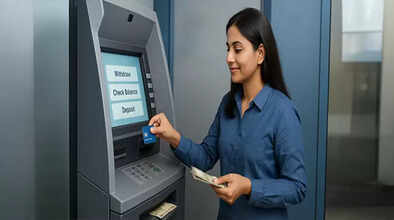
ATM Myth vs Reality: Does the guard stationed at the ATM see or monitor your PIN? This question often confuses people. Many people think the guard might steal their PIN. If you also have this misconception, let's clear up this confusion and find out what the job of an ATM guard actually is.
ATM Guards Don't Steal PINs
Often, people feel uncomfortable when they see a guard at the ATM. Many people think that the guard might steal their PIN while they are withdrawing money, or that the guard monitors everything through the ATM's cameras. Some even mistakenly believe that the guard can withdraw cash from the ATM or somehow see their PIN. But the reality is completely different. So let's clear up this confusion and understand the actual role of an ATM guard.
The Real Role of an ATM Guard
When you go to withdraw cash from an ATM, there are millions of rupees in the machine. It's not just a machine; it's a mini-bank. Therefore, the guard's job is not just to sit on a chair, but to fulfill several safety-related responsibilities.
Can Guards Steal PINs?
The biggest myth in people's minds is that the guard can see your PIN, that the guard watches the camera recordings, or that the guard can stop you from withdrawing money. But the truth is completely different. In reality, the guard has no right to know your PIN. Also, the CCTV camera footage goes to the bank's control room, not to the guard. The guard is only there to maintain security and order outside.
Is it mandatory to have a guard at every ATM?
It's important to know that the guidelines from the RBI (Reserve Bank of India) and the Ministry of Home Affairs state that it is not mandatory to have a guard at every ATM. However, ATMs with a large amount of cash, or those located in crowded areas, or those inside a bank branch, require a guard.
Do ATMs have an E-Surveillance System?
Nowadays, many ATMs have an E-Surveillance System. Yes, every ATM has cameras and sensors installed inside, so if there is any tampering, an automatic alert is sent to the control room. This is why ATMs are now completely safe in many places, even without a guard.
Why are ATM guards deployed?
There are four main reasons for having a guard: firstly, to protect the cash in the machine; secondly, to prevent theft or vandalism; thirdly, to stop fraudulent gangs from installing skimming devices; and fourthly, and importantly, to provide a safe environment for the person using the ATM. Especially at night, in deserted places, or when alone, the presence of a guard acts as a major security shield.
What are the main duties of an ATM guard?
The job of an ATM guard is to ensure that only one person is inside the ATM at a time and to keep an eye on suspicious activity. In addition, putting up a "Machine Out of Order" sign if the machine is malfunctioning, assisting elderly people in operating the machine (without looking at their PIN), securing the machine when the cash van arrives, keeping the ATM room clean and tidy, and informing the bank about AC and light maintenance are all part of the guard's duties.
What to do if there is no guard at the ATM?
If there is no guard at the ATM, take responsibility for your own safety. Before entering, check if there is any suspicious person behind you. Cover the keypad with your hand while typing your PIN. If you see any strange devices, cameras, or chips on the card slot of the machine, immediately come out and file a complaint with the bank. Do not withdraw cash from a deserted ATM alone at night; find a nearby ATM in a safe location.
ATM guards are not a threat
Let us tell you that ATM guards are not a threat, but rather your true security partner. So, the next time you go to an ATM, don't look at the guard with suspicion, but understand that they are there for your safety, not to steal your PIN or money. Be aware of your own safety, keep your PIN secure, and use the facilities provided by the bank with confidence.
Disclaimer: This content has been sourced and edited from NDTV India. While we have made modifications for clarity and presentation, the original content belongs to its respective authors and website. We do not claim ownership of the content.
