
Are Women's Jobs Most at Risk from AI? New Study Reveals Major Findings—You'll Be Shocked by the Reason
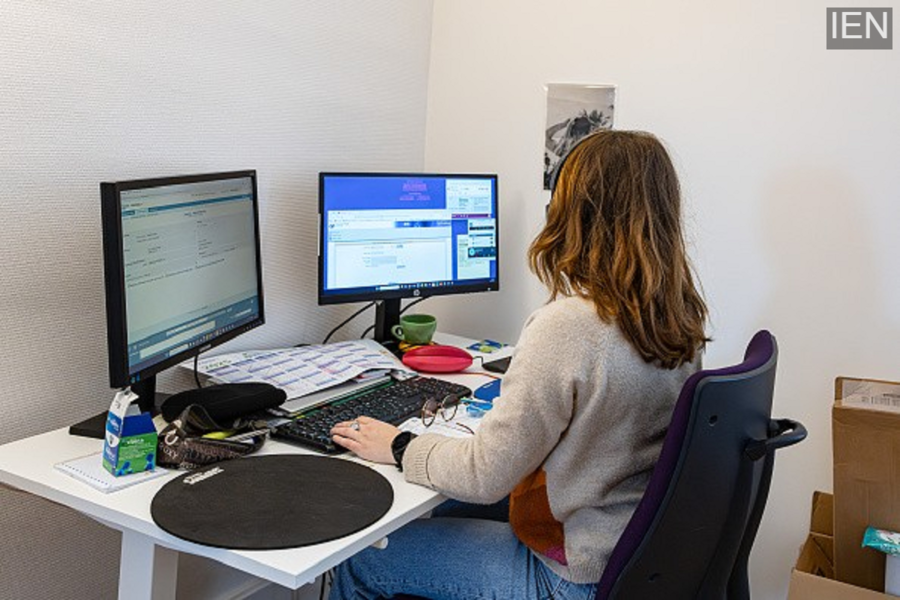
Artificial Intelligence: According to a report by the U.S. organization, the National Partnership for Women & Families, a significant portion of women work in jobs that AI can easily automate.
Artificial Intelligence: Artificial Intelligence (AI) is rapidly becoming an integral part of offices and companies worldwide. A wide range of tasks—from customer service to content writing, coding, data analysis, and scheduling—are now being executed with greater speed and efficiency with the help of AI tools. Companies, too, are investing heavily in AI to reduce operational costs and accelerate workflow.
However, amidst these developments, a new study has raised a significant question. According to the report, the impact of AI may not be uniform across all employees; specifically, women's jobs could be at a higher risk compared to those held by men.
Which Jobs Are Most at Risk?
According to the report by the National Partnership for Women & Families, a large segment of the female workforce is employed in roles that are highly susceptible to AI-driven automation. The report notes that while women constitute approximately 47 percent of the U.S. workforce, they make up nearly 83 percent of the employees in the 15 job categories deemed most vulnerable to the impact of AI.
These categories include roles such as secretaries, office clerks, receptionists, and insurance agents. These positions often involve repetitive administrative tasks—functions that generative AI can now perform with significantly greater speed and at a lower cost.
Why Is Concern Growing?
According to the study, sectors where women constitute a large portion of the workforce face a heightened risk of job disruption due to AI. Furthermore, many employees may possess limited resources—such as time or financial means—to acquire new skills or rapidly adapt to technological advancements.
Nevertheless, the report also notes that sectors such as nursing, childcare, and home healthcare are unlikely to be fully displaced by AI in the immediate future. This is because these professions require emotional intelligence and human-centric care—qualities that machines cannot fully replicate. Even so, the use of AI-based monitoring and surveillance systems is on the rise within these sectors.
Gender Bias Can Also Exist in AI Systems
The report has drawn attention to another serious issue. According to the study, AI systems themselves can be susceptible to gender bias. It was noted that women's participation in AI development and leadership roles remains low. This disparity could influence how AI tools are designed and how they are subsequently utilized in the workplace.
In one instance, AI was used to generate resumes featuring both male and female names. When these resumes were subsequently evaluated, it emerged that male candidates received higher ratings. This finding has heightened concerns that AI systems may inadvertently perpetuate existing societal biases.
Are Women Judged More Harshly for Using AI?
The study also revealed that women may be judged more critically than men when utilizing AI tools in their professional work. In an experiment, participants were presented with identical work samples; however, some were labeled as "AI-assisted," while others were designated as "non-AI-assisted." When participants believed that a woman had utilized AI assistance, her competence was perceived in a significantly more negative light.
The Growing Threat of Deepfakes and Online Abuse
The report also raised concerns regarding AI-driven deepfakes and fabricated content specifically targeting women. The use of AI to manipulate photos, videos, and audio—thereby spreading misinformation—is becoming increasingly effortless. Although this study focuses primarily on the U.S. workforce, given the accelerating adoption of AI, its implications are likely to be observed in other countries around the world as well.
