
An intriguing device spotted on PV Sindhu's forehead—find out what it does..
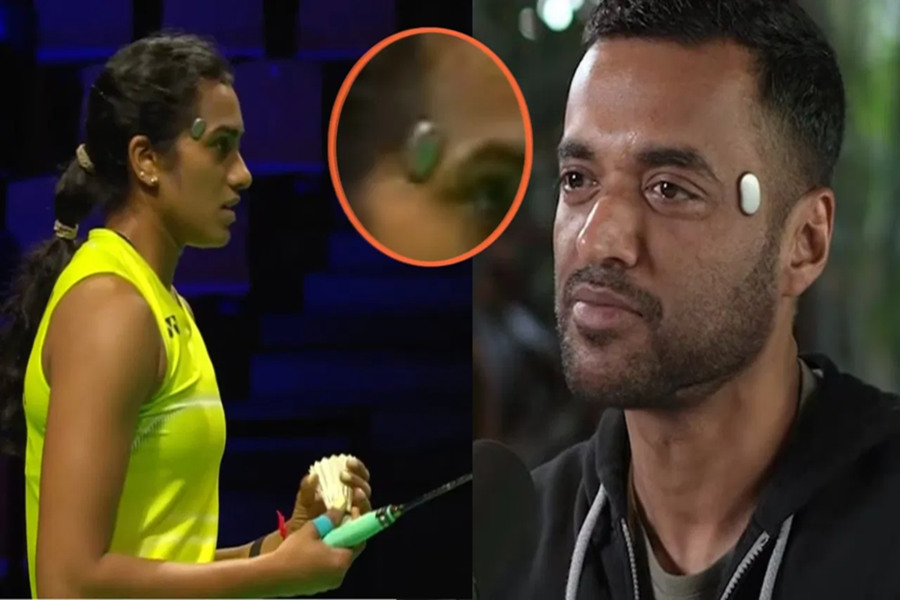
During the Thomas and Uber Cups, a small device worn on the forehead of India's star badminton player, PV Sindhu, became a subject of widespread discussion. As soon as the cameras focused on Sindhu during the match, everyone's attention was drawn to the unique gadget affixed to her forehead. This device is known as "Temple," and it was developed by Zomato founder Deepinder Goyal. It is claimed to track blood flow in the brain in real-time and assist in understanding mental performance. Notably, Sindhu is utilizing this device to enhance her game and fitness levels.
**What is the Temple Device?**
Temple is a small, lightweight, and experimental wearable device designed to be worn on the forehead or near the temple. Its primary function is to monitor blood flow within the brain in real-time. It tracks cerebral blood flow, which is considered a crucial indicator of neurological health and the aging process. Significantly, it differs from standard fitness bands or smartwatches; it does not utilize technologies such as Bluetooth. Once fully charged, it can operate continuously for approximately 3 to 4 hours. Currently, the device remains in the research phase and is not yet available for purchase in the market.
**Why Did PV Sindhu Wear This Gadget During the Match?**
With her sights set on the 2028 Olympics, PV Sindhu is continuously working on refining her fitness and performance. The Temple device provides her with vital data regarding her physical condition—and specifically, her brain activity. This data facilitates a deeper understanding of factors such as fatigue, focus, recovery, and mental readiness. Sindhu's husband, Venkat Dutt Sai, is currently involved in testing the device and analyzing the data it generates. He believes that this technology will play a pivotal role in helping Sindhu further hone her skills and elevate her game. In major tournaments, even the slightest edge can make the difference between victory and defeat.
**Deepinder Goyal's Research and the Gravity Ageing Theory**
The Temple device is being developed as part of a private research project, distinct from Deepinder Goyal's work with Zomato. Goyal launched this initiative under the banner "Continue Research." Deepinder Goyal has invested approximately $25 million—or roughly ₹225 crore—in this research initiative. This device is based on his "Gravity Ageing Hypothesis." According to this theory, the prolonged effects of gravity influence the blood flow reaching the brain. This very process could accelerate the rate of aging. *Temple* seeks to understand and quantify precisely this physiological shift.
**Will It Transform Athletic Performance?**
It would be premature to claim at this stage that *Temple* will revolutionize the world of sports. However, if athletes like PV Sindhu derive tangible benefits from it, we may well see other players adopting it in the near future. The role of data and science in modern sports is constantly expanding. In this context, the device offers athletes an opportunity to gain a deeper understanding of their mental and physical states. Its role could prove particularly significant in aspects such as fatigue management, recovery, and focus.
**Not Yet on the Market, But at the Forefront of Conversation**
Currently, *Temple* is being utilized solely for research and limited testing purposes. No official plans have been announced regarding its launch for general consumers. The device has, however, sparked considerable discussion across social media platforms. While some hail it as a technology of the future, others are raising questions regarding its underlying scientific premise. Its theoretical underpinnings—linking bats, yoga, and the aging process—have further intensified the debate. One thing is certain: *Temple* has undoubtedly ignited a new wave of curiosity within the realms of technology, science, and sports.
Disclaimer: This content has been sourced and edited from TV9. While we have made modifications for clarity and presentation, the original content belongs to its respective authors and website. We do not claim ownership of the content.
