
AMOLED vs. OLED: Which Screen Is the Most Powerful? Discover the Advantages of Both..
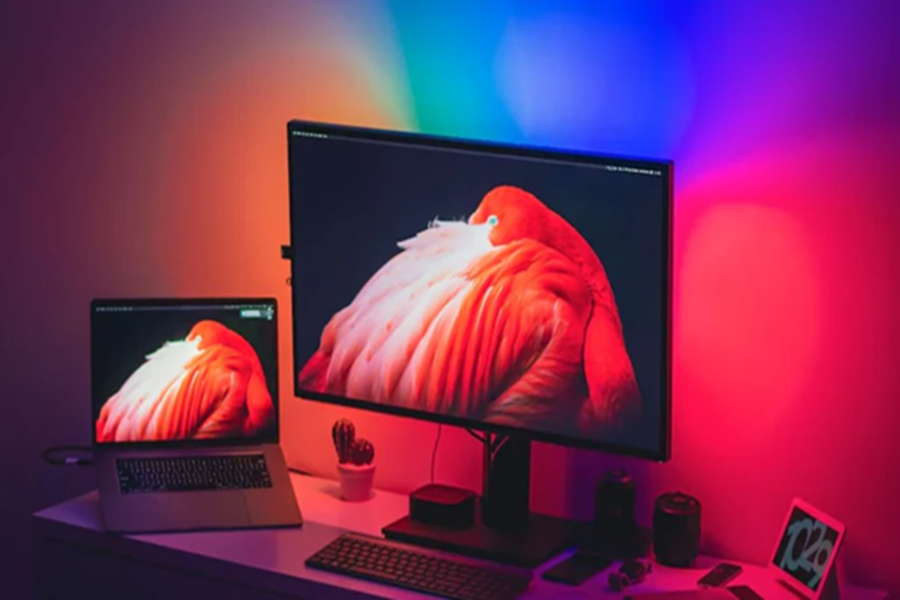
You have likely heard the names AMOLED and OLED in connection with mobile phones or TV screens. However, probably, no one has yet explained to you in detail exactly what distinguishes the two. So, let’s take a look today at the fundamental differences between these two screen technologies.
**What is OLED?**
OLED stands for Organic Light Emitting Diode. It is a screen technology in which every individual pixel emits its own light; this means it does not require a separate backlight (unlike LED or LCD screens). When a pixel is turned off, it appears completely black, resulting in exceptionally high screen contrast.
This implies that with an OLED screen, you experience deeper blacks, more vibrant colors, and an overall superior viewing experience. This is precisely why OLED technology is predominantly used in premium smartphones today.
**What is AMOLED?**
AMOLED stands for Active Matrix Organic Light Emitting Diode. It is essentially an advanced version of OLED. It incorporates a specialized technology—known as the "Active Matrix"—that allows for the individual control of each pixel.
**What are the benefits of this?**
The screen becomes faster, smoother, and more power-efficient. Consequently, AMOLED displays offer smoother scrolling, enhanced gaming performance, and reduced battery consumption (particularly when using "Dark Mode").
**AMOLED vs. OLED: What is the difference?**
Simply put, AMOLED is a refined version of OLED. While OLED serves as the foundational technology, AMOLED builds upon it by adding advanced control mechanisms and improved performance. For this reason, AMOLED is the preferred choice for most smartphones, whereas OLED technology is more commonly found in televisions and other devices.
**Advantages of AMOLED/OLED**
Both AMOLED and OLED technologies offer distinct advantages. The most significant benefit is the ability to produce "perfect blacks" and high contrast ratios, making videos and photos look stunning. The colors are incredibly vibrant and visually appealing, making the consumption of content a truly enjoyable experience. Furthermore, these displays are remarkably thin, allowing for the creation of smartphones that are both slim and lightweight.
Disclaimer: This content has been sourced and edited from NDTV India. While we have made modifications for clarity and presentation, the original content belongs to its respective authors and website. We do not claim ownership of the content.
