
Alert: Do you show your fingers while taking a selfie? Your bank account could be drained—find out what this new threat is..
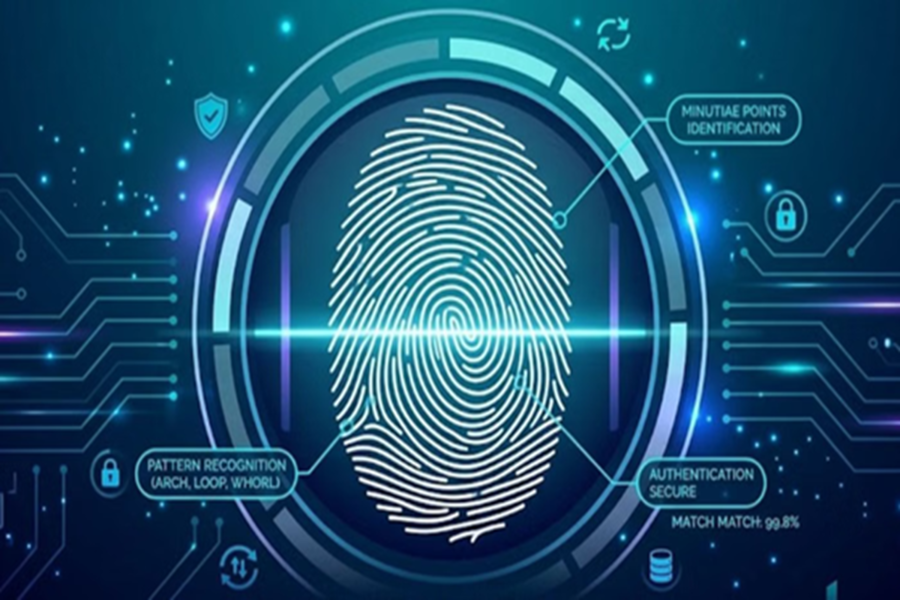
Whenever we go on vacation or hang out with friends, we often pose for photos by flashing a "peace sign" with our fingers or simply waving at the camera. But did you know that this seemingly innocent habit could land you in serious trouble? A new threat involving Artificial Intelligence (AI) and biometric theft has now emerged.
If you display your palms in front of a high-resolution camera, hackers can create a replica of your unique fingerprints. Cameras that are becoming increasingly powerful, combined with AI technology, could pose a significant threat to biometric data.
**Even a Distance of Five Feet Is Dangerous**
Recent reports from China have heightened fears regarding just how easily our physical identities can be stolen via social media. Security experts warn that if you stand within five feet of a camera while having your picture taken—and your fingers are facing the lens—a criminal could easily extract your fingerprint data.
Once a fingerprint has been digitally reconstructed, it can be used to bypass and unlock the biometric scanners on your smartphones, laptops, and even payment systems.
**AI Has Made This Threat Even More Potent**
In the past, blurry photographs often served as a safeguard against this type of theft. However, the advent of Artificial Intelligence has changed everything. Financial expert Li Chang warns, "Modern photo-editing software and AI tools can now render the fingerprint ridges hidden within everyday selfies with remarkable clarity and precision."
While factors such as lighting and focus still play a role, the margin for safety is rapidly shrinking. According to Professor Jing Jiewu of the Chinese Academy of Sciences, hackers can easily extract your fingerprint data using high-resolution images or by analyzing multiple photographs. Such Experiments Have Been Conducted Before
The concept of stealing fingerprints from photographs is not new. However, the technology that validates this idea has now moved out of the lab and reached the average smartphone.
In 2013, German biometrics researcher Jan Krissler successfully hacked Apple's Touch ID shortly after its launch.
Exactly one year later, he reconstructed the fingerprints of Germany's Defense Minister using nothing more than standard photographs of her hands.
What once seemed like a highly complex and technical feat has now become frighteningly simple.
In 2021, researchers at Kraken Security Labs demonstrated that a fake—yet functional—fingerprint could be created using just a single photograph, Photoshop, a laser printer, and a small amount of wood glue.
Why Do We Still Use Fingerprints?
If the risks are so significant, why do major tech companies like Apple, Google, and Samsung still rely on fingerprint scanners? The answer is quite straightforward: convenience.
Biometrics offer us the freedom to perform tasks without any hassle. With their help, users can unlock their phones or authorize payments in a matter of seconds.
Although it may not be as secure as a long, complex password, it remains an excellent method for protecting a phone against common thieves.
Disclaimer: This content has been sourced and edited from Amar Ujala. While we have made modifications for clarity and presentation, the original content belongs to its respective authors and website. We do not claim ownership of the content.
