
Alert! Money Can Be Stolen from Your Phone Without Touch – The Truth Behind the ‘Tap to Pay’ Scam
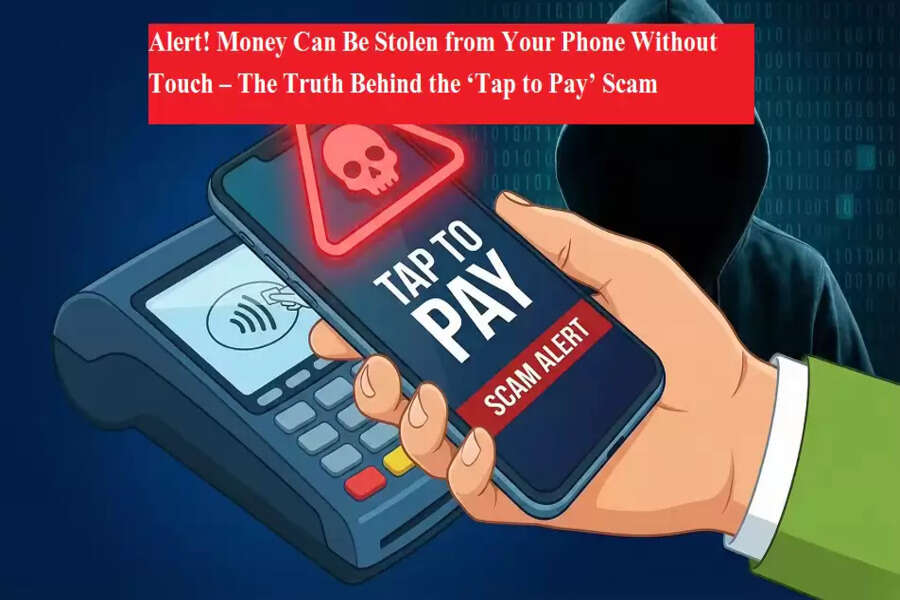
With the rise of digital payments, contactless transactions have become a part of everyday life. Whether it’s a debit card, credit card, or smartphone, the ‘Tap to Pay’ feature powered by NFC (Near Field Communication) allows users to make quick payments by simply bringing their device close to a machine. No swiping, no inserting, no PIN in many cases – just tap and go.
While this technology has made life easier, it has also opened the door for new and dangerous scams. Cybercriminals are now misusing contactless technology to steal money directly from people’s pockets, often without them even realizing it.
What Is the ‘Tap to Pay’ Scam?
The ‘Tap to Pay’ scam is a form of contactless payment fraud where criminals use portable wireless payment machines to deduct money from victims’ cards or phones. The most alarming part is that the victim usually becomes aware only after receiving a bank alert message.
Scammers take advantage of crowded places such as metros, buses, markets, malls, railway stations, and festivals, where people are standing close to each other. In such environments, it becomes easy for criminals to get physically close without raising suspicion.
How Does This Scam Actually Work?
The method used by fraudsters is shockingly simple and effective:
Targeting crowded areas: Scammers choose busy locations where people are distracted and packed together.
Using portable POS machines: They carry small wireless POS (Point of Sale) machines in their hands or bags.
Silent scanning: As they walk past or stand near a victim, they bring the machine close to the pocket, handbag, or backpack where the phone or card is kept.
Instant deduction: If the phone’s NFC is switched on or a contactless card is inside the wallet, the machine reads it and instantly processes the payment.
No PIN, no OTP: For small amounts (usually up to ₹5,000), no PIN or OTP is required. This is why criminals often deduct small amounts to avoid suspicion and ensure the transaction goes through smoothly.
By the time the victim realizes something is wrong, the money is already gone.
Why Are You at Risk?
Many smartphone users keep their NFC feature permanently switched on. Some people even place their debit or credit cards inside the back cover of their phone for convenience. While this may seem practical, it makes things extremely easy for scammers.
If your NFC is on, your phone is constantly ready to communicate with nearby devices. In crowded places, this can be like leaving your wallet open in public.
How to Protect Yourself from ‘Tap to Pay’ Fraud
The good news is that with a few simple precautions, you can protect yourself from this scam.
Turn off NFC when not in use: Go to your phone settings and switch off NFC. Only enable it when you are making a payment.
Use RFID-blocking wallets: These special wallets and card holders block radio signals, making it impossible for machines to scan your cards from outside.
Aluminium foil trick: If you don’t have an RFID wallet, wrapping your cards in aluminium foil can help block signals. It’s a simple and cost-effective solution.
Set transaction limits: Through your bank app, reduce the contactless payment limit or disable it completely if you rarely use it.
Monitor SMS alerts: Always read bank messages carefully. If you notice any unknown transaction, contact your bank immediately.
Avoid keeping cards in phone covers: Do not store your debit or credit cards in your phone case. It gives scammers access to both your phone and card at the same time.
Why Awareness Is the Best Defense
Technology is meant to make life easier, but security must come first. The ‘Tap to Pay’ feature is undoubtedly convenient, but in crowded environments, it can become a risk if used carelessly.
Cybercriminals rely on people being unaware and careless. A few seconds of attention to your phone settings can save you from major financial loss.
Final Word
The ‘Tap to Pay’ scam is real, and it is growing. But the solution is simple – stay alert, stay informed, and stay cautious. Turn off unnecessary features, protect your cards, and keep an eye on your bank alerts.
Remember, in the digital age, your safety is in your hands. A little caution today can save you from a big problem tomorrow.
