
AI Laptops Are Hitting the Market—Will Your Old Laptop Become Obsolete? Do You Really Need One?
Over the past year, AI technology has emerged as the biggest selling point in the tech world. Now, it is not just smartphones; TVs, refrigerators, ACs, and even water purifiers are being marketed with an "AI" tag. Against this backdrop, companies are positioning AI laptops as a necessity for the future. This is why, driven by the surging global demand for AI, essential components—such as memory, storage, and CPUs—are becoming more expensive; this trend could lead to a 35% to 40% increase in laptop prices by 2026. So, are AI laptops truly a necessity for us? Let's explore this question.
What is the difference between a standard laptop and an AI laptop?
AI laptops feature three chips, whereas standard laptops have two:
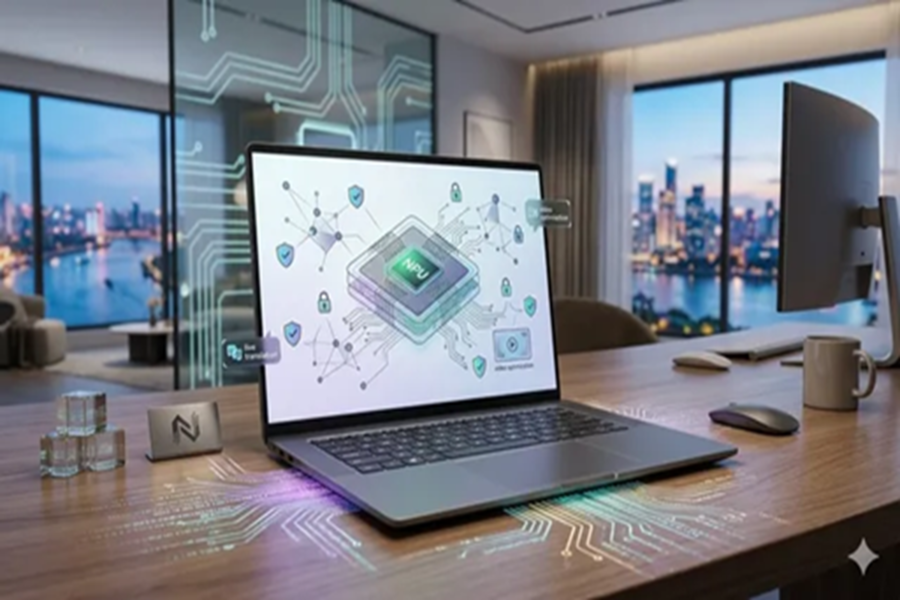
Standard laptops contain two chips: a CPU and a GPU. AI laptops incorporate a third, specialized processor chip known as an NPU (Neural Processing Unit). This unit is specifically designed to handle AI-related tasks, such as image recognition, natural language understanding, and text processing. The NPU executes these AI-related tasks directly on the laptop itself. This means you do not need to rely on an internet connection for every task.
Additional Features of AI Laptops:
Live Translation & Subtitles: During video calls, this feature can convert spoken language into text. For instance, if the person you are speaking with is speaking German, you can understand them in English.
Local AI Assistant: Tasks such as searching for files, drafting text, and editing photos or videos can be performed much faster—even without an internet connection.
Smart Video Calling: This feature automatically blurs the background, keeps the focus on your face, and utilizes noise cancellation to ensure your meetings appear more professional.
Improved Battery Life & Smoother Performance: Since the NPU handles the AI processing workload, the pressure on the CPU and GPU is significantly reduced. This results in both extended battery life and consistently smoother performance. Things to Keep in Mind When Buying a Laptop
Understanding Your Needs: The Average User
For those whose digital lives revolve around essential tasks—such as browsing the internet, attending online classes, basic photo and video editing, writing emails, managing office documents, or watching movies—a standard laptop is more than sufficient. You do not necessarily need highly advanced AI hardware to perform these tasks effectively.
Instead, focus on a few key hardware basics: ensure you have at least 8–16 GB of RAM to facilitate smooth multitasking, and a minimum of 512 GB of storage for easy access to your files. A robust battery life of 6 to 8 hours is essential for staying productive without being tethered to a power outlet.
The Next Step: The Power User
If your work involves more demanding tasks—including coding, 3D design, professional video editing, or data science—then an AI laptop (often referred to as an AI PC or Copilot+ PC) can truly prove to be a game-changer for you. These machines are specifically engineered to handle complex workloads.
When shopping in this category, look for a dedicated NPU (Neural Processing Unit) to handle local AI processing, and aim for a configuration featuring 16 to 32 GB of RAM along with at least 1 TB of storage. These specifications ensure that generative AI tools and sophisticated editing software run directly on your device without slowing down your system.
Pricing: AI Laptops Can Cost Up to 25% More
AI laptops are also known as AI PCs or Copilot+ PCs. Generally, these devices are 15% to 25% more expensive than standard laptops with comparable specifications. For instance, the starting price for the Lenovo AI laptop series (Aura Edition) is approximately ₹94,000, whereas the range for standard Lenovo laptops equipped with an i7 processor begins at around ₹71,000.
Disclaimer: This content has been sourced and edited from Dainik Jagran. While we have made modifications for clarity and presentation, the original content belongs to its respective authors and website. We do not claim ownership of the content.
