
AI Fact-Check: Is All Information Provided by AI True? Discover 6 Effective Ways to Fact-Check AI..
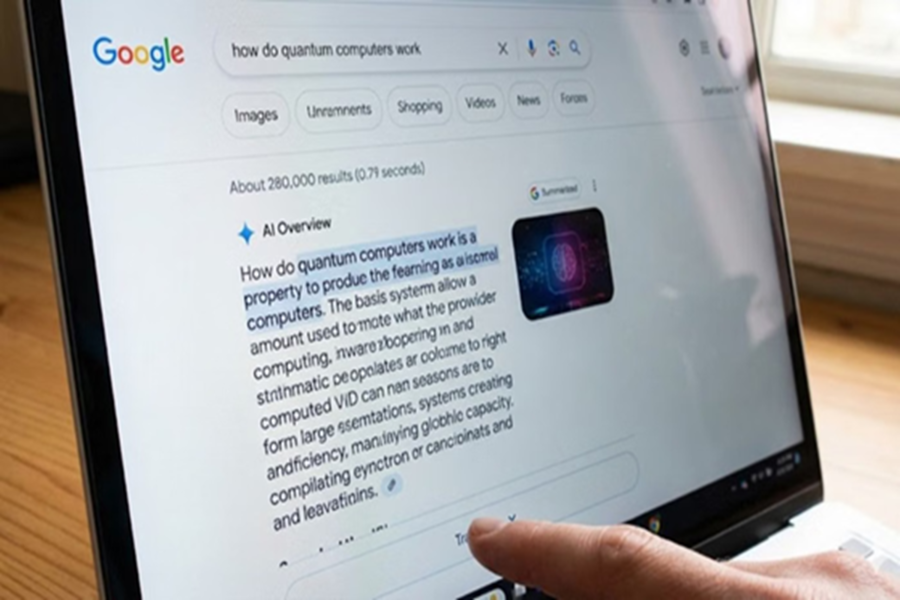
Artificial Intelligence has become an integral part of our daily work today. People are utilizing AI tools for everything from research, content writing, and academic studies to obtaining medical information and financial advice. However, a significant problem persists. AI often provides information that sounds plausible but is, in reality, incorrect. In the world of AI, there exists a phenomenon known as "hallucination." This refers to instances where an AI system generates an incorrect response with complete confidence.
According to the 2026 Stanford HAI AI Index, the rate of hallucination—that is, the generation of false information—was found to range from 22% to 94% across various AI models. Researchers discovered that when a false premise is presented to an AI system, it tends to accept it as fact. Therefore, placing blind faith in AI is not a prudent approach. We must learn how to verify and cross-check its responses.
**AI Frequently Commits These Errors**
AI errors can manifest in various forms. These include providing incorrect information, relying on outdated data, hallucinating, engaging in repetitive output, and citing fictitious sources. The greatest danger arises when AI intermingles factual information with falsehoods. Even major corporations have struggled to detect these errors generated by AI systems. According to a report by *The New York Times*, a prominent Wall Street law firm filed a legal brief in court that cited entirely fabricated case precedents conjured up by an AI tool.
Fundamentally, an AI system's responses are contingent upon its training data. If this data is outdated, the AI will lack knowledge regarding recent events. While AI systems sometimes explicitly indicate that they do not possess up-to-date information, the real peril emerges when they fail to provide any such warning to the user. Many experts caution that even if an AI system cites a major research paper or academic study, this does not automatically guarantee the accuracy of the information it provides. 6 Ways to Fact-Check AI.
The good news is that AI's errors can be detected. You just need to exercise a little caution. If an AI fails to cite a clear source, provides outdated dates, or gives conflicting answers to the same question, you can assume that something is amiss. Let's explore the 6 best ways to verify AI-generated responses:
1. Verify Information Across Multiple Sources
Just as journalists speak to multiple people to confirm a news story, you should do the same. For high-impact questions, never accept an AI's initial response as the absolute truth. As advised by Texas A&M University, you should conduct your own independent research. Cross-check the claims made by the AI by searching for them on Google or Google Scholar.
2. Ask the AI Follow-Up Questions
If an AI's response strikes you as odd, ask it a follow-up question. Just as you would ask a human, "Why are you saying this?", ask the AI the same thing. You might ask, "What is the source of this information?" or request that it present an argument regarding a different aspect of the same topic. This approach can help expose the AI's limitations.
3. Ask the Same Question on Different Models
Pose the same question to various platforms, such as ChatGPT, Gemini, and Claude. If the responses from all of them are consistent, your confidence in the information can increase. However, in instances where the responses differ, additional verification becomes essential.
4. Verify the Currency of the Information
Every AI model is trained on data up to a specific cutoff date. If an event occurred after its training period concluded, the AI will be unable to provide information about it. Particularly when dealing with statistics or breaking news, be sure to ask the AI whether its information has been recently updated.
5. Verify Context and Sources
If an AI cites a research paper or report, open and read that source yourself. Do not simply trust the information based solely on the name of the source. At times, AI even generates fabricated references.
6. Exercise Your Judgment
If a response seems unusual or overly confident, cross-check it. According to experts, skepticism and verification have become the most essential skills in the age of AI.
Disclaimer: This content has been sourced and edited from Amar Ujala. While we have made modifications for clarity and presentation, the original content belongs to its respective authors and website. We do not claim ownership of the content.
